Paris cooking classes: what a hands-on kitchen session actually gives you
Are cooking classes in Paris worth it compared to a guided tour?
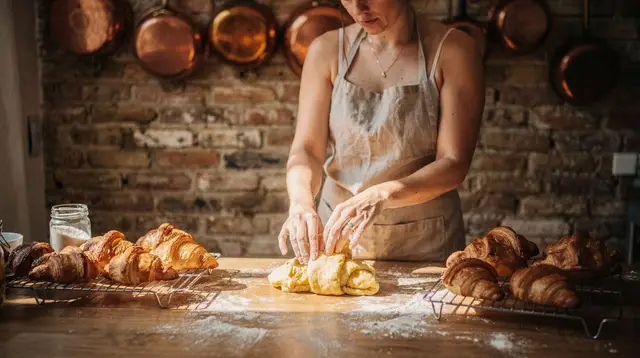
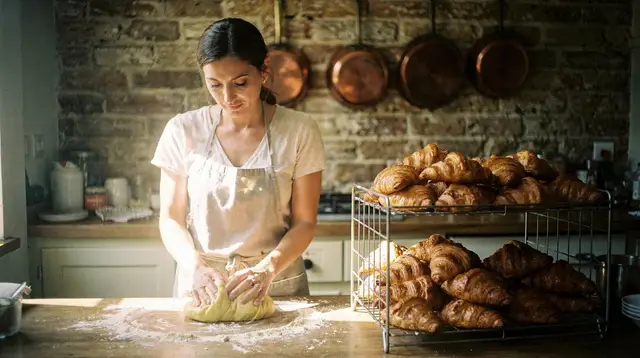
Cooking classes trade sightseeing for hands-on time in a kitchen, usually in a small group, and end with a meal you made. They suit travellers who want to slow down for half a day rather than cover more ground, and they work well alongside, not instead of, walking or museum visits.
What a cooking class adds to a Paris trip
Paris has no shortage of ways to spend a few hours: a museum, a walking tour of a neighbourhood, a boat trip on the Seine. A cooking class sits apart from all of these because it is not built around looking at things. It is built around doing one thing, in one place, for a few hours, and finishing with a meal the group made together. That trade-off — less ground covered, more time in one room — is worth naming clearly before booking, because it is the whole point of the format.
The catalogue for Paris lists 56 cooking-related activities, a small but distinct slice of the wider things to do in Paris roster that also includes walking tours, museum visits, and bike and Segway tours. Those other formats move you through the city. A cooking class, by design, does not.
Classes run out of ordinary kitchens and small studios spread across the city rather than a single dedicated district, so location is worth checking on the listing itself before booking around a particular neighbourhood. Some sit inside food-focused areas such as Le Marais or near the produce stalls of the Latin Quarter and Saint-Germain, which can make it easy to fold a short walk before or after the session without adding a separate outing to the day. A cooking class is also one of a broader family of hands-on formats sold in Paris alongside it, including perfume workshops and other creative workshops and classes — all share the same logic of trading sightseeing time for a skill-based session with a tangible result at the end.
How it differs from the rest of paris-city’s activities
It helps to place cooking classes against the other formats sold under Paris, since the catalogue groups them all under the same destination.
- Walking tours and private tours move on foot through a neighbourhood such as Montmartre or Le Marais, with a guide narrating history and pointing out landmarks. A cooking class stays in one kitchen or studio.
- Bike and Segway tours and vintage car tours are active and cover distance, often past monuments. A cooking class is seated or standing at a counter, not moving through the streets.
- Private monument visits, such as guided entries to the Louvre or Notre-Dame and Sainte-Chapelle, are about a specific building and its history. Cooking classes involve no monument at all.
- Food and wine tours, which walk between tasting stops, are the closest relative: both are built around French food culture. The difference is participation. A food tour has you tasting what others prepared; a cooking class has you preparing it yourself.
None of this makes one format better than another — it makes them suited to different days of a trip. A cooking class works well as one anchor activity on a day that otherwise stays light, rather than as a fourth stop after a morning of sightseeing.
What the format typically covers
Within the 56 listings, the differences are mostly in scope and length rather than in style. A few recurring shapes:
| Format | Typical focus | Roughly how long |
|---|---|---|
| Small-group hands-on class | A full savoury menu, cooked start to finish | A few hours |
| Dessert or pastry-focused class | French desserts or pastry technique specifically | Two to three hours |
| Class with lunch in an art gallery setting | Cooking paired with a gallery or studio setting, then a shared meal | Half a day |
| Team-building format | Group cooking activity structured for a group or corporate outing | A few hours |
Durations and inclusions vary by listing, so check the specifics on the activity itself rather than assuming one format matches another. Some classes announce a stop at a market to select produce before cooking begins; others work from ingredients already sourced. If starting at a market matters to you, look for that detail in the description before booking, since it is not universal across the 56 activities.
a hands-on class built around a small group, where everyone cooks rather than watches is a reasonable starting point if you want the fullest version of the format — a real menu, real knife work, and a meal at the end with the people you cooked alongside.
For a shorter, more focused session, a class centred on French desserts or a pastry-focused session of a couple of hours fits better into a half-day than a full menu class does.
If the setting matters as much as the cooking, a class paired with lunch in an art gallery combines the kitchen work with a different kind of room than a standard cooking studio.
Groups travelling together, including work groups, sometimes look specifically for a cooking session structured as a team activity, ending in a shared meal rather than an individual-style class. A team-building format that pairs cooking with a shared meal in an art gallery setting is built for exactly that, and it works as well for a group of colleagues as it does for a group of friends who want a structured activity rather than a free-form class.
Where a class fits against a longer Paris plan
A cooking class is easiest to place on a trip that already has some slack in the schedule, rather than one built around covering the maximum number of sights per day. On a shorter visit, such as a two-day or three-day itinerary, it competes directly with time that would otherwise go to a major sight, so it tends to work best when food is already one of the trip’s priorities — a food-lovers weekend built around markets, bakeries, and one hands-on session fits the format naturally. On a longer stay, such as four or five days in the city, there is more room to treat a cooking class as one slower afternoon among several busier ones, without it displacing a must-see landmark.
The market, if the class includes one
France’s food markets are a genuine part of daily life, not a staged backdrop, and a class that starts with a stop at one is showing you something real about how Parisians shop for a meal. If a class you are considering includes a market stop, it is worth treating that stop on its own terms: markets in Paris mostly run on cash or card depending on the stall, and carrying a small amount of cash is a sensible habit for markets generally, even when a card works at most other counters in the city. This is a small logistical note, not a reason to choose one class over another — the cooking itself is the point, and the market, where included, is simply where the ingredients start.
Service, tipping, and what a class actually costs you beyond the ticket
France sets service charges into the price of food and drink by law, and that applies to any meal served as part of a cooking class the same as it would at a restaurant. In practical terms, this means the price you pay already includes service — there is no obligatory tip to calculate on top of it. Rounding up or leaving a small amount afterward is common enough and always appreciated, but it is a courtesy, not a requirement. Anyone budgeting for a class should treat the listed price as the real price, not as a base figure with a mandatory addition on top.
Beyond that, no specific figures — ticket prices, ingredient costs, or gratuity amounts — belong in a general guide like this one, since they change and vary by listing; check the activity page itself for current pricing. For a broader sense of how tipping norms work across restaurants, cafes, and activities in the city, the tipping in Paris guide covers the same rule in more general terms, and the money, cards, and payments guide is a useful reference for how cards and cash are actually used day to day.
Who a cooking class suits, and who it doesn’t
A cooking class suits travellers who like at least one slower, participatory activity on a trip that is otherwise full of walking and queuing. It also suits anyone travelling with a food-focused itinerary already in mind, since it complements rather than duplicates a food market visit or a wine tasting. Families with older children who enjoy being in a kitchen can find it a good fit too, though checking the minimum age and format on a specific listing matters more here than for a typical walking tour.
It suits these travellers less well: anyone with a single day in Paris trying to see as much of the city as possible, since a class takes a meaningful block of that day and does not move you past any landmarks. It is also a poor fit for travellers with strict dietary needs who have not confirmed in advance that a class can accommodate them, since a set menu is harder to adjust mid-session than a restaurant order.
Booking and timing notes
Small-group and hands-on formats tend to have real caps on group size, which is part of what makes them different from a large demonstration-style class — but it also means popular time slots can fill before a walking tour equivalent would. If a class is the one fixed activity you want on a specific day of a trip, booking it ahead rather than treating it as something to decide on the day is the more reliable approach, the same logic that applies to any activity in Paris with a limited number of spots.
Classes generally run at set times rather than continuously through the day, so they anchor around a fixed slot the way a reserved museum entry does, even though no monument is involved. Building the rest of that day loosely around the class time, rather than trying to fit it between two other bookings, tends to work better in practice.
Season matters more for a cooking class than it might seem. Spring and early autumn, generally the best time to visit Paris, are reliable for this kind of indoor, scheduled activity since they are not affected by the heat that can make a hot kitchen less comfortable in peak summer. August is a specific case worth flagging: a good share of Parisians leave the city for the month, and some small, independently run food businesses close for part of it — which can affect market-based classes in particular, since a class built around a market stop depends on that market actually operating as usual. Checking that a class is running as described is a reasonable extra step for a summer booking, in a way it isn’t for most of the rest of the year.
Practical notes before booking
A cooking class is a stationary activity, so the usual Paris transport questions matter less here than for a sightseeing day — there is no need to plan a route between several stops, only one journey there and one back. Confirming the address against the class listing before the day, rather than assuming it sits in a well-known district, avoids a last-minute scramble to a studio tucked down a side street. Travellers combining a class with other food-focused plans, such as a stop at a food market elsewhere in the day, should treat the class as the fixed point and build looser plans, like a market wander, around it rather than the other way round.
Cooking classes: frequently asked questions
How long does a Paris cooking class usually run?
Formats vary from around two to three hours for a focused dessert or pastry session to a half-day that includes a market stop and a full meal. Check the exact duration listed on each activity before booking.
Do I need cooking experience to join?
No. Most classes are built for beginners and explain each step, from knife work to plating. Small-group formats mean more attention from the instructor than a large demonstration would give.
Is a market visit included?
Some classes start with a stop at a food market to choose ingredients, others work from produce already prepared in the kitchen. This is a real difference between offers, so check what each one includes.
What language are classes taught in?
Classes aimed at visitors are generally taught in English, sometimes alongside French. Confirm the language on the specific listing if it matters to you.
Do I get to eat what I cook?
Yes. Nearly every format ends with the group sitting down to eat the dishes prepared during the session, which is part of what separates this from a demonstration-only class.
Is service or a tip expected on top of the class price?
Service is included by law in French food and drink prices, including meals that are part of a class. A tip is never owed; rounding up or leaving a small amount is a personal choice, not an obligation.
Are cooking classes a good rainy-day activity?
Yes. Because the activity happens indoors in a kitchen or studio, it is one of the more reliable options when the weather turns, unlike an outdoor walking tour.
Can a cooking class replace a restaurant meal?
It can stand in for one meal, since most sessions end with the group eating what they made, but it is a different experience from dining out and is better thought of as an activity that happens to include a meal.
Paris cooking and pastry classes on GetYourGuide
Verified deep-linked GetYourGuide tours. Book through these links and we earn a small commission at no cost to you.
GetYourGuide does not provide a product photo for this activity — the image shows the meeting point, photographed by us.