Notre-Dame, Sainte-Chapelle and the Conciergerie: the Île de la Cité
Is Notre-Dame free to visit, and do you need Sainte-Chapelle tickets?
Notre-Dame de Paris reopened on 7 December 2024 and entry to the cathedral itself is free, though booking a free time slot in advance is worth doing. The tower climb is a separate, paid, reservation-only visit whose current status should be checked before you plan around it. Sainte-Chapelle and the Conciergerie, next door on the same island, are paid monuments with their own tickets.
Three monuments, one small island
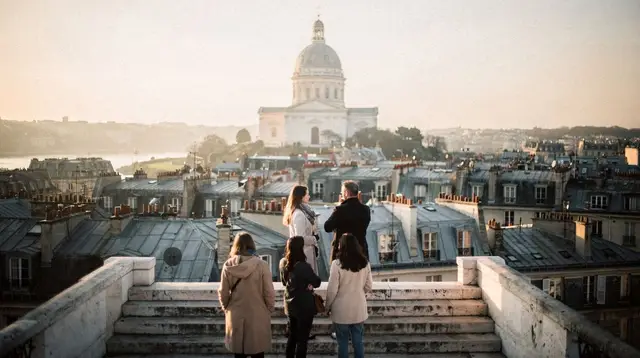
The Île de la Cité sits in the middle of the Seine, in the historic heart of Paris, roughly equidistant from the Louvre on the Rive Droite and the Latin Quarter on the Rive Gauche. It is the oldest inhabited part of the city, and three of its buildings draw most visitors: Notre-Dame de Paris, the Sainte-Chapelle and the Conciergerie. All three are within a five-minute walk of each other, and 83 products in the local catalogue cover them, from timed entry tickets to guided walks that combine two or three sites in a morning.
This page is about what these three buildings are, what it actually costs you in time to see them properly, and where the most common confusion happens — because it happens often, and getting it wrong wastes a morning.
None of the three is an art museum in the sense of the Louvre or the Musée d’Orsay. Notre-Dame is a working cathedral. The Sainte-Chapelle was built as a royal chapel to house relics. The Conciergerie was a royal palace before it became a revolutionary prison. If you came for paintings and sculpture in the way you’d visit Paris’s museums, you’re in the wrong building — these are religious and civic spaces, and the visit feels different: less wall text, more architecture and atmosphere.
Notre-Dame de Paris: reopened, and free to enter
Notre-Dame de Paris reopened on 7 December 2024, following the fire of April 2019 and more than five years of restoration. Entry to the cathedral’s nave is free. This is worth stating plainly, because outdated advice from before the reopening still circulates online, and some of it wrongly implies the cathedral is closed or that entry now costs money. Neither is true: the nave is open, and there is no admission fee to walk in and see the restored interior.
Booking a free time slot in advance is recommended, not required. It shortens your wait, especially in the middle of the day and during school holidays, but arriving without a booking does not turn you away — it just means joining the queue.
The tower climb — the separate route up toward the bell towers and gargoyles — is not the same visit as walking into the nave. It is paid, it requires its own reservation, and its current booking window and reopening status change; check directly before you plan around it, and do not assume it runs on the same schedule as the free ground-floor entry. If a listing quotes you a date or a price for the towers, treat it as provisional until you’ve confirmed it.
a guided outdoor tour of Notre-Dame that also covers the archaeological crypt and Sainte-Chapelle is one way to get context on the cathedral’s exterior and history from a guide, without needing a separate interior booking — useful if your main goal is understanding what you’re looking at rather than going inside.
For the fuller story of the fire, the restoration and what changed inside, see the dedicated Notre-Dame visitor guide.
Sainte-Chapelle: small building, tallest stained glass in Paris
A few steps from Notre-Dame, inside the walls of the Palais de la Cité, the Sainte-Chapelle is easy to walk past without noticing — it doesn’t have Notre-Dame’s scale from the outside. Inside, the upper chapel is a single room wrapped in stained-glass windows that rise the full height of the walls, telling biblical scenes in sequence. It was built in the 13th century to house relics, and unlike Notre-Dame it has never lost its original glass to fire.
Entry is paid and timed. Security screening is shared with the Conciergerie, since both sit inside the same palace complex, and the queue for that screening is often the slowest part of the visit — arriving right at opening, or booking a slot that includes skip-the-line access, saves real time here.
a Sainte-Chapelle entry ticket paired with an outdoor tour of Notre-Dame covers both sites in one booking if you don’t want the cathedral’s interior visit specifically, only its exterior and history.
Light matters here: the windows read best on a sunny morning or early afternoon. On a grey day the room is still worth seeing, just dimmer than the photos suggest. Full detail on layout, glass and timing is in the Sainte-Chapelle guide.
The Conciergerie: palace, then prison
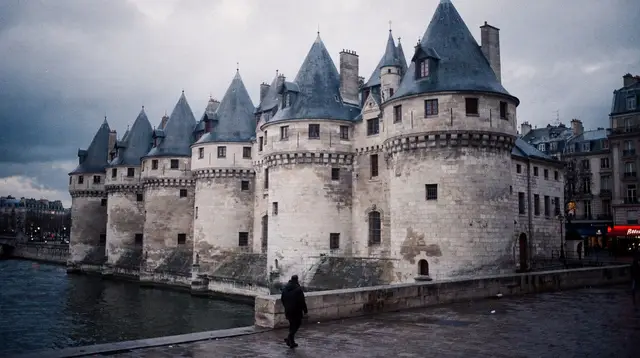
The Conciergerie occupies the lower, older part of the same complex as the Sainte-Chapelle. It began as a medieval royal palace — its Gothic hall is one of the oldest surviving in Europe — and later became a prison during the French Revolution, most famously holding Marie-Antoinette before her execution. The building carries both stories: vaulted medieval halls and a reconstructed cell block that lays out the Revolutionary period in more concrete terms than a plaque ever could.
It’s the least visited of the three, which makes it the calmest stop on the island if you’ve just come from a crowded nave or a queued chapel. A combined ticket with the Sainte-Chapelle is the most efficient way to see both, since they share an entrance area.
a guided tour that covers Notre-Dame, the Conciergerie and Sainte-Chapelle in one outing is the option built for exactly this pairing, with a guide sequencing the three sites so you’re not backtracking across the island. Details on the palace-turned-prison story are in the Conciergerie guide.
Where this island sits, and what it isn’t
The Île de la Cité is not a neighbourhood you stay in — there’s no hotel district here — it’s a destination you walk to from wherever you’re staying, whether that’s Le Marais, the Latin Quarter or Saint-Germain, or across the river. The Musée d’Orsay is on the Rive Gauche, facing the Tuileries; the Louvre is on the Rive Droite. Neither is on this island, and neither is the Eiffel Tower, which sits well to the west. If a guided-tour listing bundles the Île de la Cité with the Eiffel Tower on foot, check the transport included — it’s not a walking distance the way Notre-Dame to Sainte-Chapelle is.
a combined tour covering Notre-Dame, Sainte-Chapelle and the Louvre exists precisely because these are separate buildings in separate parts of the city, and a guide handles the walking and timing between them.
Two Seine bridges connect the island to each bank — Pont Neuf to the west, Pont au Double and others to the south and north — and a short Seine river cruise passes right alongside the island, giving you a view of the cathedral’s flying buttresses that you can’t get standing in front of it.
Booking, queues and the free-versus-paid confusion
The single most common mistake in trip planning for this island is assuming Notre-Dame now charges for entry because it’s newly restored, or assuming it’s still closed because the fire is what people remember. Neither is current. The nave is open and free. Only the towers are paid, and only the towers require the kind of advance booking people associate with major Paris sights.
| Site | Entry to main visit | Booking |
|---|---|---|
| Notre-Dame (nave) | Free | Free slot recommended, not required |
| Notre-Dame (towers) | Paid | Reservation required; status varies, check before relying on it |
| Sainte-Chapelle | Paid | Timed entry; skip-the-line options reduce the security queue |
| Conciergerie | Paid | Timed entry; often combined with Sainte-Chapelle |
The Paris Museum Pass covers both the Sainte-Chapelle and the Conciergerie, since both are state-run monuments, alongside places like the Louvre and the Château de Versailles. It does not apply to Notre-Dame’s free cathedral entry, and holding the pass does not remove the need to book a timed slot where one exists — it only removes the ticket cost.
Planning the visit
Queues build through the morning and stay heavy into the afternoon, especially at Sainte-Chapelle’s shared security checkpoint. Arriving close to opening, or booking any product that includes skip-the-line access, is the main lever you have over how much of your morning this costs you.
a private walking tour covering Notre-Dame and Sainte-Chapelle is worth considering if you’d rather set your own pace and have a guide answer questions on the spot, particularly useful for the restoration story at Notre-Dame, which changed enough in 2024 that a guide’s up-to-date account is more reliable than older written material.
Realistically, seeing all three sites without rushing takes half a day. Pair the morning with a walk into the Latin Quarter for lunch, or continue toward the Louvre on the Rive Droite if your afternoon allows it. For a broader sense of how this fits into a longer stay, see how many days in Paris and the three-day Paris itinerary, both of which place the Île de la Cité early in a visit.
If it’s your first trip, the first-time visitors guide covers how this island fits with the rest of central Paris, and things to do in Paris is the wider list this page sits inside. Crowds on the island mean pickpocket attention too, in line with what’s noted for other busy monument areas in the Paris scams and pickpockets guide.
Getting there and getting around
The island is reachable on foot from both riverbanks, and by metro to Cité or Saint-Michel–Notre-Dame stations, part of the wider network covered in the Paris metro guide. There’s no need for a car or taxi to move between these three sites — everything described here is within a five-minute walk, and the island itself is largely pedestrian around the monuments.
Notre-Dame, Sainte-Chapelle and Conciergerie: your questions
Is Notre-Dame open again after the fire?
Yes. Notre-Dame de Paris reopened to visitors on 7 December 2024, after more than five years of restoration following the 2019 fire. The cathedral is open for visits and services.
Do you have to pay to go inside Notre-Dame?
No. Entry to the cathedral’s nave is free. Booking a free entry time slot in advance is recommended to avoid the queue, but there is no ticket price for the main visit.
Can you go up the towers of Notre-Dame?
The tower climb is a separate visit from the free cathedral entry, and it is paid and reservation-only. Its exact reopening status and booking process change, so check current availability directly before including it in a plan.
What is the difference between Notre-Dame, Sainte-Chapelle and the Conciergerie?
Notre-Dame is a working Catholic cathedral. Sainte-Chapelle is a former royal chapel known for its stained-glass windows. The Conciergerie is a former royal palace and revolutionary-era prison. All three sit on the Île de la Cité, within a short walk of each other, but each has separate entry and separate tickets.
Is the Paris Museum Pass accepted at these three sites?
The Paris Museum Pass covers Sainte-Chapelle and the Conciergerie, since they are state monuments. Notre-Dame’s free cathedral entry does not require the pass. The pass does not remove the need to reserve a timed slot where one is required.
Where exactly is the Île de la Cité?
The Île de la Cité is one of two natural islands in the Seine, in the historic centre of Paris, roughly between the Louvre on the Rive Droite and the Latin Quarter on the Rive Gauche. It is walkable from both riverbanks.
Are these monuments museums?
No. Notre-Dame and Sainte-Chapelle are working or former religious buildings, and the Conciergerie is a former palace and prison turned historic monument. None of the three is an art museum, unlike the Louvre or the Musée d’Orsay.
How much time should you set aside for the Île de la Cité?
A visit to Notre-Dame’s nave, Sainte-Chapelle and the Conciergerie together, without a guided tour, typically fills half a day once queueing and walking between the three sites is included.
Arc de Triomphe and Paris landmark tickets on GetYourGuide
Verified deep-linked GetYourGuide tours. Book through these links and we earn a small commission at no cost to you.
GetYourGuide does not provide a product photo for this activity — the image shows the meeting point, photographed by us.