Paris museum tours: what's worth booking and what to skip
Do I need to book Paris museum tickets in advance?
Yes for the Louvre, which requires a reserved time slot every day it is open, including for Paris Museum Pass holders. The Musee d'Orsay and most other museums allow booking ahead but are more flexible for walk-ins outside peak hours.
Paris has more art than any one trip can cover
Paris runs roughly 85 bookable museum and art products across the catalogue, from the Louvre and the Musee d’Orsay to smaller specialist collections. That range is the problem as much as the appeal: a first-time visitor can lose an entire trip trying to see everything, and a poorly timed visit can mean standing in a line that a reserved slot would have skipped entirely. This guide sorts out what is worth booking, what time slots actually require, and where the Paris Museum Pass helps and where it does not.
It does not cover Notre-Dame and the Sainte-Chapelle, which are religious monuments rather than art museums and are handled separately, and it does not cover Eiffel Tower logistics, which live on their own page. What follows is strictly museums and galleries.
The Louvre: book a time slot, always
The Louvre is the anchor of any Paris museum itinerary and, at 146 products in the catalogue, the single most heavily booked site. Two facts matter more than any other detail:
- The Louvre is closed on Tuesdays. It is open the rest of the week.
- A reserved entry time slot is required for every visit, on every open day, and this applies even to Paris Museum Pass holders. The pass covers the cost of entry; it does not replace the need to book a slot.
This second point trips up more visitors than the closing day does. People assume that owning a pass, whether the Paris Museum Pass or a paid skip-the-line ticket, means they can simply show up. At the Louvre, they cannot. The building has to manage the number of people entering at any given hour, and that number is set by the timed reservation system, not by whether an entry fee has already been paid.
A standard guided highlights tour runs around two hours and covers the building’s best-known works without trying to see everything. If you want to explore galleries at your own pace afterward, some tickets include extended access once the guided portion ends. Either way, book the entry slot days or weeks ahead in high season; slots for popular times fill up well before the visit date.
a Paris Museum Pass covering entry to the Louvre and more than 50 other sites is worth considering if you plan to see several museums and monuments across your stay, but treat it as a way to prepay entry fees, not as a way to avoid booking the Louvre’s own time slot.
Musee d’Orsay: closed Mondays, more forgiving otherwise
The Musee d’Orsay sits on the Rive Gauche, across the Seine from the Tuileries, and holds the city’s main collection of Impressionist and post-Impressionist painting. It is closed on Mondays, the mirror image of the Louvre’s Tuesday closure, which makes it easy to confuse the two if you are not paying attention while planning a two-museum week.
Orsay is smaller than the Louvre and generally faster to move through: two to three hours covers the main galleries comfortably. Advance booking is recommended, particularly for the first hour after opening and around midday, but the museum is somewhat more workable for a same-day ticket outside those windows than the Louvre is. Still, if a specific date matters to your itinerary, book ahead rather than relying on availability at the door.
The catalogue lists the Musee d’Orsay’s tours under the Latin Quarter and Saint-Germain grouping, reflecting its location on that side of the river rather than any connection to the Latin Quarter’s own sights.
The Paris Museum Pass: what it actually buys you
The Paris Museum Pass is sold in 2, 4 or 6 consecutive-day versions and covers entry to more than 50 museums and monuments in Paris and the wider region, including the Louvre, Orsay, the Musee de l’Orangerie, the Arc de Triomphe, the Sainte-Chapelle and the chateau of Versailles. For a visitor planning several full-price museum days, it can add up to real savings, and it removes the need to queue at ticket counters at most sites.
What it does not do is remove the Louvre’s separate booking requirement. Pass holders still need to reserve an entry time slot for the Louvre before they arrive; the pass pays the entry fee once that slot is used. Skipping this step is the most common reason pass holders end up turned away or stuck waiting outside.
The pass is a poor fit for a short trip focused on one or two sites, since a single Louvre ticket or a Louvre-and-Orsay combination is usually cheaper bought separately. It earns its cost on a longer stay that mixes major museums with smaller monuments across several days.
The Musee de l’Orangerie and other smaller collections
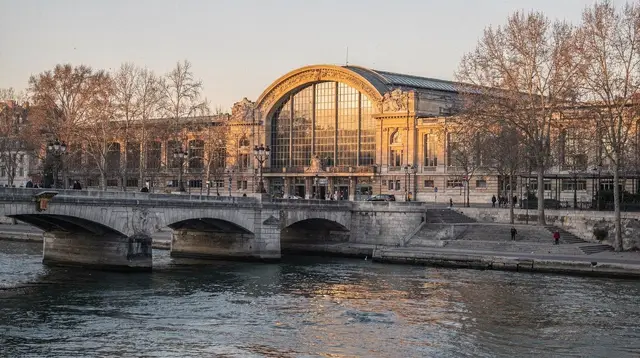
Just across the Tuileries from the Louvre, the Musee de l’Orangerie holds Monet’s large Water Lilies panels in two oval rooms built for them, plus a smaller collection on the floor below. It is compact enough to see properly in an hour and pairs naturally with a Tuileries walk or a Musee d’Orsay visit on the same day, since it sits between the two.
Paris also has smaller specialist museums worth knowing about even though the catalogue lists few or no bookable products for them individually: the Rodin Museum, the Picasso Museum, and a handful of others covered on the best museums in Paris page. These tend to be less crowded and rarely need advance booking outside peak season, which makes them a good way to fill a quieter afternoon between the two headline museums.
Rodin Museum and Picasso Museum: two smaller collections worth a dedicated stop
Beyond the Louvre-Orsay-Orangerie cluster, two smaller museums reward a dedicated visit rather than a rushed add-on. The Rodin Museum is built around a sculpture garden as well as an indoor collection, which makes it a good pick for visitors who want a slower, more outdoor-feeling museum stop than the Louvre’s crowded galleries allow. The Picasso Museum, by contrast, sits inside a historic mansion in Le Marais rather than a purpose-built gallery space, so it pairs naturally with an afternoon spent walking that neighbourhood’s streets rather than with another full museum day.
Neither museum carries the same booking pressure as the Louvre or the Musee d’Orsay. Both are manageable on a same-day basis outside the busiest stretches of summer, which makes them a useful way to fill a half-day that would otherwise go unplanned, especially on a trip that already has its Louvre and Orsay days locked in.
Louvre or Musee d’Orsay first, if you can only pick one
Visitors with limited time sometimes have to choose between the Louvre and the Musee d’Orsay rather than fitting in both. The full comparison lives on the Louvre versus Musee d’Orsay page, but the short version follows from what each museum is built for: the Louvre rewards visitors who want the widest possible sweep of art history in one building, while the Musee d’Orsay suits visitors whose main interest is Impressionist and post-Impressionist painting and who would rather spend half a day than a full one.
Neither choice is wrong, and the decision matters less than it might seem on a longer trip, since both museums fit comfortably into a three-day Paris itinerary alongside a day spent on neighbourhoods rather than galleries. It only becomes a real trade-off on a one- or two-day visit, where a single museum day has to carry the whole art-focused portion of the trip.
What to skip: the Centre Pompidou
The Centre Pompidou is closed for a multi-year renovation, with reopening not expected until around 2030. It does not belong on a 2026 itinerary, and no product in the catalogue should be booked expecting access to it. If you have an old guidebook or a list built before the closure, cross it off; sending a reader there is the single most avoidable mistake on this page.
Montmartre’s museums and studios
Montmartre has its own smaller art scene, tied to its history as an artists’ neighborhood, with studio-museums and walking tours that focus on that history rather than a single large collection. These sit outside the Louvre-Orsay axis and work well as a lower-key add-on once the two major museums are done; see the dedicated Montmartre art and museum tours page for that side of the neighborhood.
Museum-adjacent experiences: fashion, perfume and wax
Not every art-related booking in Paris is a painting collection. A few products blend a museum visit with a themed experience: a combined perfume museum visit with a fashion show and chocolate tasting pairs a small specialist museum with a lighter, more sociable format than a standard gallery walk. Similarly, a tour built around the history of fashion and costume in Paris works as an alternative for visitors whose interest runs more toward design history than painting.
At the lighter end, the Grevin wax museum is a different kind of attraction entirely, more entertainment than fine art, and better suited to families or a rainy afternoon than to a serious museum day. It is worth knowing about mainly so it is not confused with the city’s art collections when comparing options.
For visitors who want to see the Louvre’s neighborhood on the move rather than only on foot, a walking-paced guided route linking several museums and landmarks can work as a way to get oriented before choosing which collections to book in full.
Planning a museum-focused day or two
A workable two-day museum plan looks roughly like this: one day for the Louvre, booked with its own time slot and nothing else scheduled tightly around it, since queues and gallery walking eat more time than planned; a second day combining the Musee d’Orsay in the morning with the Musee de l’Orangerie in the early afternoon, given their short walking distance apart, with room left over for a smaller collection or a Montmartre studio visit if energy allows.
| Site | Closed | Booking needed | Typical visit length |
|---|---|---|---|
| Louvre | Tuesdays | Time slot required, every visit | 2–4 hours |
| Musee d’Orsay | Mondays | Recommended, more flexible | 2–3 hours |
| Musee de l’Orangerie | Tuesdays | Recommended | About 1 hour |
| Centre Pompidou | Closed for renovation (until around 2030) | Not applicable | Not applicable |
Trying to fit the Louvre, Orsay and a third site into a single day is possible only if you move quickly and skip lingering in any one gallery. Most visitors get more out of spreading these across two or three days and treating each museum as its own outing rather than a stop on a checklist.
Getting there and combining with the rest of the trip
Both the Louvre and the Musee d’Orsay sit within easy reach of central Paris on the metro and RER network, and neither requires a special trip outside the city. If museums are the centerpiece of your visit, see the how many days in Paris guide for how to balance them against the rest of the city, and the three days in Paris itinerary for one way to sequence a museum day alongside walking neighborhoods like Le Marais and the Ile de la Cite.
Museum days also work as a natural fallback for a rainy day in Paris, since every site on this page is indoors and unaffected by weather. If the budget is tight, the free museums in Paris page is worth checking before assuming every collection needs a paid ticket. Visitors travelling with limited mobility should check the Louvre and Versailles with limited mobility guide and the notes on using the metro with a wheelchair or stroller, since gallery layouts and station access vary more than the booking rules do.
For visitors who would rather see the Louvre’s neighbourhood on foot before settling on which collections to book, a walking-paced route that ends at the museum can work as an orientation lap for a lower-key first day, leaving the more focused museum visits for once you know which collections are worth the extra time.
Museum visits in Paris: frequently asked questions
Which day is the Louvre closed?
The Louvre is closed on Tuesdays. It is open the rest of the week, and a reserved time slot is required for every visit.
Which day is the Musee d’Orsay closed?
The Musee d’Orsay is closed on Mondays.
Does the Paris Museum Pass let me skip the Louvre queue without a reservation?
No. The pass covers entry fees at more than 50 museums and monuments over 2, 4 or 6 consecutive days, but the Louvre still requires its own reserved time slot even for pass holders.
Is the Centre Pompidou open?
No. The Centre Pompidou is closed for a multi-year renovation, with reopening expected around 2030. It is not a current option for a Paris museum visit.
How long does a Louvre visit take?
Most visitors spend two to four hours inside. A guided tour focused on the highlights runs closer to two hours; seeing the museum in depth takes a full day.
Is the Musee d’Orsay or the Louvre better for a first visit?
The Louvre has the larger, more famous collection and takes longer to see; the Musee d’Orsay is smaller, focused on Impressionist and post-Impressionist art, and can be done comfortably in half a day.
Can I visit both the Louvre and the Musee d’Orsay in one day?
It is possible but tiring, since each deserves at least half a day. Splitting them across two days gives a more comfortable pace.
Where is the Musee d’Orsay located relative to the Louvre?
The Musee d’Orsay sits on the Rive Gauche, facing the Tuileries across the Seine, while the Louvre is on the Rive Droite.
Is the Musee de l’Orangerie covered by the Paris Museum Pass?
Yes. The Musee de l’Orangerie is one of the more than 50 museums and monuments covered by the Paris Museum Pass, alongside the Louvre, the Musee d’Orsay, the Arc de Triomphe, the Sainte-Chapelle and the chateau of Versailles.
Where is the Picasso Museum in Paris?
The Picasso Museum is in Le Marais, in a historic mansion rather than a purpose-built gallery, which makes it a natural stop to pair with a walk through that neighbourhood.
Louvre, Orsay and Paris museum tours on GetYourGuide
Verified deep-linked GetYourGuide tours. Book through these links and we earn a small commission at no cost to you.
GetYourGuide does not provide a product photo for this activity — the image shows the meeting point, photographed by us.