Free things to do in Paris
What can you actually do for free in Paris?
Walking the Seine and its bridges, crossing neighbourhoods like Montmartre and Le Marais, and standing on the parvis in front of Notre-Dame de Paris or the Sacré-Cœur cost nothing. Notre-Dame's nave itself is free to enter since its 2024 reopening, though its towers are a separate, paid, bookable visit.
What “free” actually means in Paris
Paris doesn’t charge an entry fee to exist. You can walk its streets, cross its bridges, and stand in front of its most photographed buildings without paying anything. What this page covers is exactly that: outdoor, street-level activities that cost nothing — not the free museums, which have their own list, and not general money-saving tactics for the whole trip, which live on the budget guide. This is a list of specific places to walk to and stand in, with the real catch attached to each one, because most of them have one: a booking slot, a crowd, or a pickpocket risk.
Walking the Seine and its bridges
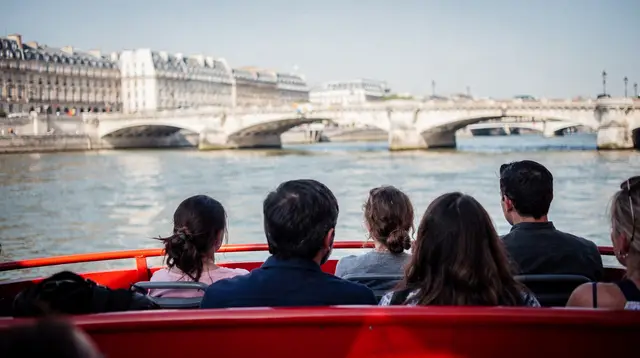
The stretch of riverbank between the Eiffel Tower and the Ile Saint-Louis is inscribed as a UNESCO World Heritage site (“Paris, banks of the Seine,” 1991), and you can walk the whole thing without paying for anything. Start at the lower quays near the Eiffel Tower, cross toward Ile de la Cité past Notre-Dame, and keep going to Ile Saint-Louis. Along the way you cross some of the city’s most recognisable bridges: Pont Alexandre III with its gilded statues, the pedestrian Pont des Arts, and the smaller bridges linking the two islands.
The lower quays flood periodically and close without much notice — if a section is gated off, the upper street-level embankment runs parallel and gets you to the same places. Evenings are calmer than midday, when tour groups and the paid Seine river cruises queues bunch up the departure points near the Eiffel Tower and Pont Neuf. You don’t need a cruise ticket to enjoy the river — the walk is a genuinely different, and free, way to see the same water.
Crossing Montmartre on foot
Montmartre is a Paris neighbourhood, not a separate town requiring transport or a ticket — you walk into it from the metro like any other part of the city. The appeal here is the streets themselves: steep staircases, ivy-covered buildings, the vineyard on Rue Saint-Vincent, and the view that opens up as you climb toward the top of the hill.
The parvis in front of the Sacré-Cœur basilica is free and gives one of the widest rooftop views over Paris without paying for a viewing platform. That’s the free part. What costs money in Montmartre is specific: guided Montmartre walking tours, the funicular if you don’t want to climb the stairs, and any paid interior visit. The area around the steps up to the basilica is also one of the most reported spots for the “friendship bracelet” scam — someone ties a bracelet onto your wrist uninvited and then demands payment. Walk past, don’t stop, don’t extend your wrist.
Place du Tertre, the small square just behind Sacré-Cœur, is free to walk through, though the portrait artists working there charge for a sketch or portrait if you want one — that’s a paid transaction you can simply decline.
Crossing Le Marais
Le Marais is the other neighbourhood worth walking end to end for free: narrow medieval streets, the arcaded Place des Vosges, and a mix of historic hôtels particuliers (townhouses) now used as embassies, galleries, and shops. None of it requires an entry fee to walk through. Place des Vosges itself, one of the oldest planned squares in Paris, is a public park — free to sit in, no ticket gate.
What costs money in Le Marais is specific and optional: guided food tours, gallery entry where a gallery charges, and shopping on Rue des Rosiers and Rue des Francs-Bourgeois. On Sundays, when much of Paris closes, Le Marais is one of the touristic zones where shops stay open — a useful thing to know if you’re timing a visit around a closed city.
Notre-Dame de Paris: what’s actually free
Notre-Dame de Paris reopened on 7 December 2024 after the 2019 fire, and entry to the cathedral’s nave — the restored interior itself — is free. This is worth stating plainly because it’s easy to assume a landmark this significant, freshly restored, must charge for entry. It doesn’t. Booking a free time slot in advance is recommended given how much demand there still is to see the interior, but the entry itself costs nothing.
What is separate, and paid, is a visit to the towers — the climb that gives a rooftop view over Ile de la Cité and the surrounding rooftops. That’s sold and booked on its own system, distinct from the free nave entry, and its current status (open, closed, under what booking rules) is worth checking directly before you plan around it, since it has changed more than once since the fire.
Outside, the parvis in front of the cathedral’s façade is public space, free to stand in at any hour, and gives the classic front-on view of the towers and rose window without needing to go inside at all. It’s also one of the more crowded pickpocket spots on Ile de la Cité, alongside the approaches to the Sainte-Chapelle — keep bags zipped and in front of you in the crush.
A free (or nearly free) way to see Paris on the move
If walking isn’t the pace you want, a small number of bookable options are pitched as free or low-cost: a free-format sightseeing walk built around film locations, or a themed walking tour through a specific chapter of Paris history. These aren’t the neighbourhood walks above — they’re guided, scheduled, and run by an operator, but they cost nothing or close to nothing to join.
a free-format walking tour built around Paris film locations covers ground you’d otherwise have to map yourself, with a guide who knows which corner shows up in which film. For something with more historical framing, a themed walking tour through the story of the French Revolution moves through real Paris streets rather than a museum room.
For covering more ground in less time without the cost of a car or taxi, a guided bike tour of Paris is a paid option worth flagging here because it changes what’s reachable in a single free afternoon — you can pair it with a walk through Le Marais or along the Seine without the whole day going to transit.
If you’re staying in the Bastille area in the evening and want a low-cost social option after a day of free sightseeing, a Bastille quarter pub crawl with free shots and club entry included is a paid ticket but bundles several venue entries that would otherwise cost separately.
Other free corners worth the detour
A few smaller free stops round out a day built around walking rather than paying:
- The Latin Quarter and Saint-Germain-des-Prés area rewards aimless walking — narrow streets around Rue Mouffetard, the Sorbonne’s exterior, and the Luxembourg Gardens’ public paths (the garden itself is free; specific facilities inside sometimes aren’t).
- Canal Saint-Martin, further from the main tourist core, is a free waterside walk with none of the Seine’s crowds.
- Window displays and building façades along the Champs-Élysées cost nothing to look at, even if most of what’s inside does.
None of these need a booking, a ticket, or advance planning — which is also why they’re easy to skip when a trip fills up with paid, timed activities. Building at least one loose, unscheduled afternoon around a neighbourhood walk is often the simplest way to actually use this list.
Free parks and gardens beyond the big names
Public gardens are the most consistently overlooked free option in Paris, because they sit right next to paid attractions and get treated as a passageway rather than a destination. The Luxembourg Gardens, already mentioned above, are worth a slower visit on their own — benches, the central pond where children still sail toy boats, and gravel paths that stay quiet on weekday mornings even when the rest of the city is busy. The Tuileries, between the Louvre and Place de la Concorde, work the same way: free to walk through, with views back toward the museum’s glass pyramid that cost nothing to photograph.
Further out, the Promenade Plantée (also called the Coulée Verte), an elevated former railway line turned linear park near Bastille, is a free walk above street level with a very different view of the city than the riverbank routes. It’s quieter than most of the free spots on this list, which makes it a reasonable option on a day when you’ve already done the crowded version of Paris and want something calmer. None of these gardens require tickets, opening-hour bookings, or a specific season — they’re open most of the year, though exact closing times shift with daylight and are worth checking on-site rather than assuming.
Free things to do with limited time
If you’re only in Paris for a day or two, free activities are worth sequencing deliberately rather than squeezing in as an afterthought — the one day in Paris and two days in Paris itineraries both build in a walking block for exactly this reason. A single loose morning is usually enough to cover one neighbourhood properly — Montmartre or Le Marais, not both — plus a stretch of the Seine, rather than trying to hit every free spot on this page in one pass. Travellers building a longer trip around a tighter budget can see how these free blocks fit into a fuller day-by-day plan on the Paris on a budget in three days itinerary, which pairs them with the cheapest paid options rather than treating “free” and “paid” as separate trips.
First-time visitors in particular tend to over-schedule paid, timed entries and leave no slack for the free stuff, which ends up being some of what people remember most from the trip — see the broader planning notes on the guide for first-time visitors for how much unscheduled time is worth keeping open.
Free things to do in Paris, at a glance
| Activity | Cost | The real catch |
|---|---|---|
| Walking the Seine riverbanks | Free | Lower quays close when the river floods |
| Crossing Montmartre on foot | Free | Steep climb; pickpocket risk near Sacré-Cœur steps |
| Crossing Le Marais on foot | Free | Some streets very crowded on weekend afternoons |
| Notre-Dame de Paris (nave) | Free | Towers are a separate, paid, bookable visit |
| Sacré-Cœur parvis view | Free | ”Friendship bracelet” scam works this exact spot |
| Place des Vosges | Free | Nothing — genuinely a public park |
| Themed walking tours (film locations, history) | Free or low-cost, booked | Fixed schedule, not spontaneous |
Where the crowds and the risk sit
None of the free activities above are dangerous in the sense of being unsafe places to be — see the fuller picture on whether Paris is safe for tourists. The risk that comes with “free and famous” is crowd-based: pickpockets work dense foot traffic, not empty streets. The specific spots to keep bags closed and stay alert are the approaches to the Eiffel Tower, the Louvre’s exterior queues, the steps and parvis around Sacré-Cœur, and the packed carriages of metro line 1 and RER B. A longer rundown of the common scams, including the bracelet trick and the fake petition, is on the dedicated scams and pickpockets guide.
Contextualised FAQ: free things to do in Paris
Is Notre-Dame de Paris free to visit?
Entry to the cathedral’s nave is free. Notre-Dame reopened on 7 December 2024 after the 2019 fire, and walking in to see the restored interior doesn’t require a ticket, though booking a free time slot in advance is recommended. The towers are a separate paid visit on their own booking system — check current status before planning around them.
Can you go inside Sacré-Cœur for free?
The basilica’s exterior and the parvis in front of it, with the rooftop view over Paris, cost nothing. We’re not covering interior museum-style visits here since this page is about free outdoor and street-level activities, not the free-museums list.
Is walking along the Seine worth it if you’re not paying for a cruise?
Yes. The riverbanks between the Eiffel Tower and Ile Saint-Louis are UNESCO-listed and walkable end to end for free, crossing bridges like Pont Alexandre III and the Pont des Arts along the way. A paid cruise adds a different, seated view, but it’s not required to enjoy the river.
Are Montmartre and Le Marais free to visit?
Both are Paris neighbourhoods, not separate destinations needing a ticket or special transport — you walk into them like any other part of the city. What costs money there are specific paid activities (guided tours, workshops, the Sacré-Cœur dome climb), not the neighbourhoods themselves.
Do you need to book anything in advance for these free activities?
For Notre-Dame’s nave, booking a free entry slot in advance is recommended even though it costs nothing. For everything else on this list — river walks, neighbourhood strolls, standing on a parvis — no booking exists because there’s nothing to book.
Where are pickpockets most active among these free spots?
The crowded approaches to the Eiffel Tower and the Louvre, the steps up to Sacré-Cœur, and packed metro lines (line 1 and RER B in particular) see the most reported pickpocketing. None of that means avoiding these places — it means keeping bags closed and valuables out of back pockets in a crowd.
Is it worth combining these free activities into one day?
It depends on the neighbourhoods you pick — Montmartre and the Seine riverbanks near Ile de la Cité are walkable together, but crossing the whole city on foot in one day eats hours you could spend elsewhere. Group free activities by area rather than by list order.
Budget-friendly Paris activities on GetYourGuide
Verified deep-linked GetYourGuide tours. Book through these links and we earn a small commission at no cost to you.
GetYourGuide does not provide a product photo for this activity — the image shows the meeting point, photographed by us.