Two days in Paris: monuments, then Montmartre and the Marais
Day one of this itinerary covers the monuments nearly every first visit to Paris is built around: the Eiffel Tower, the Louvre, Île de la Cité and a Seine cruise. Day two takes a different shape entirely. Instead of adding a second list of sights, it slows down into two neighbourhoods on foot — Montmartre in the morning, Le Marais in the afternoon and evening — both on the Right Bank, both reachable without ever touching the RER. The result reads as one continuous trip: from the monumental scale of day one to the lived-in streets of day two, never doubling back to the Louvre or repeating ground already covered.
This is not the same trip as a Paris weekend itinerary, which compresses fewer destinations into less time. Here, the pace stays brisk enough to finish the core monument list on day one, which is what frees up day two entirely for neighbourhood walking rather than another round of ticketed sites.
Base yourself somewhere central for these two days — both days stay inside Paris proper, so a hotel near the Louvre, Saint-Germain or the Marais itself cuts down on transfer time more than a location further out would. See where to stay in Paris for how the different arrondissements compare, or where to stay in Le Marais if you would rather be inside day two’s neighbourhood from the start. This itinerary assumes you arrive with your hotel already sorted; for the trip in from the airport, see Paris airport transfers.
Day 1: Eiffel Tower, Louvre, Île de la Cité and the Seine
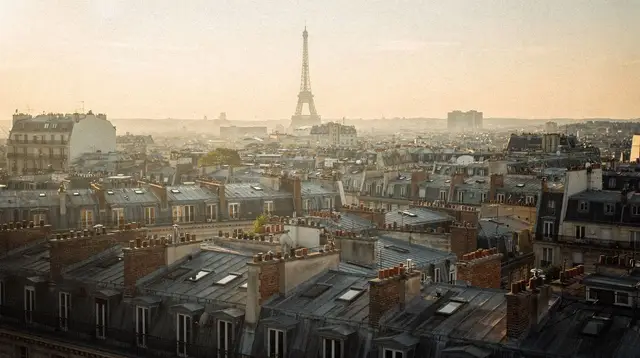
Start early at the Eiffel Tower. Booking a timed slot in advance is worth doing regardless of whether you plan to go up — the queue for same-day tickets can eat an hour or more. The tower itself dates to the 1889 World’s Fair and stands roughly 330 metres including its antennas; the second floor is reachable by lift or stairs, the summit by lift only. Across the river, the Trocadéro terraces give the classic wide view back at the tower, useful for photos before the crowds thicken.
From there, head toward the Louvre. This is the one non-negotiable booking of the whole two days: entry requires a reserved time slot, museum pass or not, and the museum is closed on Tuesdays — check the day of your visit before locking in a date for this itinerary. A guided visit is the efficient option for a first pass, since the collection is too large to see unguided in a morning. See Louvre museum tickets and tours for how the entry system works, or read the fuller Louvre museum guide for what to prioritise once inside.
a guided morning visit of the Louvre’s main collectionsAfter the Louvre, walk through the Tuileries toward the river and cross to Île de la Cité. Notre-Dame de Paris reopened on 7 December 2024 after the 2019 fire, and entry to the cathedral is free — reserving a free slot in advance still saves time at the door. The towers, if you want to climb them, are a separate paid and reservation-based visit; confirm their current booking status before planning around them, since that has changed more than once since the reopening. The same island holds the Sainte-Chapelle and the Conciergerie, both worth a look if the afternoon allows it. Full context on all three: Notre-Dame and Sainte-Chapelle tours.
a guided tour of Notre-Dame’s art, history and symbolismFor visitors who would rather bundle the day’s three big stops into one guided outing instead of booking each separately, a combined Notre-Dame, Sainte-Chapelle and Louvre tour covers the same ground in one block.
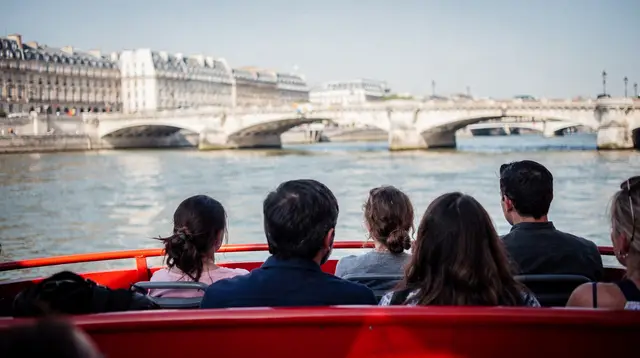
a combined tour taking in Notre-Dame, Sainte-Chapelle and the LouvreClose the day on the Seine. A river cruise is the easiest way to see the riverbanks between the Eiffel Tower and Île Saint-Louis, a stretch inscribed on the UNESCO World Heritage list since 1991. An evening cruise, dinner cruise included, works well as a low-effort finish after a day of walking and queuing. See Seine river cruises in Paris for the difference between a short sightseeing cruise and a full dinner cruise.
an evening dinner cruise on the Seine with a glass of champagneVisitors doing multiple museums over the two days, or planning a longer stay, should compare the cost of individual tickets against the Paris Museum Pass, which covers entry to more than 50 museums and monuments across Paris and the wider region over 2, 4 or 6 consecutive days — it does not, however, remove the need to book a Louvre entry slot separately.
By the time the cruise ends, day one has covered the itinerary’s entire ticketed-attraction budget — which is deliberate. Anyone tempted to squeeze in a sixth stop before dinner should resist: the two remaining sites on day two, Sacré-Cœur and the Marais’s smaller museums, are free or low-cost to enter and reward slower pacing far more than a rushed extra monument would.
Day 2: Montmartre in the morning
Day two leaves the museum circuit behind entirely. Montmartre is best walked in the morning, before the streets around Sacré-Cœur and the Place du Tertre fill up. The basilica sits on the highest point in Paris, and the walk up through the surrounding streets — steep, cobbled, occasionally crowded with artists selling portraits in the square — is the point as much as any single sight. This is the one part of the two days where pickpocket awareness matters more than usual: keep bags closed and be wary of anyone offering a “friendship bracelet” near the church steps, a known scam in this specific spot.
Metro access is straightforward from central Paris; there is no need for a car or an RER connection anywhere on this itinerary. For a slower half-day built around the neighbourhood rather than a single landmark, see Montmartre walking tours or the broader things to do in Montmartre.
Breakfast is worth timing around the neighbourhood rather than rushing it: Montmartre’s cafés fill up with day-trippers by mid-morning, so an early coffee near the base of the hill, before the climb to Sacré-Cœur, tends to be quieter than anything found closer to the Place du Tertre. Visitors who want a themed angle on the morning rather than a general walk — art history, or the neighbourhood’s food and wine scene specifically — can compare Montmartre food and wine tours against the general walking tour linked above.
Day 2: Le Marais in the afternoon and evening
From Montmartre, take the metro south to Le Marais, a short ride and a complete change of register. Where Montmartre trades on hilltop views and artist-square atmosphere, Le Marais is flat, dense, and built for wandering between historic mansions, small galleries and independent shops without a fixed list of stops. It is also one of the neighbourhoods where Sunday shopping stays open, as an internationally touristic zone, if your two days happen to fall on a weekend.
Food is a good organising principle for the afternoon: falafel stands, pastry shops and wine bars sit close enough together that a loose crawl works better than a single sit-down meal. See Le Marais walking tours for a structured route through the neighbourhood’s older streets, or Le Marais food tours if eating is the priority for the evening.
This is also a good point, if two days has only whetted the appetite, to look at what a longer stay would add — see three days in Paris for how a third day typically gets used, or best day trips from Paris for what lies beyond the city once the core sights are done.
Keep the evening loose rather than booking a second reservation on top of dinner: Le Marais’s bars and small squares work well for wandering without a plan, and nothing on this itinerary requires being anywhere specific after the food crawl winds down. Note also that August thins out the neighbourhood in a way most visitors do not expect — plenty of small, independent shops and restaurants close for the month while their owners take their own holiday, so a Marais evening planned for late summer benefits from checking opening hours rather than assuming a favourite spot will be open.
Getting around: metro only, no RER needed
Every stop across both days sits inside Paris proper, so the city’s 16 metro lines are all this itinerary requires — no RER, no car, no need to think about airport transfers until the trip’s edges. A Navigo Easy card loaded with tickets, or a phone equivalent, covers the whole two days without needing to work out ticket types on the fly. For a fuller rundown of how the ticket system works since the January 2025 reform, see the Paris metro guide and Paris metro tickets and Navigo guide.
Driving is not worth considering for this itinerary: parking in central Paris is difficult, the low-emission zone requires a Crit’Air sticker, and nothing on either day is faster by car than by metro or on foot.
Since the January 2025 reform, single tickets come in two forms — a Metro-Train-RER ticket and a separate Bus-Tram ticket — both loaded onto a Navigo Easy card or a phone rather than sold as the old paper carnet. Visitors staying several days and riding often are usually better off with a weekly Navigo pass, which runs Monday to Sunday rather than from the day of purchase, or with a Paris Visite pass aimed specifically at short-stay tourists. Either covers every ride this itinerary needs without having to think about which ticket type applies to which leg of the day. For a wider comparison of getting around without the metro at all, see metro vs taxi in Paris.
Where this itinerary fits
Two days compresses the essential monuments into one focused day and gives the second entirely to neighbourhood texture — deliberately different from a shorter weekend visit, which typically has to drop one side or the other. If your schedule allows a third day, it usually goes to a single major excursion, such as Versailles, rather than a third neighbourhood inside Paris; see how many days in Paris for how that trade-off is usually made.
A handful of practical notes carry across both days. Tipping is not expected the way it is in some other countries — service is already built into café and restaurant prices, and rounding up or leaving a few coins is a courtesy rather than an obligation; see tipping in Paris for how that plays out at a sit-down dinner versus a quick coffee. Sunday can also catch first-time visitors out: plenty of ordinary shops close, though the touristy stretches around the Marais and the Champs-Élysées stay open, so day two’s Marais afternoon is unaffected either way — see Paris on a Sunday if the rest of the trip runs into a Sunday too. Tap water is safe to drink throughout, including from the green Wallace fountains dotted around both neighbourhoods, which is worth knowing on a day spent mostly on foot.
FAQ: planning two days in Paris with Montmartre and the Marais
Is two days enough to see Paris properly?
Two days is enough to cover the essential monuments and add two contrasting neighbourhoods, but it is a full pace with no slack for long waits. Visitors who prefer a slower rhythm should look at three days in Paris instead.
Do I need to reserve a time slot for the Louvre?
Yes, the Louvre requires a reserved entry slot even for a guided visit, and it is closed on Tuesdays. Book ahead so the museum morning of day one is not lost to a sold-out slot.
Is Notre-Dame free to visit after the reopening?
Entry to the cathedral itself is free since it reopened on 7 December 2024, though booking a free slot in advance is worth doing to avoid a long queue at the door.
Do I need the RER for this itinerary?
No. Every site on both days sits inside Paris proper, and the metro covers all of it. The RER only becomes useful for excursions beyond Paris, such as Versailles or Disneyland Paris.
Should I go back to the Louvre on day two?
No. The Louvre and the wider museum quarter belong to day one. Day two is built around neighbourhood walking in Montmartre and Le Marais, not another museum stop.
Which neighbourhood should come first on day two, Montmartre or Le Marais?
Montmartre in the morning works better logistically: its steep streets and Sacré-Cœur viewpoint are more pleasant before the crowds build, and Le Marais’s food scene and shops suit an afternoon and evening pace.
Is this itinerary suitable for a first visit to Paris?
Yes. It is designed as a natural extension of a monuments-only day, giving first-time visitors the landmarks everyone expects plus a sense of how Parisians actually live in two very different quartiers.
tours.2 days
Verified deep-linked GetYourGuide tours. Book through these links and we earn a small commission at no cost to you.
GetYourGuide does not provide a product photo for this activity — the image shows the meeting point, photographed by us.