Montmartre food and wine tours
What is the best Montmartre food and wine tour?
There is no single best option: the 46 Montmartre food and wine products split into guided tastings, hands-on pastry or chocolate workshops, and self-guided bistrot routes. The right pick depends on group size, whether you want a private setting, and whether you prefer a morning market walk or an evening tasting.
Choosing between tastings, workshops and bistrot routes
Montmartre has 46 food and wine products in the catalogue, which is enough to actually compare formats rather than book the first thing that comes up. The real decision here is not Sacre-Coeur versus place du Tertre — that comparison belongs to Montmartre walking tours. This page is about a different choice: guided tastings that stop at several small addresses, hands-on workshops where you make pastry or chocolate yourself, and looser bistrot routes built around wine and cheese rather than sightseeing.
Montmartre is a neighbourhood of Paris, not a separate town, so nothing here requires a special journey. You reach it the same way you reach any other part of the city, and every tour on this page starts and ends within the district. For where to sleep if you are staying in the area rather than just visiting for a tour, see where to stay in Montmartre.
Tasting walks: small group or private
A tasting walk moves between several stops — a cheese shop, a wine bar, a bakery, sometimes a chocolatier — with a guide who explains what you are eating rather than leaving you to order blind. The Paris: Taste of Montmartre Food Wine Walking Tour (a small-group tasting walk through several Montmartre food addresses) is built around this format, mixing savoury and wine stops over a single outing.
For a version with more stops, the Paris: Montmartre Food Tour with 8 Food Tastings Wines (a longer tasting circuit with eight separate food and wine stops) covers more ground and more variety, which suits visitors who want breadth over depth. If you would rather set your own pace and skip the group dynamic, Chef Pj S Montmartre Food Walking Tour (a guided walk led by a chef through Montmartre’s food addresses) runs with a chef guide, which tends to bring a sharper focus on technique and sourcing than a general tasting walk.
A useful way to compare the main tasting formats:
| Format | Group size | Best for |
|---|---|---|
| Small-group tasting walk | Small group | First visit, budget-conscious |
| Extended multi-stop tasting | Small group | Visitors who want more variety per outing |
| Chef-led walk | Small group | Interest in technique and sourcing, not just eating |
| Private tasting | Private | Full control of pace, dietary needs, timing |
Private and themed tastings
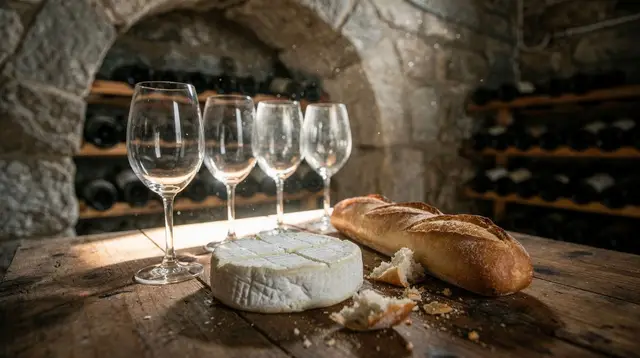
Some visitors prefer not to share the pace of a walk with strangers. Montmartre Food Tour Typical Dishes Cheeses Wine Tasting (a tasting tour centred on typical dishes, cheeses and wine) leans into classic French pairings — cheese and wine as the anchor rather than a broad food sampler, which makes it a good fit if that combination is specifically what you are after.
For something less conventional, Paris a Sensory Wine Art Experience in Montmartre (a wine tasting experience paired with a sensory or art-focused format) combines wine with a sensory or creative angle rather than a straightforward walking tasting, useful if you want an evening activity that is not purely a food crawl.
Hands-on workshops: pastry and chocolate
If you would rather make something than simply taste it, the Paris: Montmartre Bakery and Pastry Food Tour with Tastings (a bakery and pastry-focused tour combining tastings with the craft behind them) blends a walking tasting element with a closer look at pastry-making. Workshops generally run in smaller groups than tasting walks, since the format depends on hands-on participation rather than moving between stops, so book ahead if your dates are fixed. For a broader look at hands-on options across the city, not only in Montmartre, see Paris cooking classes and Paris workshops and creative classes.
Morning versus evening
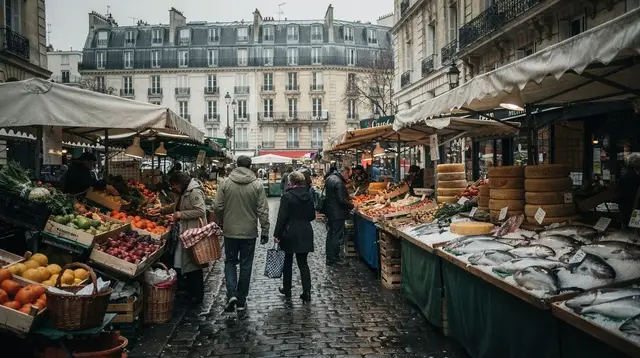
Morning food tours in Montmartre tend to follow the rhythm of the market and the bakeries as they open, so you see shops at their freshest and often quietest. Evening options lean toward wine and cheese, with a slower, more social pace suited to the end of a day rather than the start of one. Neither is inherently better — it depends on whether you want a market-driven morning or a wind-down evening, and on what else is on your itinerary that day. If you are planning a full day in the district beyond food, things to do in Montmartre covers the wider list.
Where the tourist markup shows up
Be honest with yourself about the immediate surroundings of the Sacre-Coeur and the place du Tertre: this is where the crowds concentrate, and pricing at cafes and stalls right on the square tends to reflect that. Quality is inconsistent, and paying tourist rates for an ordinary crepe or glass of wine right at the viewpoint is a common regret reported by past visitors. The streets a few minutes further out — away from the direct approach to the basilica — are generally where the better value and more genuine addresses sit, which is part of why a guided tasting walk with a local guide tends to outperform wandering in on your own near the main square.
This is a general pattern worth carrying into any Montmartre food decision, not a claim about any specific named address, since venues and quality change. A guide who works the neighbourhood regularly is more likely to route you past the streets that reward exploring than toward whatever storefront happens to be closest to the basilica steps.
A note on the Sacre-Coeur approach
While walking toward or around the Sacre-Coeur, you will likely be approached by people offering to tie a “friendship bracelet” onto your wrist, apparently for free, before demanding payment once it is on. This has nothing to do with any legitimate food or wine tour and is a long-running, well-documented approach in this specific spot. The simplest response is to keep your hands to yourself, say no clearly, and keep walking — no need for alarm, just the same ordinary caution you would use in any crowded tourist spot. For a fuller rundown of this and other common approaches, see Paris scams and pickpockets.
Family and group considerations
Most of these tastings involve wine, which naturally limits their fit for families travelling with children. The Family Tour of Montmartre (a Montmartre tour adapted for families travelling with children) is built with that audience in mind, trading some of the wine focus for a pace and content mix that works better with kids along.
For general sightseeing rather than food specifically, the Montmartre District Tour (a general orientation tour covering the wider Montmartre district) and Montmartre Walking Tour (a walking tour covering Montmartre’s streets and viewpoints) sit closer to sightseeing than tasting, and are better compared on the dedicated Montmartre walking tours page. A more unusual option, Vivaldi in Montmartre (a Montmartre experience combining music with the neighbourhood setting), pairs music with the setting rather than food, worth considering as a change of pace if tasting fatigue sets in after several days in Paris.
Travelling with kids and want food along the way rather than a full tasting walk built around wine? A tightly wine-focused itinerary is not the best fit for younger children even when a family-adapted version exists, so it is worth reading Paris with kids or, for the youngest travellers, Paris with toddlers before committing to a specific format, since a slower self-paced walk through the district with food stops chosen along the way can work better than a structured tasting circuit.
Pairing a food tour with the rest of your visit
A Montmartre tasting walk sits naturally inside a longer Paris stay rather than as a stand-alone reason to visit. If food is the main theme of your trip rather than one afternoon of it, Paris food and wine tours covers the citywide picture, and the Paris food lovers weekend itinerary shows how a Montmartre tasting can slot alongside a market visit or a cooking class elsewhere in the city on the same short trip. Couples looking for an evening option that reads as a date rather than a group activity might also look at the private and chef-led formats above alongside the wider romantic Paris guide.
If Montmartre is only a half-day of a longer stay, decide first roughly how many days you have in Paris overall — see how many days in Paris — since that shapes whether a two-hour tasting walk fits comfortably alongside the Sacre-Coeur and the rest of the hill, or whether it is worth giving the neighbourhood its own separate visit. Anyone staying in the district itself, rather than just passing through for a tour, should also check where to stay in Montmartre for the practical trade-offs of basing a trip up the hill.
What a tasting or workshop typically includes, and what it doesn’t
Most tasting walks and workshops bundle the food and drink sampled along the route or made during the session, plus the guide’s commentary; transport to and from the meeting point is not included, and Montmartre’s meeting points are usually reached on foot or by metro like any other part of the city. Wine tastings are built around adults, so if strong alcohol content or a full evening of wine stops is not what you are after, a morning market-style walk or a pastry workshop is the closer fit. None of the formats on this page include entry to paid sights such as the Sacre-Coeur dome, so treat a food tour as separate from, not a substitute for, sightseeing time in the district.
Weather is rarely a reason to cancel a tasting walk outright, since most of the route moves between indoor stops, but Montmartre’s hill means more walking on uneven, sometimes wet cobbles than a flat itinerary elsewhere in the city, so check what footwear and pace the specific format assumes before booking a private or chef-led option built around a longer route.
Booking practicalities
None of these tours require advance timed-entry reservations the way the Louvre or Notre-Dame tower access do, but small-group and private tastings do sell out on popular dates, particularly weekend evenings and around any Paris holiday period. Check group size before booking: a smaller group generally means more direct interaction with the guide and less waiting between stops, while a larger group usually costs less per person. If food allergies or strong dietary restrictions apply, a private tasting or a workshop with direct communication ahead of time is more reliable than a fixed-menu small-group walk, since substitutions are harder to arrange mid-tour with a larger party.
Comfortable shoes matter more than the food itself for enjoying the outing: Montmartre’s streets are hilly and often cobbled, and a tasting walk still involves a fair amount of standing and walking between stops even though it is not primarily a sightseeing tour. Bring an appetite that can pace itself — most tasting formats involve more stops than a single meal’s worth of food, so eating lightly beforehand is worth planning for.
For a wider view of eating well across Paris beyond this one neighbourhood, see what to eat in Paris and best food markets in Paris. And if Montmartre’s food and wine scene is only part of a longer stay, how many days in Paris and things to do in Paris help place it within a broader itinerary.
Montmartre food and wine tours: frequently asked questions
Is a Montmartre food tour different from a Montmartre walking tour?
Yes. A walking tour of Montmartre moves through the Sacre-Coeur, place du Tertre and the streets associated with painters, with food as a side note at most. A food and wine tour centres on tastings, a workshop or a bistrot route, and usually covers less ground on foot.
Do I need to travel specially to reach Montmartre for a food tour?
No. Montmartre is a neighbourhood of Paris, reached like any other part of the city, not a separate town. No special transport arrangement is needed beyond getting to the district itself.
Are small-group tastings better than private ones?
Small-group formats cost less and still allow questions, while private tastings set the pace entirely around your own schedule and dietary preferences. Neither is objectively better; it depends on budget and how much flexibility you want.
Is the food near the Sacre-Coeur and place du Tertre worth eating?
Some of it, but the immediate approaches to the Sacre-Coeur and the place du Tertre carry a tourist markup, and quality is inconsistent. Guides and locals generally point toward the quieter streets a few minutes away for better value.
Should I book a morning or an evening food tour in Montmartre?
Morning tours tend to follow market rhythms and food shops as they open, while evening tours lean toward wine, cheese and a more relaxed bistrot pace. Choose based on whether you want a market-driven or a wind-down experience.
Are pastry or chocolate workshops worth it compared to a walking tasting tour?
A workshop is hands-on and usually smaller in group size, aimed at people who want to make something rather than sample many places. A walking tasting tour covers more stops and more variety in less structured time.
What should I watch for around the Sacre-Coeur while on a food tour?
The area around the Sacre-Coeur draws people offering free-looking friendship bracelets who then ask for payment. It is not related to any legitimate food or wine tour; keep walking and decline without engaging.
Paris food and wine tasting tours on GetYourGuide
Verified deep-linked GetYourGuide tours. Book through these links and we earn a small commission at no cost to you.
GetYourGuide does not provide a product photo for this activity — the image shows the meeting point, photographed by us.