Workshops and creative classes in Paris
What are workshops and creative classes in Paris?
They are hands-on sessions, such as perfume creation, painting, photo shoots or craft workshops, where a small group is guided through making something with an instructor. The catalogue lists 121 such products in Paris, separate from cooking classes and food tastings.
A different kind of Paris activity
Most visitors arrive in Paris with a list built around looking: monuments, museums, a river view. That list is worth having, but it leaves out a format that a meaningful share of the catalogue is built around — the workshop. Rather than moving through the city and observing it, a workshop asks a small group to sit down in one place, usually a studio or dedicated atelier, and make something with their hands, guided by an instructor. Paris carries 121 products in this category, distinct enough from sightseeing that it is worth understanding on its own terms before booking.
This is not a page about restaurants, tastings or cooking. Cuisine has its own place on this site, covered separately from creative workshops, and the two rarely overlap in practice: a cooking class is built around food from the start, while a creative workshop can be about scent, paint, a craft technique or a styled photo session with nothing edible involved. Keeping the two apart matters when deciding what a day in Paris should actually contain, because a cooking class and a perfume workshop solve different needs even though both sit under the broad heading of “hands-on.”
What counts as a workshop here
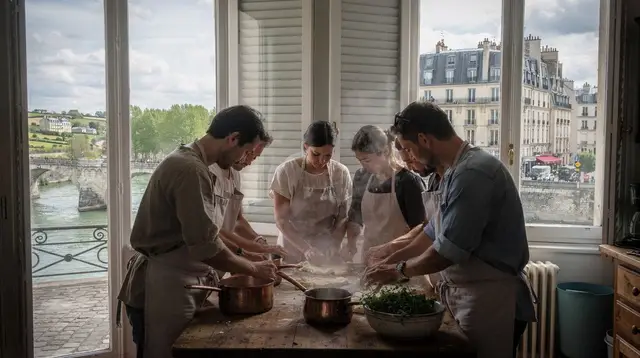
The common thread across this category is participation. In a museum tour, a guide talks and the group listens and looks. In a workshop, the group does something under instruction, and there is usually a result at the end — a scent blended and bottled, a painting finished, a personalised object assembled, a set of photographs styled and shot. The instructor’s role shifts from narrator to teacher, and the pace of the session is set by the task rather than by a walking route.
Examples of the format, without pinning down prices or exact running times, include:
- Perfume creation, where a guide leads a small group through building a personal scent from a set of base notes
- Painting or drawing sessions structured around a single piece finished during the class
- Photo shoots that are staged and styled rather than a self-guided stroll with a camera
- Personalised accessory or craft workshops, where the result is an object the visitor customises and keeps
- Other studio-based creative formats that ask for active participation rather than passive viewing
What ties these together is not the material — scent, paint, fabric, a camera — but the structure: a guided, hands-on session with a beginning, an instructional middle and a finished result, usually run for a small group rather than a crowd.
How this differs from a walking tour or a museum visit
A walking tour through Montmartre or the Marais covers ground. The group moves, a guide narrates history and context along the way, and the main output is what visitors saw and learned. A museum visit works similarly: the visitor moves through galleries, looking rather than making. Neither format typically produces something the visitor takes home beyond photographs and notes.
A workshop inverts that. The group usually stays in one location, the pace is set by the activity rather than a route, and the session tends to run longer in general than a single museum stop or a short walking segment, because instruction and hands-on practice both take time. This is worth factoring into a day’s plan: a workshop is closer in shape to a class than to a sightseeing stop, and treating it as a quick add-on between two other bookings can leave too little time to actually finish the piece being made.
None of this makes a workshop better or worse than a walking tour — it is a different kind of activity, suited to a different kind of traveller or a different kind of day. Someone who wants to cover as much of Paris as possible in a short visit may prefer the walking-tour format. Someone who wants a slower, more immersive block of time, particularly useful on a day when the weather turns, may prefer a workshop.
Where a workshop fits into a Paris itinerary
Because a workshop groups the day around one activity rather than a route through the city, it tends to work best as a defined block: a morning or an afternoon set aside, with the rest of the day built around it rather than through it. Trying to fit a workshop between two tightly scheduled bookings, especially ones on opposite sides of the city, risks running into the session’s own pace rather than a fixed slot.
A workshop also pairs naturally with a day that already includes an indoor stretch — a museum visit in the Louvre and Tuileries area, or a stop in the Latin Quarter and Saint-Germain — since both formats keep visitors under cover. On a trip built around the guides in three days in Paris or five days in Paris, a single workshop slotted into one afternoon adds variety without requiring a full extra day.
a Paris perfume walking tour, where a guide leads a small group through building a personal scent is one example of the format working as a self-contained half-day activity rather than a stop on a longer route.
Choosing between formats
The table below sets out how a workshop compares with two other activity types covered elsewhere on this site, without repeating what is already said there.
| Format | What happens | Typical pace |
|---|---|---|
| Workshop / creative class | Small group makes something under instruction, usually in one location | Session-length, set by the activity |
| Walking tour | Group moves through streets or a district with a guide narrating | Route-length, covers ground |
| Museum or monument visit | Group moves through galleries or a site, mostly looking | Visit-length, self-paced within a route |
None of these formats replace the others; a well-built Paris trip usually mixes at least two. The point of separating them here is simply to make an informed choice easier, particularly for a visitor who assumes “things to do in Paris” means only sightseeing and monuments.
Getting to a workshop studio
Workshops in this category are not clustered in one district the way, say, souvenir shops are; studios and ateliers turn up across the city, from the Marais to Montmartre and beyond. That makes it worth checking a listing’s exact address before booking rather than assuming it sits near a well-known landmark.
Paris and its region run a dense public transport network through Île-de-France Mobilités: 16 metro lines plus 5 RER lines, alongside trams and buses, which between them reach almost anywhere a workshop studio is likely to be. Since the January 2025 fare reform, single journeys are sold as one of two tickets — a Metro-Train-RER ticket or a Bus-Tram ticket — loaded onto a Navigo Easy card or a phone rather than bought as the old paper ticket.
A visitor staying several days and moving around for multiple bookings may find a Navigo semaine pass, which runs Monday to Sunday, more convenient than buying single tickets before each session; the Paris metro guide and the Paris metro tickets and Navigo guide cover the options in more detail, including the tourist-oriented Paris Visite pass. Driving to a workshop is rarely worth considering: parking is scarce, central Paris sits inside a low-emission zone requiring a Crit’Air sticker, and traffic can easily undo any time saved over the metro or RER.
On payment, cards and contactless are accepted almost everywhere in Paris, including by most studios running these sessions, though it is sensible to carry a little cash as a backup, the same habit worth keeping for markets and small vendors; the money, cards and payments in Paris guide covers this in full.
The best time of year for a workshop
Because most workshops happen indoors, they are less weather-dependent than a walking tour or an open-air market visit, which makes them a reasonable option in any season. That said, the season still shapes the rest of the day built around a workshop. Paris has a temperate climate, and the best time to visit Paris tends to fall in April to June or September to October, when mild weather makes it easy to pair an indoor session with time outdoors elsewhere in the city.
Summer in Paris can turn hot, with the occasional heatwave, and August is also when many Parisians leave the city for the month; some small businesses and independent studios follow the same pattern and either close or run a reduced schedule, so it is worth confirming a summer booking further ahead than usual and having a backup date in mind. Winter is colder and greyer, but it brings its own draw: the city’s illuminations and Christmas markets make a studio-based session an easy match for a short, dark winter afternoon when an outdoor itinerary loses its appeal. Rain is possible in Paris in any season, which is one more reason a workshop slots in comfortably regardless of when a trip happens to fall.
Booking notes and honest expectations
A few things are worth knowing before booking a workshop in this category:
- Group sizes tend to be smaller than on a general walking tour, since the instructor needs to guide each participant through a hands-on task.
- No prior skill is expected for most sessions — painting, perfumery and similar formats are built for beginners, with the instructor setting the pace.
- Not every workshop sends visitors home with a physical result; confirm on the individual listing whether a finished piece, such as a bottle or a personalised object, is included.
- Because the format runs longer than a quick sightseeing stop, allow a realistic buffer either side rather than scheduling a workshop tightly between two other bookings.
- This category deliberately excludes cooking and food-based classes, which are covered under Paris food and wine tours instead.
For visitors weighing this format against the rest of what Paris offers, it helps to see it alongside the wider catalogue: creative workshops as a category, the full range of things to do in Paris, and the broader things to do in Paris guide for context on how workshops sit next to monuments, museums and day trips.
a DIY workshop in Paris where visitors personalise their own accessory is a good example of the take-home element some sessions include, while others are built purely around the experience of the class itself.
Workshops for specific interests
Some workshops in the Paris catalogue lean toward a particular interest rather than a general creative session. A zoo-themed art show format, for instance, pairs a creative activity with a family-friendly setting, which can suit visitors travelling with children who want an activity beyond a standard museum stop — see also family activities and escape games in Paris for more on that angle. Other sessions lean toward a specific skill, such as a guided class built around a single sport or technique.
a zoo-themed art show in Paris that combines a creative session with a family-friendly setting and a tennis master class in Paris for visitors who want an active, skill-based session both illustrate how the workshop format extends beyond painting and perfumery into more specific interests.
For visitors researching where to base themselves while planning a day that includes a workshop, see where to stay in Paris, and for a wider read on weaving hands-on activities into a short trip, how many days in Paris and Paris for first-time visitors both cover pacing in more depth. Visitors curious about how a workshop compares with other indoor options on a rainy day can also check Paris on a rainy day.
Workshops and creative classes: questions answered
How is a workshop different from a walking tour?
A walking tour moves through the city and looks at things from the outside. A workshop stays largely in one place, such as a studio or atelier, and the visitor’s hands do the work under guidance, whether that is blending a scent or mixing paint.
Are cooking classes included in this category?
No. Cooking and cuisine classes sit under the food and wine section of the site. This page covers non-culinary workshops: creative, craft and sensory sessions such as perfumery, painting, photography and personalised accessory making.
Do workshops take longer than a typical museum visit or walking tour?
Generally yes. A workshop groups people around one activity for the length of the session, which tends to run longer than a quick museum stop, because the format includes instruction, hands-on practice and finishing a piece to take away.
Do visitors need a particular skill level?
No. Most workshops in Paris are built for first-time participants, with an instructor guiding each step. No prior experience with painting, perfumery or the relevant craft is expected.
Is there something to take home afterward?
Many workshops end with a finished piece, such as a personalised accessory or a bottle of a self-blended scent. Read each listing to confirm what, if anything, is included to take away.
Are these workshops good for a rainy day in Paris?
Yes. Because most workshops happen indoors in a studio setting, they work well when the weather turns, unlike an outdoor walking tour or an open-air market visit.
Can a workshop be combined with other activities the same day?
Yes, since most sessions run for a defined block of time rather than a full day. A workshop pairs easily with a museum visit or a walk earlier or later in the day, though it is worth allowing a buffer rather than booking sessions back to back.
Perfume, painting and craft workshops on GetYourGuide
Verified deep-linked GetYourGuide tours. Book through these links and we earn a small commission at no cost to you.
GetYourGuide does not provide a product photo for this activity — the image shows the meeting point, photographed by us.