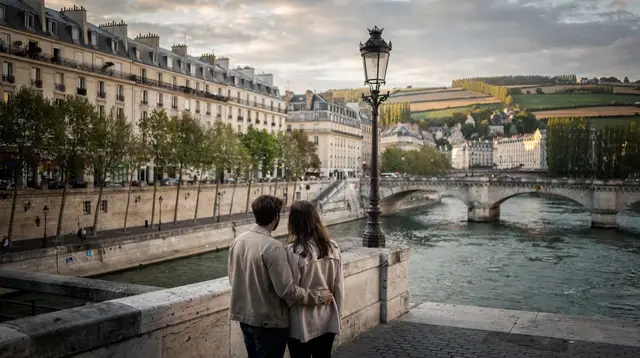
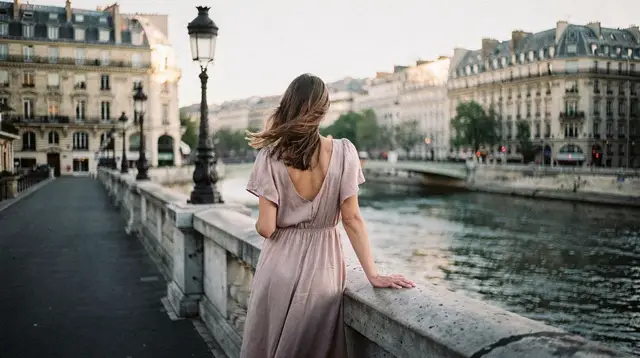
Paris photo shoots: professional photography sessions at the city's landmarks
What is a Paris photo shoot, and how is it different from a walking tour?
A Paris photo shoot pairs you with a professional photographer for a set block of time at one or more landmarks, and the point of the outing is the finished images of you, not a narrated walk through the city's history. Sessions run from a single spot near the Eiffel Tower or Montmartre to a multi-location route, and most are booked as a private session rather than a group activity.
A different kind of Paris activity
Most things booked under Paris sightseeing put the city itself at the centre: a guide walks you through Montmartre and explains what you are looking at, or a vintage car takes you past the Seine’s bridges so you can see more of the city in less time. A photo shoot flips that. Across the roughly 83 products in this category, the shared idea is the same — a professional photographer meets you at a landmark, and the point of the hour or two that follows is the photos of you, not a tour of the site.
That distinction is worth being clear about before booking, because the three kinds of activity that sit closest to this one in the catalogue serve genuinely different purposes. Paris walking tours exist to help you understand a neighbourhood — its layout, its history, why a street looks the way it does. Paris vintage car and 2CV tours exist to move you between sights in a memorable way, with the car itself as much a part of the experience as any single stop. A photo shoot has neither goal. You may spend the whole session in one spot near the Eiffel Tower and Trocadéro, and the photographer’s job is to work that single location — light, angle, timing — rather than to cover ground or explain what you are standing in front of.
If what you actually want is to see Paris, book a walking tour. If you want images of yourself in Paris that you would not get by handing your phone to a stranger, this is the category to look at.
What actually happens during a session
The format varies by photographer, but the shape is consistent. You agree a meeting point and a time window, usually with some flexibility built in for light and crowd conditions. The photographer meets you — often already scouting a first spot rather than starting cold — and directs a short sequence of poses or natural movement at each location, checking shots on the back of the camera as they go. A single-location session might run under an hour; a route covering two or three landmarks runs longer.
Sessions built around the Eiffel Tower and Trocadero typically use the Trocadéro esplanade or the Champ de Mars lawns as the backdrop rather than the tower’s base, because both give more room to work with and a cleaner view of the tower itself. Sessions in Montmartre tend to move through the district’s stepped streets and small squares, with the Sacré-Cœur steps as one stop among several rather than the only one — worth knowing if you associate this neighbourhood mainly with the basilica itself; see the dedicated guide to Sacré-Coeur tours if the monument, not the photo backdrop, is what interests you.
What you get afterwards also varies. Most sessions deliver a set of edited digital images within a stated turnaround, though the exact count, editing style and any physical prints or albums differ by photographer — this is a detail to confirm at booking rather than assume.
Group size matters more than it might seem. A solo traveller or a couple is the simplest booking, since the photographer only has to direct one or two people and can move quickly between poses. Families are a different case — younger children rarely hold a pose, so a photographer used to working with kids will shoot in bursts around natural movement rather than staging a formal line-up, closer to candid reportage than a studio-style portrait. If you are travelling with children and want photos as part of the trip rather than a full dedicated session, it is worth reading Paris with kids alongside this guide, since some family-oriented itineraries build in shorter photo stops rather than a standalone booking.
For proposals, engagements and family portraits
A meaningful share of demand in this category is not about a generic portrait but a specific occasion: an engagement, a proposal, an anniversary, or a family gathered for one Paris trip. Photographers who take these bookings are used to working discreetly — positioned to capture a proposal moment without the couple noticing them as anything more than a bystander with a camera, for instance — and the pre-booking conversation usually covers timing, location and what you want captured, in more detail than a standard portrait session would need. a photographer who specialises in engagement and proposal shoots at Paris landmarks is worth looking at specifically if the occasion is the point, since the briefing and positioning differ from a general tourist portrait session.
For learning rather than being photographed
Not everyone booking under this category wants to be in front of the camera. A smaller set of sessions are framed as classes: a working photographer teaches you to use your own phone or camera at real Paris locations, covering composition, light and settings rather than directing your poses. a beginner-level photography class held at Paris locations and
a private workshop built around your own phone or camera
both sit in this category for that reason — the deliverable is a skill, not a folder of edited portraits.
Choosing a location, honestly
The landmarks that make the best backdrops are, almost by definition, the landmarks with the most visitors. That tension is worth naming rather than glossing over.
The Trocadéro esplanade facing the Eiffel Tower is one of the most photographed spots in the city at any hour with decent light, and by mid-morning it can be genuinely crowded — tripods, wedding parties, and dozens of people angling for the same shot. A photographer who works this spot regularly will know how to frame around the crowd or time the visit for early morning, but an unplanned or late-morning session here can mean waiting for gaps in the foot traffic, or accepting that other people will be visible at the edges of some frames.
Montmartre’s steepest streets and the steps in front of Sacré-Cœur carry the same problem in the afternoon and evening, when the district is at its busiest with both tourists and street sellers. Photographers who know the area tend to route around the single most crowded square and into quieter side streets nearby, which is part of what a professional adds over simply picking a spot from a map.
The Louvre’s courtyard and pyramid are less consistently crowded than the two locations above but still draw heavy footfall around midday. None of this means these locations are bad choices — they are the backdrops people come to Paris for — but it does mean asking your photographer, before booking, how they plan to work around the crowd rather than assuming a private booking guarantees a private setting.
Worth noting: none of this changes visiting hours or entry rules at the underlying sites. A photo shoot staged near a monument does not include entry to it, and closure days, booked time slots and ticketing for places like the Louvre are unaffected by whether a photographer is also present outside.
Full-session photo experiences
Some bookings in this category are structured as a complete outing rather than a single-location shoot: a photographer works with you across several stops in one session, sometimes combined with a private tour element. a multi-stop photo session covering several of the city’s best-known backdrops is built this way, moving between locations rather than staying in one spot for the full booking. At the other end,
a private day tour that includes photography and transfers between stops
folds the photo element into a broader day out, useful if you want both the sightseeing and the portraits without booking two separate activities — though it is worth being clear this is closer to a private tour with a photographer along than a dedicated photo shoot, and the pacing reflects that.
Photos while moving through the city
A smaller set of bookings pair photography with an unconventional way of getting around, rather than a static shoot. These sit at the edge of this category — closer to a scenic ride that happens to include images than to a portrait session — but come up often enough to mention.
a guided ride through Paris with photo stops built in
and a sidecar ride through the city both fall into this group. If what appeals to you is the idea of moving through Paris in something memorable, with photos as a bonus rather than the main event, these sit closer to Paris vintage car and 2CV tours in spirit than to a dedicated photographer session, and it is worth reading that guide too before deciding which fits what you actually want.
What this category does not cover
It is worth being precise about what sits outside this category, since the names of similar-sounding activities can blur together.
A walking tour with a guide narrating Montmartre’s history, or the Latin Quarter’s streets, is not a photo shoot — the guide’s job is explanation, and any photos are incidental, usually taken on your own phone rather than by a professional with editing included. See Paris walking tours for that category.
A vintage car or 2CV tour moves you past landmarks in a memorable vehicle; photography, if it happens at all, is secondary to the drive itself. See Paris vintage car and 2CV tours.
Museum and monument tickets — for the Eiffel Tower, the Louvre, Sacré-Cœur or Notre-Dame — get you inside a site; they say nothing about whether a professional photographer is present, and booking a landmark ticket does not include one. See the dedicated guides for Eiffel Tower tickets and tours and Sacré-Coeur tours if entry, not portraits, is what you need.
If you are choosing between a photo shoot and simply visiting a landmark for the view, the best views in Paris guide covers vantage points on their own terms, without the photographer.
Best time of year and time of day
The same seasonal patterns that shape any Paris visit shape a photo shoot’s results. Spring, roughly April to June, and early autumn, September into October, tend to offer the most reliable combination of mild light and manageable crowds at the landmark backdrops this category relies on — see best time to visit Paris for how that plays out across the year more broadly, and Paris weather by month for the detail behind it. A photographer scheduling around one of these windows has more flexibility than one working in the height of summer or the depth of winter.
Summer brings long days and strong light, which can work for or against a session depending on the hour — flat midday sun is rarely flattering, while the hour or so after sunrise or before sunset produces the kind of soft, directional light most photographers aim for. Summer heat, and the possibility of a heatwave, is also worth planning around if the session involves walking between locations; see Paris in summer for what that season generally brings. August is a particular case: a significant share of Parisians leave the city for the month, and some smaller businesses close, though this affects the photographer’s availability and the character of certain neighbourhoods more than the landmarks themselves, which stay open. Paris in August covers that pattern in more depth.
Winter sessions trade warmth for atmosphere: grey skies are common, but the softer, more even light can suit portrait work, and a session timed around the Christmas illuminations adds a backdrop unavailable the rest of the year — see Christmas in Paris if that timing appeals. Whatever the season, rain is possible at any time of year in Paris, which is the practical reason to ask a photographer about their wet-weather policy before booking rather than after.
A few practical honest points
A photo shoot is a scheduled appointment with another person, which makes it less flexible than wandering with your own camera. Weather affects outdoor sessions the way it affects any outdoor activity in Paris — rain does not necessarily cancel a shoot, but it changes what is possible, and it is reasonable to ask a photographer in advance what their policy is for a wet or overcast day.
Locations with strong architectural backdrops — the Trocadéro, the Louvre pyramid, Montmartre’s steps — are also locations where light changes fast depending on the hour, and a photographer scheduling around golden hour will usually produce noticeably different results than a session booked at flat midday light. This is a scheduling detail worth asking about rather than assuming any time slot gives the same outcome.
Finally, a session marketed as “private” means you are not sharing the photographer’s time with another group, not that the location itself will be empty. At the city’s most photographed spots, other visitors will very often be visible somewhere in the surrounding scene, and a photographer experienced with that particular location is the main safeguard against it ruining your images, not the booking type.
If you want the couple’s or proposal angle specifically
For an engagement, anniversary or proposal, the honest reading of this category is that timing and location choice matter more than almost anything else you can control. Early morning sessions at the Trocadéro or a quieter Montmartre street avoid the worst of the crowds; a photographer with proposal experience will also have thought through camera positioning that does not tip off the other half of the couple. If this is your reason for booking, say so clearly when you book rather than choosing a generic portrait session and hoping the photographer adapts on the day. a standard photo session with a professional photographer at a Paris landmark of your choice remains the broadest entry point into this category if you are not sure yet which format fits — a general session, rather than one built specifically around a class, a proposal or a multi-stop route.
Paris photo shoots and photographer sessions on GetYourGuide
Verified deep-linked GetYourGuide tours. Book through these links and we earn a small commission at no cost to you.
GetYourGuide does not provide a product photo for this activity — the image shows the meeting point, photographed by us.