Why this corner of Paris gets its own page
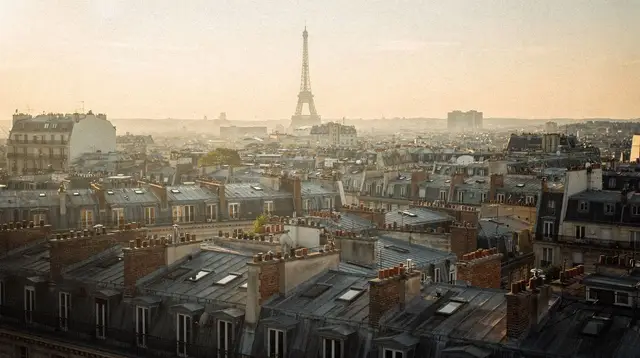
The Eiffel Tower is the one structure most visitors picture before they picture anything else about Paris. It was built for the 1889 World’s Fair, and it still tops out at roughly 330 m once you count the antennas. That single fact is worth holding onto, because a lot of what gets written about the tower is vaguer than it should be: no other height applies, and no other date does either. This page keeps to one subject — the tower and the view across the river from Trocadéro — and leaves the museums of the Louvre and the Île de la Cité and the shopping streets around the Champs-Élysées and the Opéra to their own pages.
Two things separate a smooth visit here from a frustrating one. First, deciding in advance whether you’re going up the tower or just looking at it — because the two experiences happen in different places, at different paces. Second, booking a time slot for the lift if you do plan to go up, since the alternative is an unpredictable wait in the open air with no shade.
Two viewpoints, not one
People often assume “visiting the Eiffel Tower” means one thing. In practice it’s two separate visits that happen to face each other across the Seine.
The Champ de Mars is the long park that runs from the base of the tower toward the École Militaire. This is where you stand directly underneath the ironwork, where the ticket queues form, and where you go up if that’s the plan. It’s also where the crowd is thickest and where the ground-level photos look more like a construction site of legs and elbows than a postcard.
Trocadéro, across the river on the Right Bank, is the terrace and gardens facing the tower head-on. There’s no lift to board here and nothing to queue for — you come for the view. This is where the classic wide shot with the whole tower, the fountains, and the Seine in one frame comes from, and it’s the better stop if your priority is seeing the tower rather than climbing it. For layout, sightlines, and which side of the terrace catches the best light at which hour, a dedicated Trocadéro and Champ de Mars guide goes further than a single section can here.
A workable plan for a first visit: start at Trocadéro for the overview and the photo, then cross the Pont d’Iéna to the Champ de Mars for the lift, arriving close to your booked time slot rather than early. Doing it in the other order means climbing the tower before you’ve actually seen it from a distance, which is a strange way round for most people.
Getting here by metro and RER
Both sides of this pairing sit close to their own stations, and it’s worth knowing which one serves which viewpoint before setting off. For the Champ de Mars, the RER C stop Champ de Mars–Tour Eiffel puts you within a short walk of the base, and metro line 6 to Bir-Hakeim is the usual approach from the Left Bank, crossing the river on the elevated section of track with a view of the tower on the way in — a small bonus for anyone without an extra minute to spare on photos.
For Trocadéro, metro line 9 (or line 6) to the Trocadéro station brings you up directly onto the terrace, so the view is the first thing you see on leaving the platform rather than something you walk toward. Neither approach involves a long walk from the nearest station, which is part of why this pairing works well as a half-day rather than needing extra time built in for getting between the two sides. General guidance on buying tickets, choosing between the metro and RER, and how the network fits together is in the Paris metro guide and metro versus taxi in Paris.
Getting to the top: what the lift actually covers
The tower has three levels open to visitors, but the way up isn’t uniform the whole way. Lifts and stairs both reach the second floor — stair access is the cheaper, more physical option and gives you a closer look at the ironwork on the way. From the second floor, the summit is lift-only; there’s no stair option for the final stretch, and no way around a wait for that lift even if you walked up the first section.
A reserved time slot is strongly advised, both for the ground-floor security check and for the lift itself. Walking up without one means joining a standby queue that can run long, especially in the middle of the day and through summer. If your plan includes the summit, book that specifically — a second-floor ticket doesn’t carry you further up on the day, and swapping tiers isn’t something to count on once you’re there. Comparing what each level actually offers, and whether the summit is worth the extra wait for a given trip, is covered in more depth in Eiffel Tower summit versus second floor and in a broader guide to visiting the Eiffel Tower.
Weather matters here in a way it doesn’t for most Paris sights. Wind can close the summit level temporarily, and there’s no reliable way to predict this from a booking made days in advance. It’s a reason to build a little slack into the day rather than treating the tower as a fixed fifteen-minute slot between two other things.
What each level is for
| Level | What you get | Access |
|---|---|---|
| Ground floor / Champ de Mars | The base, the ironwork up close, ticket and security checkpoints | On foot, no ticket needed to reach the base itself |
| First and second floor | Views over central Paris, exhibition space, dining options | Lift or stairs |
| Summit (top) | The highest public viewpoint, roughly 330 m including antennas | Lift only from the second floor, no stair option |
| Trocadéro terrace | The full tower in frame, wide view across the Seine | On foot, free and open, no ticket or time slot |
Eating near the top is possible but limited and worth planning rather than assuming; a full breakdown of the on-site and nearby options sits in Eiffel Tower restaurants and dining.
Seeing the tower from the water
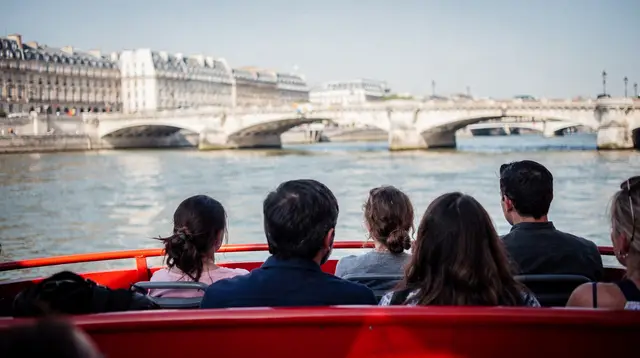
The stretch of the Seine below the tower is one of the busiest for river cruises in Paris, and it’s a genuinely different way to take in the structure — looking up from below rather than standing beneath it or facing it from across the river. A short sightseeing pass works well paired with a Trocadéro visit on the same afternoon.
a Seine sightseeing cruise that departs near the Eiffel Tower covers this stretch of river without committing to a full meal service, which suits a shorter visit or a first pass through the area.
For a slower version of the same idea, a lunch cruise gives a seated meal with the tower and riverbanks going by outside, useful for a visit that already has the lift or the terrace covered and wants a lower-key second half to the day: a lunch cruise departing from near the Eiffel Tower.
In the evening, the tower’s hourly light show (after dark, running on the hour) is best seen from the water or from Trocadéro rather than from directly underneath, where the angle is too steep to take in. A dinner cruise timed to catch the tower lit up is a reasonable way to end a day built around this corner of Paris: a dinner cruise timed around the Eiffel Tower’s evening lighting. More on river options generally, including how sightseeing and dinner formats compare, is in the Seine dinner cruises guide and seine dinner cruise versus sightseeing cruise.
Pickpockets around the tower
The area around the Eiffel Tower is one of the parts of Paris where pickpockets are consistently active, alongside the Louvre, the steps of Sacré-Cœur, and the RER B and metro line 1. This isn’t a reason to avoid the area — it’s one of the most visited sights in the world for good reason — but it’s worth keeping bags zipped and phones out of back pockets in the queue lines and on the Champ de Mars lawns, where dense, slow-moving crowds are exactly the conditions pickpockets rely on. The same applies on the Trocadéro terrace during peak sunset hours, when everyone’s attention is on the view rather than their belongings. A broader rundown of common scams around Paris landmarks, including tactics specific to this area, is in Paris scams and pickpockets and is Paris safe for tourists.
Nearby: Les Invalides and the riverside museums
The Champ de Mars side of this pairing sits within easy reach of Les Invalides, the domed military complex that houses Napoleon’s tomb and the Army Museum, on the same bank of the Seine. It’s a natural add-on for a day already built around the tower, rather than a separate outing requiring its own trip across the city: a guided visit to Les Invalides and the Army Museum covers the tomb, the military collections, and the courtyard in a few focused hours, which fits comfortably either before the Champ de Mars queue or after coming down from the tower.
Further along the same bank toward the Left Bank’s museum cluster, art-focused visitors sometimes prefer to swap an afternoon at the tower for a stop at the Musée d’Orsay instead, or fit both into the same day if the pace allows. How the two riverside museum options — Les Invalides and the Orsay — compare for a traveller with limited time is covered in the Musée d’Orsay guide, Louvre versus Musée d’Orsay, and Les Invalides and Napoleon’s tomb guide.
Fitting this into a Paris trip
For a first visit to Paris, the Eiffel Tower and Trocadéro pairing usually takes a half day rather than a full one, which leaves room on the same day for a nearby stop or an evening elsewhere in the city. It sits reasonably close to the museums around the Seine’s Left Bank and to the riverside walk toward the Seine river cruises departure points, so it slots naturally into a day that also includes a walk along the water. Where this fits across a longer stay — first day, last day, or split across an itinerary — is covered in the one-day Paris itinerary and in how many days in Paris.
Travellers building a longer stay around several landmarks at once, rather than treating the tower as a single half-day stop, can compare how it sits against a fuller multi-day plan in three days in Paris and two days in Paris, both of which place this corner of the city alongside the Louvre, Montmartre, and the Île de la Cité rather than on its own.
Travellers weighing whether to stay near the tower for convenience, versus basing themselves somewhere more central, can compare options in where to stay near the Eiffel Tower. It’s a quieter, more residential part of the 7th and 16th arrondissements compared with the Marais or the Latin Quarter, which suits some travellers and not others.
For photography specifically, the golden-hour and blue-hour windows from the Trocadéro terrace are consistently the most rewarding, and a walk through nearby Montmartre later the same evening gives a second, higher vantage point over the city from the opposite side.
The Eiffel Tower and Trocadéro: frequently asked questions
How tall is the Eiffel Tower?
The tower reaches roughly 330 m including its broadcast antennas. That figure is the one to go by; earlier or lower figures sometimes quoted elsewhere don’t reflect the antennas added after the original 1889 construction.
Do I need to book a time slot in advance?
A reserved time slot is strongly recommended for both the security checkpoint and the lift. Arriving without one usually means a longer, less predictable wait, particularly at midday and during the warmer months.
Can I walk all the way to the top?
Stairs reach the second floor. From there, the summit is accessible by lift only — there’s no stair route for that final section, regardless of ticket type.
Which is better, the Champ de Mars or Trocadéro?
They serve different purposes. The Champ de Mars puts you at the base of the tower and is where you go if you’re going up. Trocadéro faces the tower from across the river and is the place for the full-tower photo without a queue.
Is the area around the Eiffel Tower safe?
It’s a heavily visited, generally safe part of Paris, but it’s also one of the areas where pickpockets are known to be active, especially in dense queue lines and on the Champ de Mars lawns. Ordinary precautions — zipped bags, phone awareness — are enough for most visitors.
What’s the best way to see the tower lit up at night?
The hourly light display is best seen from a distance, either from the Trocadéro terrace or from the river, rather than from directly beneath the structure where the angle makes it hard to take in.
Is a Seine cruise a good way to combine the tower with the river?
Yes — cruises departing near the tower are a common way to see it from the water, either as a short sightseeing pass or as a longer lunch or dinner cruise timed around the evening lighting.
How much time should I set aside for this area?
A half day covers both viewpoints comfortably, including a lift visit if you have one booked. Pair it with a riverside walk or a cruise rather than trying to add a full separate sight on the same afternoon.