Louvre vs Musée d'Orsay: which one to visit
Should I visit the Louvre or the Musée d'Orsay?
Visit the Louvre for an encyclopedic collection spanning antiquity to the 1800s, and the Musée d'Orsay for a tighter, more focused collection of impressionist and post-impressionist painting. Many visitors do both, on separate days, since the Louvre alone can fill most of a day.
Two collections, two banks of the Seine
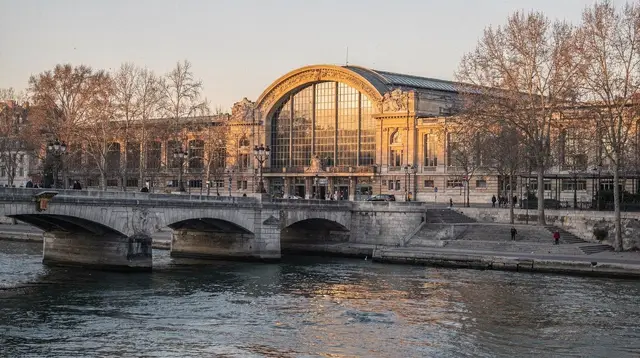
The Louvre and the Musée d’Orsay are the two museums most first-time visitors to Paris feel they should see, and the two most often confused when it comes to booking. They sit on opposite banks of the Seine, a short walk apart, but they are not interchangeable. The Louvre, on the Rive Droite next to the Tuileries, is a former royal palace holding an encyclopedic collection that runs from ancient Egypt and Mesopotamia through Greek and Roman antiquity to European painting up to the mid-1800s. The Musée d’Orsay, on the Rive Gauche facing the Tuileries across the river, is a former railway station holding a far smaller, more concentrated collection built almost entirely around impressionist and post-impressionist painting from the second half of the 19th century.
This page is not about which museum is more accessible for visitors with mobility needs, and it does not cover cabarets, dinner cruises or any of the other comparisons on this site — it is specifically about choosing between, or combining, these two museums. If you are weighing up how to get around Paris with limited mobility, that is covered elsewhere on this site; here the focus is on collections, closing days, booking rules and how much time each place actually needs.
Which bank, which building
Location matters more than it might seem, because visitors sometimes assume the two museums sit side by side. They do not. The Louvre occupies the former Louvre Palace on the Rive Droite, bordering the Louvre and Tuileries district. The Musée d’Orsay occupies a converted Belle Époque railway station on the Rive Gauche, roughly opposite the Tuileries garden, closer to the Latin Quarter and Saint-Germain side of the river. The walk between the two, crossing one of the bridges near the Tuileries, takes well under half an hour, and both are also reachable by bus or a short metro connection. Proximity is genuinely one of the strong arguments for seeing both museums during the same trip, even if not the same day.
Closing days: easy to mix up, important not to
Both museums close one day a week, and it is not the same day. The Louvre is closed on Tuesdays. The Musée d’Orsay is closed on Mondays. Visitors who plan a museum-heavy first two or three days in Paris sometimes assume both are shut on the same date, or book the wrong museum for the wrong day, and arrive to a locked door. Check the specific closing day against your own dates before booking anything, and do not assume either closure moves around the calendar or the season — it does not.
Size and how long each one takes
This is where the two museums diverge most. The Louvre is enormous. Its galleries run for kilometres across several wings and multiple floors, and even a focused visit aimed at the best-known works, rather than a full survey of the collection, tends to take half a day. Visitors who try to see everything routinely underestimate how much walking and how much time it requires, and end up exhausted well before they reach the wings holding decorative arts or the less-visited antiquities galleries. If you only have a few hours in Paris and want to see the Louvre properly, it is worth deciding in advance which sections matter most to you rather than wandering and hoping to cover it all.
The Musée d’Orsay is a different kind of visit. It is a fraction of the size of the Louvre, arranged over a few floors of a single converted station building, and a thorough visit including the main galleries can be done in a couple of hours rather than half a day. That does not make it a quick stop to squeeze in — the collection rewards a slower pace — but it is a far more contained visit than the Louvre, and visitors who plan for a rushed 45 minutes usually find they want longer once they are there.
| Louvre | Musée d’Orsay | |
|---|---|---|
| Bank | Rive Droite | Rive Gauche |
| Building | Former royal palace | Former railway station |
| Closed | Tuesday | Monday |
| Time slot required | Yes, including with Paris Museum Pass | Recommended to book ahead |
| Typical visit length | Half a day or more | A couple of hours for the main galleries |
| Collection focus | Antiquity through the mid-1800s, encyclopedic scope | Impressionist and post-impressionist painting |
What each museum actually holds
The difference in scope explains the difference in size. The Louvre’s collection is genuinely encyclopedic: Egyptian antiquities, Mesopotamian and Near Eastern collections, Greek and Roman sculpture, Islamic art, French and Italian sculpture, decorative arts spanning centuries, and painting that runs from medieval altarpieces through to the early 19th century. It is a museum built to survey the history of art and civilization broadly, not a single period. If you want the highlights and the Mona Lisa in a couple of hours, that is achievable, but it means deliberately skipping most of the building.
The Musée d’Orsay is built around a single, narrower story: French painting and sculpture roughly between 1848 and 1914, with impressionism and post-impressionism at its core. This is where visitors go for a concentrated dose of a period the Louvre barely touches, in rooms designed around natural light from the old station’s glass roof. If impressionist and post-impressionist painting specifically is what drew you to Paris, the Musée d’Orsay, not the Louvre, is the collection you actually want.
Booking: a time slot at the Louvre is not optional
The single most important practical difference between the two museums is the Louvre’s reservation system. Entry to the Louvre requires a reserved time slot, and this rule applies even to visitors holding a Paris Museum Pass — the pass covers entry, it does not exempt you from booking a slot. Visitors who assume a pass in hand is enough, and show up without a reservation, are the most common source of frustration at the Louvre entrance. Book your slot as early as you can once your Paris dates are fixed, particularly for anything close to school holidays or a weekend.
The Musée d’Orsay does not carry the same strict time-slot requirement, but booking ahead is still worth doing, since lines can build during peak season and a booked ticket avoids standing outside while you could be inside.
The Paris Museum Pass, without the details that go stale
The Paris Museum Pass is valid for 2, 4 or 6 consecutive days and covers entry to more than 50 museums and monuments across Paris and the wider region, the Louvre and the Musée d’Orsay both included. It is genuinely useful if you plan to see several museums over a short stay, since it removes the need to buy separate tickets one by one. What it does not do is remove the Louvre’s time-slot requirement, and it is not worth trying to plan around a specific price or a specific set of opening hours here — both change, and the pass’s own site is the only reliable source for either.
a Paris Museum Pass covering the Louvre, the Musée d’Orsay and dozens of other sites is the simplest way to bundle entry to both museums along with other stops on your list, without juggling separate bookings for each one.
How to actually combine both
For most visitors, the Louvre and the Musée d’Orsay work better as two separate outings than one crammed day. A realistic pattern is the Louvre on one morning, aimed at a specific set of galleries rather than the whole building, followed by lunch, and the Musée d’Orsay on a different day when you have a freer afternoon. If your schedule in Paris is tight and you genuinely only have one day for both, the Musée d’Orsay’s shorter visit length makes it the one to fit around a longer Louvre morning — Louvre first thing, when slots are easiest to get, then cross the river to the Musée d’Orsay in the afternoon, accepting that neither visit will be exhaustive.
Because the two museums sit close together, a break between them is easy to build in. The stretch along the river near the Tuileries and the Musée de l’Orangerie is a natural place to pause. A picnic set up in one of the gardens near the river is a lower-key way to break up two museum visits than sitting down for a full restaurant meal, and it keeps you close to both riverbanks.
If you would rather end the day with a proper sit-down meal once the galleries close, a guided food and wine tour through central Paris is a way to close out a museum day without having to research restaurants yourself.
If you can only choose one
If your time in Paris is genuinely short and you have to pick a single museum, the choice comes down to what you want to see. Choose the Louvre if you want breadth: antiquity, sculpture, decorative arts and painting across centuries, and you are willing to give it half a day or more. Choose the Musée d’Orsay if impressionist and post-impressionist painting is specifically what you came for, and you would rather have a focused two-hour visit than a sprawling one. Neither choice is wrong, and neither museum is a lesser stand-in for the other — they cover different ground by design.
For a broader look at where these two museums fit alongside the rest of Paris’s collections, see the guide to the best museums in Paris, and for ticket specifics on each museum individually, see the Louvre tickets and tours guide and the Musée d’Orsay tickets and tours guide. If you are building out a longer stay around art and museums specifically, the three-day itinerary for art lovers works both museums into a fuller plan alongside smaller collections nearby.
Travellers moving between the two on foot or by bike sometimes prefer to see the riverbank itself rather than take the metro; a guided bike ride along the Seine between the two riverbanks covers that stretch of the city while doubling as transport between the museums. For a different pace entirely, a a vintage sidecar tour past the riverside landmarks is a way to see both banks from the road rather than on foot.
Louvre and Musée d’Orsay questions answered
Which day should I avoid for the Louvre?
Avoid Tuesday. The Louvre is closed that day every week, with no seasonal exception to plan around.
Which day should I avoid for the Musée d’Orsay?
Avoid Monday. The Musée d’Orsay’s weekly closure falls on Monday, the day after the Louvre’s own closure, which is exactly why the two get mixed up.
Does the Paris Museum Pass let me skip the Louvre’s booking system?
No. The pass covers entry cost, not the reservation requirement. You still need a booked time slot at the Louvre even when using the pass, so book it as soon as your dates are set. For more on what the Louvre museum guide can tell you about planning a visit, that page goes into the layout in more depth.
Is the Musée d’Orsay smaller than the Louvre?
Yes, considerably. It occupies a single former railway station building rather than a palace complex, and its collection is concentrated on one period rather than spanning millennia, so a thorough visit takes a fraction of the time a thorough Louvre visit does.
Can I see both museums in a single Paris trip without rushing?
Yes, if you spread them across two separate outings. The things to do in Paris hub lists other museums worth folding into the same stretch of your trip, and the how many days in Paris guide can help you work out how much time to set aside overall.
What should I check before booking either museum?
Confirm the closing day against your actual travel dates, and for the Louvre specifically, confirm you have booked an entry time slot rather than just a ticket. The blog post on booking the Louvre in advance and the post on the Louvre’s closing day both cover common booking mistakes in more detail, and the post on whether the Paris Museum Pass is worth it is worth reading before you commit to a multi-day pass.
Paris tour and pass comparisons on GetYourGuide
Verified deep-linked GetYourGuide tours. Book through these links and we earn a small commission at no cost to you.
GetYourGuide does not provide a product photo for this activity — the image shows the meeting point, photographed by us.