Louvre museum guide: what to know before you go
What's the one thing to know before visiting the Louvre?
Book a timed entry slot in advance — this is required even if you already hold a Paris Museum Pass — and check the date, because the Louvre is closed every Tuesday. It sits on the Rive Droite, across the river from the Musée d'Orsay, which closes on Mondays instead.
Getting the logistics right before the art
The Louvre rewards planning more than almost any other stop in Paris. It’s not that the museum is hard to reach or hard to enter — it’s that the two things most visitors get wrong (the closing day and the need to book ahead) are exactly the two things that can end a visit before it starts. This page sticks to that practical layer: when the Louvre is open, how booking works, where it sits in the city, how to move through the building once you’re inside, and how much time to realistically set aside. For what to actually look at once you’re through the doors — the Mona Lisa, the Winged Victory, the rest of the list people come for — that’s covered separately in the Louvre highlights guide, so this page doesn’t repeat it.
The Louvre is closed on Tuesdays
Write this one down: the Louvre is closed every Tuesday. It’s the single most common scheduling mistake travellers make when building a Paris itinerary, usually because the closing days of major museums don’t line up with each other. The museum is generally open the rest of the week and on most public holidays, but holiday schedules shift from year to year, so it’s worth a final check close to your travel dates rather than assuming based on a guidebook written months earlier.
If your trip is built around a tight window — a layover extension, a weekend visit, a single free afternoon — put the Louvre on the calendar first and build the rest of the schedule around whichever day that leaves you. Trying to fit the Louvre in on a Tuesday “just to see the building from outside” is a common consolation move, and it’s a fine one: the Cour Napoléon and the glass pyramid are visible and photographable without a ticket, even on the closed day.
A booked time slot is not optional
The Louvre uses timed entry. You choose a slot for a specific day and hour, and that slot is what gets you in the door — not just a general ticket, and not just a museum pass. This is the part that trips up visitors who’ve used the Paris Museum Pass at other sites in the city and expect it to work the same way everywhere.
It doesn’t, at the Louvre. The pass covers the cost of entry, but it doesn’t reserve you a place. Reserve a time slot for the museum, whether you’re buying entry outright or activating a pass you already hold. Skipping this step is the single most avoidable reason people get stuck outside the Louvre despite having a valid pass in hand — the queue for those without a slot can be long, and during peak season there’s a real chance of not getting in that day at all.
Book earlier than feels necessary. Popular slots, especially first-thing-in-the-morning and weekend afternoons, fill up well in advance during spring, summer and around major holidays. If your dates are fixed, lock the slot down as soon as they are.
a guided visit to the Rodin Museum with skip-the-line entry, a good way to fill the afternoon after a Louvre morningWhere the Louvre sits in Paris
The Louvre is on the Rive Droite — the Seine’s right bank, the north side of the river. That puts it in the Louvre and Tuileries area, with the Tuileries Garden extending west from the museum toward the Champs-Élysées and Place de la Concorde.
This matters because the Musée d’Orsay, the other major art museum most visitors pair with the Louvre, sits on the opposite bank — the Rive Gauche — more or less facing the Tuileries from across the water. The two museums are a short walk or a quick bridge crossing apart, but they are not the same building, the same collection, or, crucially, the same closing day. See the comparison in Louvre vs Musée d’Orsay if you’re deciding how to split your time between them.
The Louvre and the Musée d’Orsay don’t close on the same day
This is worth stating plainly because it’s a genuinely common mix-up. The Louvre closes on Tuesdays. The Musée d’Orsay closes on Mondays. They are different days, and travellers who assume the two museums share a closing schedule sometimes build an itinerary that leaves both of them shut on the same day, or shows up at one expecting the other’s hours.
If you’re planning a multi-museum day or a short trip that needs to fit both, map the two closing days against your dates before you book anything else. A simple approach: if your trip includes a Monday, do the Louvre that day (assuming it’s not also a public holiday closure) and save the Musée d’Orsay for later in the stay; if it includes a Tuesday, flip that around.
The Louvre is too large to see in one pass
The Louvre holds one of the largest art collections in the world, spread across three wings and four floors, with a floor plan that takes most first-time visitors a few minutes just to orient to. Trying to see everything in a single visit isn’t a realistic goal — it’s closer to a marathon than a museum visit, and it tends to leave people more tired than satisfied.
A more workable approach is to pick a short list of priorities before you arrive — a handful of galleries or works that matter to you — and accept that most of the museum will stay unseen this time. The Louvre highlights guide is built around exactly that kind of shortlist, including the Mona Lisa and the works clustered near it, without trying to catalogue the entire collection.
Inside, the museum is organised into the Denon, Sully and Richelieu wings, and the layout isn’t always intuitive on a first pass — galleries wrap around courtyards and connect in ways that aren’t obvious from a printed map. Picking up a floor plan at the entrance (or the museum’s own app) before heading in saves real time once you’re inside, rather than trying to navigate purely from memory of a highlights list.
How much time to set aside
For a focused visit built around a shortlist of works, plan on at least half a day — figure two to four hours once you’re through security and inside the galleries, plus queueing and orientation time at the start. That’s enough to see a curated set of highlights without feeling rushed through each room.
If art is a bigger priority for your trip, a full day is a reasonable target, ideally with a break for lunch somewhere in the surrounding Louvre and Tuileries area rather than trying to push straight through. Trying to compress a full-day visit into ninety minutes before a lunch reservation elsewhere in the city is the fastest way to leave frustrated rather than satisfied — better to pick fewer galleries and actually spend time in front of the works you came for.
Families with younger children, or anyone visiting with limited mobility, should generally plan for less gallery time and more breaks; the building is large, the crowds around the most famous works can be dense, and pacing matters more than coverage.
Getting there and arriving well
The Louvre sits centrally enough that most visitors reach it on foot from elsewhere on the Rive Droite, or by metro to one of the stations serving the museum directly. Whichever way you arrive, build in extra time at the start of your visit for security screening, which can add a real queue on busy mornings even for those who already hold a booked slot.
Arriving close to opening time, if your slot allows it, tends to mean shorter queues and slightly calmer galleries before the day’s crowds build up. Arriving with your slot confirmation ready — on your phone or printed — avoids fumbling at the entrance while a queue builds behind you.
a guided tour of Paris in a Citroën 2CV, a relaxed way to see the Rive Droite and Rive Gauche riverbanks either side of a museum dayCombining the Louvre with the rest of your day
Because the Louvre sits right at the edge of the Tuileries, it pairs naturally with a walk through the garden afterward, or a stroll along the Seine toward the Île de la Cité. For a first Paris trip trying to fit the Louvre into a wider schedule, the one-day Paris itinerary shows how it can sit alongside other central sights without overcrowding the day, though most people find that pairing the Louvre with just one or two other stops works better than trying to layer in several.
If the Louvre isn’t the only museum on your list, it’s worth reading up on the best museums in Paris or, for a tighter budget, the city’s free museums before deciding how to spend a multi-day stay. And if you’re still weighing whether the Paris Museum Pass makes sense for your trip, that decision usually comes down to how many paid sites you’ll actually visit — the pass itself, as noted above, never removes the need to book a Louvre time slot separately.
a 1.5-hour guided Segway tour, a lighter-effort way to cover ground on a day when your legs have already done a full museum circuitQuick reference: Louvre vs Musée d’Orsay
| Louvre | Musée d’Orsay | |
|---|---|---|
| Riverbank | Rive Droite | Rive Gauche |
| Closed | Tuesdays | Mondays |
| Museum Pass covers entry | Yes | Yes |
| Time slot still required | Yes, always | Check current rules before visiting |
| Typical visit length | Half a day to a full day | Two to four hours |
Questions about visiting the Louvre
What day is the Louvre closed?
Tuesdays. It’s open the rest of the week and most public holidays, but always confirm close to your travel dates since holiday schedules can shift.
Do I still need to book a time slot if I have the Paris Museum Pass?
Yes. The pass covers the cost of entry but doesn’t reserve a place. Book a timed slot separately, or pass holders risk being turned away during busy periods.
Is the Louvre on the Rive Droite or the Rive Gauche?
The Louvre is on the Rive Droite. The Musée d’Orsay sits across the river on the Rive Gauche, which is part of why the two get mixed up.
Is the Louvre closed on the same day as the Musée d’Orsay?
No. The Louvre closes Tuesdays and the Musée d’Orsay closes Mondays — different days, a frequent point of confusion when planning both in one trip.
How long should I plan for a Louvre visit?
At least half a day for a focused visit around a shortlist of works; a full day if art is a priority for your trip. The collection is too large to see in full in one pass.
Where can I find what to actually see inside the Louvre?
This page covers the practical side — hours, booking, orientation and timing. The highlights themselves, including the Mona Lisa, are covered in the Louvre highlights guide.
Can I just show up without a reservation?
It’s not advisable. Entry runs on timed slots, and arriving without one risks a long wait or not getting in, particularly during busy months.
What’s nearby if I want to build a fuller day around the Louvre?
The Tuileries Garden extends from the museum’s edge, and the Île de la Cité and Seine riverbanks are a short walk away — see what to do around the Louvre and Tuileries for more on pairing a museum visit with the rest of the neighbourhood.
Louvre, Orsay and Paris museum tours on GetYourGuide
Verified deep-linked GetYourGuide tours. Book through these links and we earn a small commission at no cost to you.
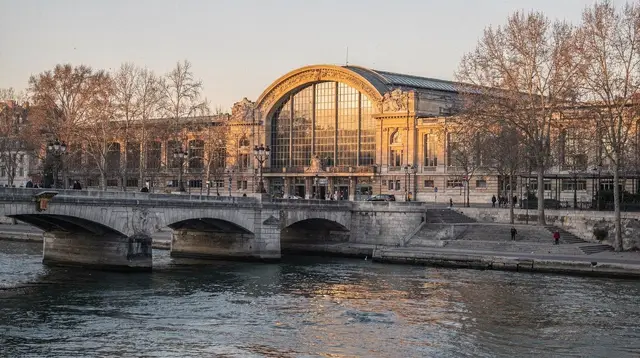
GetYourGuide does not provide a product photo for this activity — the image shows the meeting point, photographed by us.