Three days in Paris
A city that opens up over three days
Two days in Paris covers the postcard version: the Eiffel Tower, the Louvre, Notre-Dame, a walk through Montmartre and an evening in Le Marais. A third day changes the shape of the trip rather than just adding more sites to the list. It sends the reader across the Seine to the Rive Gauche — the Left Bank — for the first time, and pairs the studenty energy of the Latin Quarter and Saint-Germain with the Haussmannian formality of the Champs-Elysees and Opera. Everything below stays inside Paris intra-muros, on foot and by metro. Versailles and Giverny belong to longer stays, not this one.
Paris is arranged in 20 arrondissements, numbered in a clockwise spiral from the 1st (around the Louvre) out to the 20th, with postal codes from 75001 to 75020. The Rive Droite sits north of the Seine, the Rive Gauche south of it. Crossing the river on day three is the itinerary’s real turning point: everything on days one and two happens on the Right Bank or on the islands in the river; day three is the first time the reader properly settles into the Left Bank.
Day 1: Eiffel Tower, Trocadero, Louvre and Tuileries
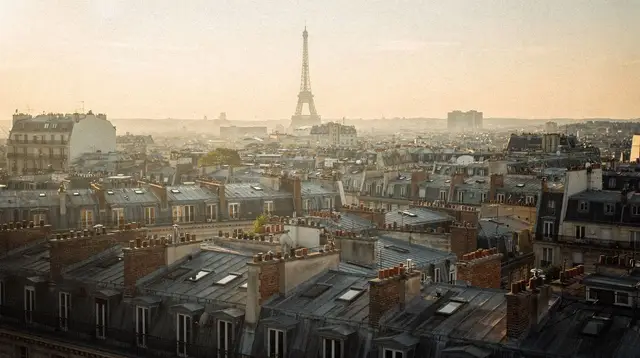
Start early at Trocadero, which gives the clearest view across the river to the Eiffel Tower before the esplanade fills up. Walk down to the Champ de Mars and cross to the tower itself. Built for the 1889 World’s Fair, it stands around 330 metres including its antennas. Book a timed entry in advance — turning up without one usually means a long wait, and the wait is the single most common complaint about the visit. Climbing to the second floor is possible by lift or stairs; the summit is lift-only from there.
a multi-day pass covering the Louvre, Orsay, Orangerie and other major museums is worth considering here if the rest of the week includes several museum stops — it does not remove the need to book a timed slot at the Louvre, only the need to buy separate tickets.
In the afternoon, head to the Louvre and Tuileries. The Louvre is closed on Tuesdays and requires a reserved timed entry even with a museum pass — check the day of the week before planning around it. Inside, most first-time visitors aim for a short list of headline works rather than trying to cover the whole museum; a guided visit is the more efficient way to do that in an afternoon.
a guided visit of the Louvre’s main galleries keeps the afternoon focused instead of wandering room to room. Afterward, the Tuileries garden is a straightforward, flat walk back toward the river — a good way to close a day that has covered a lot of ground.
Dinner near the Louvre or along the river keeps the first night simple; there is no need to venture further afield yet.
Day 2: Notre-Dame, the Seine, Montmartre and Le Marais
Day two is the busiest of the three and stays entirely on the Right Bank and the islands. Begin on the Ile de la Cite, where Notre-Dame de Paris, the Sainte-Chapelle and the Conciergerie sit within a few minutes’ walk of each other. Notre-Dame’s cathedral entry is free; a reserved slot, even a free one, avoids standing in line. The Sainte-Chapelle’s stained glass and the Conciergerie’s medieval halls are separate paid visits worth pairing together if there is time.
a combined tour covering Notre-Dame, the Sainte-Chapelle and the Louvre is one way to fit all three without working out the logistics yourself.
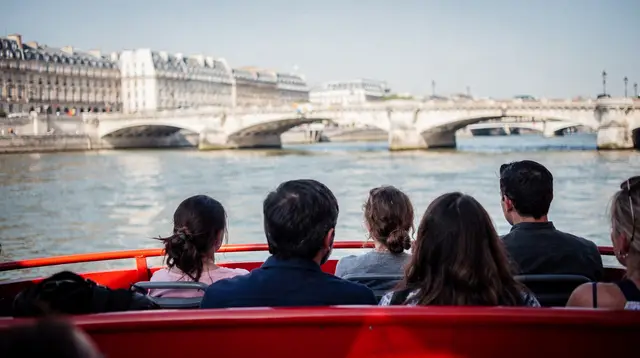
Mid-morning, walk to the river for a look at the Seine. The riverbanks between the Eiffel Tower and the Ile Saint-Louis are a UNESCO World Heritage site, listed in 1991, and a short cruise is a useful way to see the monuments from the water rather than from the street. It is a good midday break between the morning on the islands and the afternoon in Montmartre.
In the afternoon, take the metro up to Montmartre. The Sacre-Coeur and the streets around Place du Tertre are steep and can be crowded, and pickpockets are genuinely active on the steps up to the basilica — keep bags closed and be wary of anyone offering a “friendship bracelet.” The neighbourhood rewards slow walking more than a checklist of stops.
In the evening, head back down toward Le Marais for dinner. It is one of the few Right Bank neighbourhoods where a meaningful number of shops and restaurants stay open on Sundays, which matters if day two falls on one.
a sit-down dinner cruise on the Seine with a glass of Champagne is a fitting way to end the second day if a quieter, seated evening sounds better than another neighbourhood on foot — book it instead of the walking dinner above, not in addition to it.
Day 3: crossing the river to the Latin Quarter and Saint-Germain
This is the day that makes a three-day trip different from a two-day one. Start by crossing the Seine to the Latin Quarter and Saint-Germain — the first proper Left Bank morning of the trip. The Latin Quarter, around the Sorbonne, has a genuinely different feel from the Right Bank neighbourhoods covered on days one and two: narrower streets, a student population, bookshops and cheap eateries rather than grand boulevards. Saint-Germain-des-Pres, just to the west, shifts the tone again toward literary cafes and higher-end boutiques.
Les Invalides sits at the western edge of this stretch, across the esplanade from Saint-Germain, and holds Napoleon’s tomb along with the army museum. It is a reasonable late-morning stop if the pace allows for one more indoor visit before lunch.
a guided visit to Les Invalides and Napoleon’s tomb works well slotted in here, between the Latin Quarter and lunch, rather than as a separate outing on another day.
Have lunch somewhere in Saint-Germain or the Latin Quarter — this is one part of Paris where wandering into a side street tends to work out better than searching for a specific address.
In the afternoon, cross back toward the Right Bank, this time to the Champs-Elysees and Opera. The contrast is deliberate: after a morning among narrow Left Bank streets, the wide, formal boulevards around the Arc de Triomphe and the Palais Garnier feel like a different city. Walk the length of the Champs-Elysees toward the Arc de Triomphe, or do it the other direction depending on where the afternoon starts. The Champs-Elysees is one of the few Right Bank areas classified as an international tourist zone, so shops here tend to stay open on Sundays, unlike much of the rest of the city.
End the day, and the trip, around the Opera district or back toward the river for a final evening. There is no need to rush back to a specific monument — day three works best as a slower, more atmospheric close to the visit than days one and two, which cover more ground per hour.
Getting around on all three days
Everything above uses Paris’s metro and RER network — 16 metro lines and 5 RER lines run by Île-de-France Mobilités — plus walking. Since the January 2025 fare reform, single tickets come in two forms: a Metro-Train-RER ticket and a Bus-Tram ticket, both loaded onto a Navigo Easy card or a phone. For a three-day stay, a weekly Navigo pass (Monday to Sunday) or a Paris Visite pass are both reasonable options depending on how the days line up with the calendar week; no price is quoted here because fares change. Driving in Paris is not worth considering for this itinerary — traffic, limited parking and the low-emission zone requiring a Crit’Air sticker make the metro the faster option in nearly every case.
Practical notes for a three-day stay
| Day | Focus | Character |
|---|---|---|
| Day 1 | Eiffel Tower, Trocadero, Louvre, Tuileries | Right Bank monuments |
| Day 2 | Notre-Dame, Ile de la Cite, Seine, Montmartre, Le Marais | Right Bank and the islands |
| Day 3 | Latin Quarter, Saint-Germain, Champs-Elysees, Opera | First full Left Bank day, then back to grand Right Bank axes |
Paris runs on the Europe/Paris time zone, UTC+1 in winter and UTC+2 in summer. Power sockets are 230V/50Hz, type C/E. Service is included by law in cafe and restaurant prices — a tip is appreciated, never required. A per-person, per-night city tax is collected by accommodation providers; no amount is listed here since it varies.
Questions about a three-day Paris itinerary
Is three days enough for the Louvre, Notre-Dame and the Eiffel Tower plus the Left Bank?
Yes, if the days are structured as above: monuments and museums on day one, the islands, Seine and Montmartre on day two, and the Left Bank plus the Champs-Elysees on day three. Trying to compress all of it into two days usually means cutting either the Left Bank or Montmartre entirely.
Do I need to leave Paris on any of these three days?
No. This itinerary stays inside Paris intra-muros the whole time, on foot and by metro. Versailles, Giverny, Disneyland Paris and other day trips belong to longer itineraries, not this one.
What’s different about day three compared to a shorter itinerary?
Day three is the first time the itinerary crosses the Seine to the Rive Gauche. It pairs the Latin Quarter and Saint-Germain in the morning with the Champs-Elysees and Opera district in the afternoon, deliberately contrasting the two areas’ character rather than just adding more sites to a Right Bank list.
Do I need to book the Louvre and Eiffel Tower in advance?
Yes, both need a timed entry booked ahead. The Louvre is closed on Tuesdays; a Paris Museum Pass does not remove the need to reserve a time slot for either site.
Is Notre-Dame open to visitors on this itinerary?
Yes. Notre-Dame de Paris reopened on 7 December 2024 after the 2019 fire. Cathedral entry is free, though reserving a free slot in advance is still worth doing to avoid a line.
Should I worry about pickpockets in Montmartre or on the metro?
It’s worth being alert rather than worried. Pickpockets are genuinely active around the Sacre-Coeur steps, on metro line 1, on the RER B, and near the Eiffel Tower and the Louvre. Keep bags closed and be wary of strangers offering bracelets, petitions or a “found” gold ring.
Is the Champs-Elysees open on Sundays?
Generally yes — it’s one of the international tourist zones where shops can open on Sundays, unlike much of the rest of Paris, where Sunday closures are common outside those zones.
Can I fit Versailles or Giverny into this three-day trip?
Not without cutting something else. Versailles is about 20km southwest of Paris and Giverny about 75km northwest; both are full excursions in their own right and are better added as a fourth day than squeezed into this three-day plan.
tours.3 days
Verified deep-linked GetYourGuide tours. Book through these links and we earn a small commission at no cost to you.
GetYourGuide does not provide a product photo for this activity — the image shows the meeting point, photographed by us.