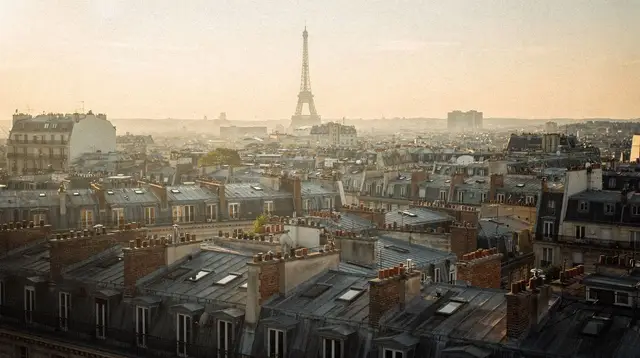
Why Le Marais rewards walking more than a checklist
Most of the destinations on this site have a single reason to visit: a museum with a closing day, a monument with a queue, a stretch of river with a departure schedule. Le Marais doesn’t work that way. There’s no single site to time a visit around, no timed-entry ticket that shapes the day. The neighbourhood is the attraction — its street grid, its shopfronts, its mix of eras stacked on top of each other — and the way to see it is to walk it slowly rather than move from stop to stop.
That distinction matters for planning. If you come to Le Marais expecting a headline sight, you’ll leave underwhelmed. If you come expecting streets worth wandering, courtyards worth peeking into, and a lunch worth lingering over, it delivers.
Where Le Marais sits in Paris
Le Marais spans parts of the 3rd and 4th arrondissements on the Right Bank, just northeast of the city centre. It is not a separate town or a day-trip destination — it’s a Paris neighbourhood, and in the GetYourGuide and Viator catalogues its tours are listed under Paris itself, the same way tours for Montmartre or the Champs-Élysées and Opera are. That means no train, no RER, no special transfer: if you’re staying anywhere in central Paris, Le Marais is a short walk or a few metro stops away, and moving between it and the rest of the city takes minutes, not planning.
This is worth stating plainly because it’s easy to assume, from the way some guides frame it, that Le Marais needs a dedicated excursion. It doesn’t. It’s most often visited as part of a normal day in Paris, folded in before or after another neighbourhood, and it fits naturally into any multi-day Paris itinerary without adding a transport line.
It also sits within easy walking distance of the river, and pairs naturally with an afternoon along the Seine or a stop on the islands at the heart of the city.
A neighbourhood built in layers
What makes Le Marais visually distinct from other Right Bank areas is how much of its street pattern predates modern Paris. The narrow lanes and low, uneven building lines survived the 19th-century redesign of the city that widened boulevards and rebuilt façades elsewhere. Walking here, you notice it immediately: streets narrow enough that cars struggle to pass, stone archways leading into hidden courtyards, and mansions — hôtels particuliers — that once housed the aristocracy before the neighbourhood fell out of fashion and, eventually, back into it.
Those mansions are part of why Le Marais has one of the highest concentrations of small museums and galleries in Paris, tucked into buildings that were never designed to be museums at all. The Carnavalet Museum, dedicated to the history of Paris itself, occupies one such former mansion, and its collection is arranged room by room rather than in the vast open galleries typical of larger institutions. It’s free to enter for the permanent collection, and it’s one of the more approachable ways to understand how the city — not just this neighbourhood — came to look the way it does.
A few streets away, the Picasso Museum is another mansion-turned-collection worth knowing about. Travellers weighing several museums across one trip may find it worth checking this site’s Paris Museum Pass guide before booking anything separately.
a guided visit through the Carnavalet Museum’s rooms, with context on how the mansion and the city around it evolvedRue des Rosiers and the Jewish quarter
One of the neighbourhood’s most distinct threads is its long-standing Jewish quarter, centred on rue des Rosiers and the streets around it. Falafel counters with queues out the door, kosher bakeries, bookshops and synagogues sit alongside newer boutiques, and the layering is part of the point: this is a living neighbourhood with a specific history, not a preserved-in-amber district.
For visitors who want more than a walk-through, a guided history tour fills in what’s easy to miss on your own — where the community’s history intersects with the wider story of the neighbourhood and the city, including periods that don’t show up on a shopfront.
a guided walk through the Jewish quarter around rue des Rosiers, covering its history alongside its food and shopsStreets to know
Le Marais doesn’t have a single main street; it has several worth knowing by name, each with a slightly different character:
| Street or area | Character |
|---|---|
| Rue des Francs-Bourgeois | Boutiques, concept stores, higher-end shopping |
| Rue des Rosiers | Jewish quarter, falafel, bakeries, bookshops |
| Rue Vieille du Temple | Bars, cafés, a livelier evening scene |
| Place des Vosges | Paris’s oldest planned square, arcaded and symmetrical |
| Rue de Bretagne / Marché des Enfants Rouges | Paris’s oldest covered food market |
Place des Vosges deserves a slower look than most visitors give it. It predates the grand boulevards by two centuries and was laid out as a single, symmetrical design — identical façades on all four sides, arcaded walkways at ground level, a garden at the centre. Sitting on a bench there for ten minutes tells you more about how deliberately this part of Paris was planned than most plaques do.
The Marché des Enfants Rouges, a short walk north, is Paris’s oldest covered market, still operating as a working food market with counters selling everything from Moroccan tagines to Japanese bento, eaten standing at shared tables rather than plated in a restaurant. It’s a good midday stop for travellers looking for what to eat in Paris without committing to a sit-down meal.
Shopping, and the Sunday exception
Le Marais’s shopping is part of its identity: independent boutiques, vintage and secondhand clothing, small galleries and concept stores dominate over chains, particularly along rue des Francs-Bourgeois and the streets branching off it.
The detail worth knowing before you plan around it: much of central Le Marais falls within an international tourist zone, a designation that exempts shops there from the rule that closes most Parisian stores on Sundays. That’s unusual. Across most of the city, Sunday is a quiet shopping day — many stores close by law — but in Le Marais, Sunday is often one of the busier shopping days of the week, which makes it a practical answer if a Sunday afternoon in Paris would otherwise be spent looking for something open.
That same tourist-zone status also means Sunday crowds here can be heavier than on a weekday, so if browsing without the crush matters more than convenience, a weekday morning is the better call.
Galleries and street art
Beyond its historic mansions, Le Marais has become one of Paris’s denser pockets for contemporary art, with small independent galleries occupying ground-floor spaces that once housed workshops and ateliers. Many are free to walk into, and gallery-hopping here works well as a loosely structured afternoon rather than a planned route.
The neighbourhood is also known, more quietly, for street art — including a scattering of small mosaic pieces by the artist Invader, tucked onto walls and corners that are easy to walk past without noticing. A tour built around finding them turns a normal walk into something closer to a scavenger hunt, and it’s a good option for visitors travelling with older kids who’d rather look for something than listen to a lecture.
a self-paced hunt for the neighbourhood’s hidden street art, including its small mosaic piecesFor a more structured introduction that ties the streets, the mansions and the shopping district together, a guided walking tour covers the ground efficiently without requiring you to plan a route yourself.
a guided walk through Le Marais’s historic streets, courtyards and squaresFor travellers comparing options before booking, this site rounds up its own picks for Le Marais walking tours and Le Marais food tours separately.
Food: markets, falafel, and pastry
Food is arguably Le Marais’s strongest draw after its streets themselves. Beyond the Marché des Enfants Rouges and the falafel counters of rue des Rosiers, the neighbourhood has a dense concentration of bakeries, wine bars and small restaurants that reward wandering more than reservation-hunting.
A guided food tour is a practical way to sample several stops without guessing which counter is worth the queue and which isn’t — useful in a neighbourhood where the best places rarely have signage that stands out.
a guided tasting route through the neighbourhood’s markets, bakeries and wine bars
If you’d rather explore independently, this site’s guide to what to eat in Paris and best food markets in Paris both cover ground that overlaps with Le Marais without requiring a booked tour. For more value-focused picks nearby, the cheap eats in Paris guide covers similar ground.
What Le Marais isn’t
It’s worth being direct about what this neighbourhood doesn’t offer, since expectations set the visit. Le Marais has no single headline monument, no must-book timed entry, no river view. If you’re looking for that kind of Paris day, it belongs on a different page of this site — the islands at the heart of the city, the grand museums, the Left Bank’s academic quarter each have their own character and their own planning needs, and Le Marais isn’t a substitute for any of them. What it offers instead is texture: the kind of Paris that exists between the sights, in streets that were never rebuilt to impress anyone.
That’s also why it pairs so easily with almost anything else on a Paris itinerary. A morning of sightseeing elsewhere followed by an afternoon here, or the reverse, works better than treating Le Marais as a standalone destination requiring its own dedicated day.
Practical notes
- Getting around: walking is the only sensible way to see Le Marais; its narrow streets weren’t built for anything else, and most of what’s worth seeing is missed from a car or bus.
- Timing: allow at least half a day; a full day if you plan to add a museum, a food tour and unhurried shopping.
- Crowds: weekday mornings are quietest; Saturday afternoons and Sunday afternoons are busiest, partly because of the neighbourhood’s Sunday-open shops.
- Combining with other neighbourhoods: because it sits centrally on the Right Bank with no transfer required, Le Marais slots easily before or after time spent elsewhere in Paris on the same day.
- Where to stay: for travellers weighing whether to base themselves here, this site’s where to stay in Le Marais guide covers the practical trade-offs.
- Understanding the area: for context on how Paris’s arrondissement system works and why Le Marais spans two of them, see this site’s guide to Paris arrondissements explained.
Le Marais neighbourhood: frequently asked questions
Is Le Marais a separate town from Paris?
No. Le Marais is a neighbourhood within Paris itself, spanning parts of the 3rd and 4th arrondissements on the Right Bank. It’s sold as part of Paris in every tour catalogue, and no train, RER or special transfer is needed to reach it from any other Paris neighbourhood.
Why are shops open in Le Marais on a Sunday when much of Paris is closed?
Parts of Le Marais fall within an international tourist zone, a status that lets shops open on Sundays when most Parisian stores are shut by law. It’s one of the few neighbourhoods in the city where Sunday shopping is genuinely normal, not the exception.
How long do you need in Le Marais?
Half a day covers the main streets and a market lunch; a full day allows time for a museum, a food tour and unhurried browsing. It rewards slow walking more than a fixed list of stops.
What is Le Marais known for?
Narrow historic streets lined with 17th-century mansions, independent boutiques, art galleries, a long-standing Jewish quarter around rue des Rosiers, and one of Paris’s most walkable concentrations of cafés and food shops.
Is Le Marais good for a first visit to Paris?
Yes, especially as a contrast to sightseeing-heavy days elsewhere in the city. It works best as unstructured time: no timed-entry ticket dictates the pace, so it suits visitors who want to slow down.
What is the best time of day to visit Le Marais?
Weekday mornings are quietest. Saturday afternoons and Sunday early afternoons draw the biggest crowds, since Sunday opening is part of the neighbourhood’s appeal.
Can you combine Le Marais with other parts of Paris in one day?
Yes. Because it sits centrally on the Right Bank, Le Marais pairs easily with a morning or afternoon elsewhere in the city without adding meaningful travel time.
Is Le Marais expensive?
It varies street by street. Rue des Francs-Bourgeois and the area around Place des Vosges have higher-end boutiques, while the market streets and falafel spots nearby are some of the better value food options in central Paris.