Food and wine tours in Le Marais
What is a Le Marais food tour like?
It is a walking tasting route through narrow Le Marais streets and the covered market, stopping at bakeries, cheese and wine shops, and Jewish and historic food addresses, usually lasting two and a half to three and a half hours. It is a grazing walk, not a sit-down meal, and popular time slots around lunch and late afternoon fill up first.
What sets a Le Marais food tour apart
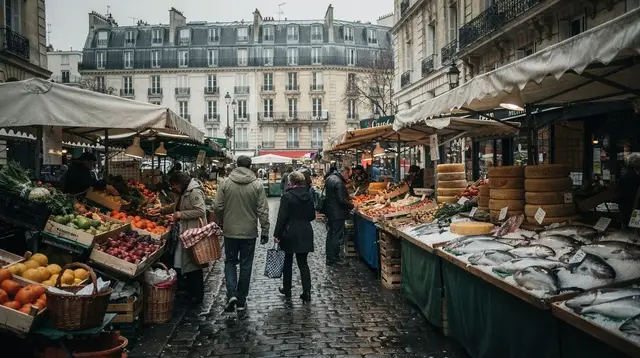
Le Marais sits on the Right Bank of the Seine, a short walk or a couple of metro stops from the Louvre or the Champs-Elysees. It is a quarter of Paris, not a town of its own, so nothing here requires a special transfer or an early start the way a day trip to Versailles or Giverny does. What a visitor is really booking when they book a food tour here is a specific texture of the city: narrow medieval streets, a covered market, and a density of small food shops that few other Paris quarters can match.
That density is the reason food and wine tours cluster in Le Marais rather than spreading evenly across the city. A single short block can hold a boulangerie, a cheese shop, a Jewish bakery, a chocolatier, and a wine bar, all within tasting distance of each other. A guide can build a route of six or seven stops without doubling back or crossing a major road, which is exactly what makes the format work as a walk rather than a bus tour.
What the tastings actually cover
A typical route moves through several categories rather than repeating one type of shop. Expect some combination of:
- Fresh bread and viennoiserie from a neighbourhood boulangerie
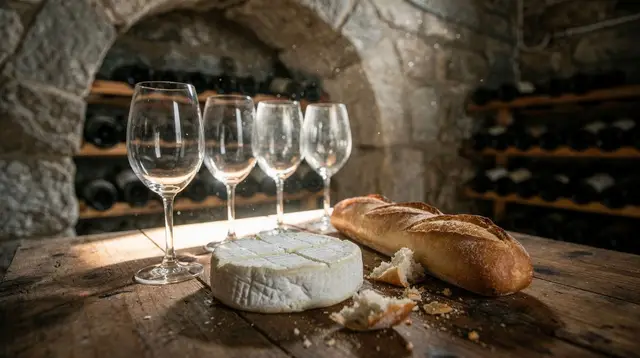
- Cheese, often paired with a short explanation of affinage and regional origin
- Charcuterie or a savory tasting from a small traiteur
- Chocolate or macarons from an artisan pastry shop
- A wine or spirits tasting, sometimes natural wine from a specialist cave
- One or two stops tied to the quarter’s Jewish food history, such as falafel or a specific bakery item associated with the Rue des Rosiers area
The covered market, the Marche des Enfants Rouges, comes up on several routes as a single stop that packs multiple small producers into one space, which is useful when a route needs to cover a lot of ground in a limited window.
Duration and pacing, honestly
Set expectations correctly before booking: this is a walking tasting format, not a restaurant meal. Group tours generally run two and a half to three hours, and some private or extended itineraries stretch closer to four. Portions at each stop are usually generous enough that skipping breakfast, or eating a light one, is the more useful preparation than expecting a formal lunch afterward.
The pace is unhurried by design. A route with seven stops over three hours leaves real time to talk with shopkeepers, hear about a bakery’s history, or ask questions about an ingredient, rather than rushing from door to door. That slower pace is part of what separates a food tour from a general sightseeing walk through the same streets.
| What to expect | Typical range |
|---|---|
| Tour length | 2.5 to 3.5 hours (private options up to ~4 hours) |
| Number of tasting stops | 5 to 8 |
| Group size | Small group or private, varies by operator |
| Walking distance | A few short blocks, mostly flat |
| Best booked | Several days ahead for peak slots |
Booking window: when slots actually fill up
Late morning departures, timed to finish around lunch, and late-afternoon departures, timed as an early-evening snack before dinner, are the two windows most in demand. Both fill first because they suit the two moments in a day when a visitor is naturally hungry and has no other plan competing for that hour. A midday slot booked only a day or two ahead is the one most likely to be gone, particularly during the April to June and September to October stretches when Paris sees its heaviest visitor numbers. Booking a preferred time slot a week or more ahead is the safer approach rather than assuming availability will hold.
Private tours, including options like a private food tour built around a smaller group’s own schedule, offer more flexibility on start time precisely because they are not tied to a fixed group departure. That flexibility comes at a higher price per person, which is the trade-off worth weighing against a set-time group tour.
How this differs from the Left Bank’s food scene
The Quartier latin and Saint-Germain, across the river on the Rive Gauche, has its own strong food identity, but it leans toward sit-down bistros, wine bars, and a market culture built around Rue Mouffetard and Rue de Buci. Le Marais leans the other way: toward small counters, takeaway pastry, and a walkable density that suits grazing rather than sitting. Neither is better, but they are different enough that a visitor doing both quarters on the same trip should not expect a repeat experience. A Saint-Germain and Latin Quarter food tour and a Le Marais food tour will not overlap much beyond the general format of a guided tasting walk.
Where food and history overlap, and where they do not
Le Marais also has a dedicated walking tour guide elsewhere on this site, built around the quarter’s architecture, its hotels particuliers, and its evolution from an aristocratic district to today’s mix of historic and contemporary Paris. This page stays on tastings, but the two subjects cannot be fully separated on the ground: a food route inevitably passes the same courtyards, the same Rue des Rosiers storefronts, and the same market hall that a history-focused walk would cover. A tour billed specifically around Jewish history, such as a guided walk through the Jewish quarter’s history and food traditions, sits deliberately between the two: it tastes, but it also explains.
For a visitor who wants both threads in one outing, several operators build combined routes. One option pairs tastings with a broader look at the quarter’s food and art history across multiple stops, including a seven-tasting walk that mixes food stops with the quarter’s art and architectural history. For a visitor who wants tastings only, a route like a small-group tasting walk through the quarter’s food shops keeps the focus tighter.
Shopping and self-guided options
Not every visitor wants a guided narration with every bite. A shopping-focused format, such as a hands-on masterclass built around shopping for and understanding Le Marais’s food specialties, suits someone who wants to leave with both a tasting and the knowledge to shop the quarter alone afterward, perhaps for a picnic to eat later by the Seine or in the Tuileries.
For those without a booked tour at all, the Marche des Enfants Rouges can be visited independently, and Rue des Rosiers, Rue de Bretagne, and Rue des Francs-Bourgeois reward slow, unstructured wandering with a list of shop names rather than a guide. The trade-off is context: a guide explains what a shop is known for and why, which a self-guided walk cannot replicate without prior research.
What to skip or reconsider
A few honest notes worth factoring into a booking decision:
- Skip a food tour on an already full sightseeing day. Three hours of walking and eating competes directly with a morning at the Louvre or an afternoon in Montmartre. Pairing a food tour with one other loosely structured activity works better than stacking it against a timed museum entry.
- Do not expect a Michelin-level sit-down meal. The format is built for breadth across many small producers, not depth at one table. A visitor wanting a formal dinner should book that separately.
- Watch dietary restrictions carefully. Tastings are pre-selected by the operator and heavy on bread, dairy, and occasionally pork-adjacent charcuterie; a route built around Jewish food traditions may in fact suit kosher-adjacent or pork-free preferences better than a general route, but this should be confirmed directly with the operator rather than assumed.
- Bring comfortable shoes, not a strict dress requirement. The walking surfaces are cobblestone in places and the route covers real distance even if it looks short on a map.
Getting there and combining with the rest of the visit
Because Le Marais sits inside Paris proper, reaching a tour’s meeting point is a matter of a short metro ride from most Right Bank or central hotels, not a transfer requiring advance planning the way Versailles or Fontainebleau would. A food tour pairs naturally with a slower afternoon spent in the quarter afterward, browsing the boutiques along Rue des Francs-Bourgeois or sitting in Place des Vosges once the tasting stops are done. It pairs less naturally with a day already built around a fixed-entry monument like Notre-Dame de Paris or the Eiffel Tower, both of which run on their own reserved-slot schedules.
Travellers planning where to base themselves for a trip built partly around Le Marais’s food scene can check where to stay in Le Marais for a sense of the quarter’s hotel options relative to the rest of the city.
Metro access and tickets
Paris runs a dense transit network under Île-de-France Mobilités: 16 metro lines plus 5 RER lines, alongside trams and buses, and Le Marais sits close to several of them, which is part of why a food tour here rarely requires more than a short ride to the meeting point. Since a January 2025 ticketing reform, single-journey travel splits into two products: a Metro-Train-RER ticket and a separate Bus-Tram ticket, both loaded onto a reusable Navigo Easy card or a phone rather than sold as the old paper carnet.
A visitor staying several days and moving around the city daily, not just for a single food tour, is usually better served by a weekly Navigo pass running Monday to Sunday, or by a Paris Visite pass aimed specifically at short-stay tourists. See the Paris metro guide and the metro tickets and Navigo guide for how the ticket types compare. None of this changes the tour itself, but arriving at the meeting point with a working ticket already loaded avoids losing minutes at a machine right before a tour departs on a fixed schedule.
A private route for smaller groups
Groups of two to six who prefer their own pace, without joining a fixed departure, have another option worth naming directly: a food and wine tasting route through the quarter’s markets and shops. It runs the same category of stops as the group tours above, tea, cheese, bread, wine, but on a schedule set closer to the group’s own preferences.
Paying for tastings, extras, and market shopping
Cards and contactless payment are accepted almost everywhere in Paris, including most boulangeries, cheese counters, and wine shops that appear on a typical Le Marais route, so a tour itself rarely requires cash. The exception is the covered market, where a handful of the smaller stalls at the Marche des Enfants Rouges still prefer a few euros in cash for a quick purchase, and the same applies to any street market stop a self-guided wander might add afterward. Carrying a modest amount of cash alongside a card covers both situations without overthinking it; the money, cards, and payments in Paris guide has more detail for a first-time visitor working out a currency and payment strategy for the whole trip.
On the question of tipping specifically, service is already included by law in the price of French restaurant and cafe bills, and the same principle carries over to a guided food tour: nothing is owed beyond the tour price itself, though a modest tip for a guide who went well beyond the standard route remains a personal choice rather than an expectation. The tipping in Paris guide covers the wider picture beyond food tours specifically, including cafes, taxis, and hotel staff.
Seasonal timing beyond the booking window
Beyond which time slot fills first on a given day, the calendar matters too. April through June and September through October are generally the most comfortable stretches for a few hours of walking between stops, before summer heat sets in and after the heaviest crowds of peak season thin out. August deserves a specific note for anyone building a food-focused itinerary: it is the month many Parisians leave the city for their own holidays, and while the larger tour operators keep running, a meaningful share of small independent bakeries, cheese shops, and family-run traiteurs close for two or three weeks at a time.
A route built around named small producers can occasionally swap a stop at short notice for this reason, which is worth knowing rather than being surprised by on the day. Winter tours still run and pair naturally with the city’s Christmas lights and markets, though a shorter, colder day argues for booking a slot that finishes before dusk rather than one timed to end after dark. The Paris in August guide covers this seasonal closure pattern in more depth for anyone planning a summer trip around food.
FAQ: food and wine tours in Le Marais
How long does a Le Marais food tour take?
Most run two and a half to three and a half hours, covering a compact walking route through the quarter’s streets and the covered market. A handful of longer private options run closer to four hours.
Do Le Marais food tours include a full meal?
No. Expect a series of tastings at bakeries, cheese counters, chocolate and pastry shops, and wine or spirits stops rather than one sit-down restaurant meal. Portions add up, but arrive without a heavy breakfast if you want to taste everything on offer.
Is Le Marais a good area for food tourism compared to other Paris quarters?
It is one of the strongest, thanks to a covered market, dense concentration of small food shops, and a historic Jewish quarter with its own specialties. It has a different character from the Left Bank’s Latin Quarter and Saint-Germain-des-Pres, which lean more toward sit-down bistros and wine bars.
Do I need to book Le Marais food tours in advance?
Yes, especially for late morning and late afternoon slots, which are the most requested times and the first to sell out. Group sizes on walking food tours are usually kept small, so availability narrows quickly once a date opens.
Is tipping expected on a Paris food tour?
No. Service is included by law in French restaurant and cafe prices, and that extends to the food stops on a tour. A small tip for a guide who has clearly gone beyond the standard route is a personal choice, never an obligation.
Do I need special transport to reach Le Marais from elsewhere in Paris?
No. Le Marais is a Right Bank quarter of Paris itself, not a separate town, and it sits within easy metro reach of the rest of the city. No dedicated transfer or day-trip logistics apply.
What is the difference between a Le Marais food tour and a Le Marais walking tour?
A food tour is built around tastings, with the quarter’s streets as the route between stops. A walking tour is built around the quarter’s history and architecture, with food shops appearing only where the two naturally overlap, such as the covered market or a historic bakery facade.
Paris food and wine tasting tours on GetYourGuide
Verified deep-linked GetYourGuide tours. Book through these links and we earn a small commission at no cost to you.
GetYourGuide does not provide a product photo for this activity — the image shows the meeting point, photographed by us.