Wine tasting in Paris: a practical guide
Can you do wine tasting in Paris itself?
Yes, but not in a vineyard. Paris tastings happen in cellars, wine bars and dedicated tasting venues in the city, usually paired with cheese, bread or pastry, led by a sommelier or guide. The nearest actual vineyards, in Champagne or the Loire Valley, are separate day trips, not part of a city wine tasting.
Paris is a city for tasting wine, not for growing it
Worth clearing up before anything else: Paris itself is not a wine region. Île-de-France has no working vineyards worth mentioning, and nothing sold as “wine tasting in Paris” involves standing among vines. What is on offer, in large numbers, is city-based tasting — cellars, wine bars, dedicated wine museums and hands-on workshops where a sommelier or guide pours bottles sourced from Bordeaux, Burgundy, the Loire Valley, Champagne and beyond, and walks a group through how to taste them.
That distinction matters because it is easy to conflate two different products. A wine tasting booked in Le Marais or Saint-Germain-des-Pres is a city activity, typically ninety minutes to a couple of hours, often paired with cheese or bread. A vineyard visit is a separate excursion out of Paris entirely, most commonly to Champagne (Reims and Epernay) or the Loire Valley, covered in their own guides, not this one. If what you actually want is to walk between rows of vines, this page is the wrong stop — head to the champagne day trip guide or the Loire Valley chateaux day trip guide instead.
This guide is also deliberately narrow next to two other pages on this site. What to eat in Paris covers food broadly — bakeries, bistros, markets, pastry — and only touches wine in passing. Best food markets in Paris is about produce markets, not tasting sessions. This page stays on wine: what the formats are, where they cluster, what to book ahead, and what an honest guide should say about a category that gets oversold as effortlessly romantic.
What “wine tasting” actually means in the Paris catalogue
Under the city’s gastronomy and wine listings, wine tasting in Paris splits into a handful of recognisable formats rather than one single product:
- Guided tastings paired with cheese. A sommelier or host pours a flight of wines matched with a selection of French cheeses, usually in a small group, in a cellar or dedicated tasting space. This is the most common format by far.
- City tours built around a tasting stop. A walking or small-group tour that covers a neighbourhood and ends, or is punctuated by, a seated wine and cheese tasting — part sightseeing, part tasting.
- Wine courses and museum-based tastings. Structured sessions at a dedicated wine venue, closer to a short class than a casual pour, aimed at people who want the “why” behind what they are drinking.
- Workshop formats that combine wine with another craft. Cheese-making, bread-baking, pastry or macaron workshops that include a wine tasting component alongside the hands-on activity.
- Blending workshops. A more hands-on format where participants blend their own wine under guidance and usually leave with a bottle.
None of these are vineyard tours. All of them happen inside Paris, in a cellar, bar, workshop kitchen or museum space.
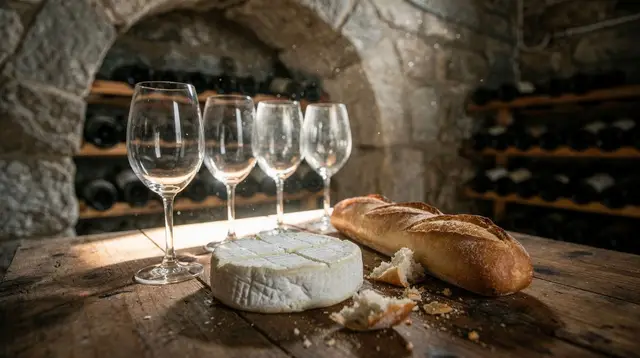
a guided wine and cheese tasting in a Paris cellar is the closest thing to a default choice for a first visit: a manageable length, a format built for people with no wine background, and a pairing that keeps the session from feeling like a lecture.
Where these tastings cluster in the city
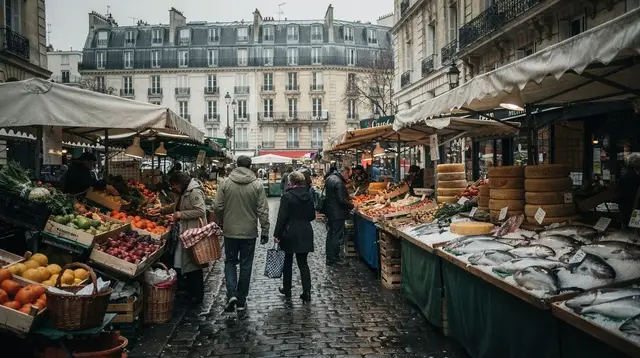
Wine bars and tasting venues are not spread evenly across Paris. They concentrate in a few areas, and knowing this helps with planning a day rather than crossing the city for one booking.
| Area | What you will find |
|---|---|
| Le Marais | Dense cluster of small wine bars and cellar tastings, easy to combine with a Le Marais food tour |
| Saint-Germain-des-Pres and the Latin Quarter | Historic wine bars, several sommelier-led tastings, natural pairing with a Saint-Germain and Latin Quarter food tour |
| Montmartre | Smaller, more casual wine bars, often folded into Montmartre food and wine tours |
| Dedicated wine museums and course venues | Structured tastings and short courses, a different rhythm from a bar-based session |
None of this rules out a spontaneous glass at a wine bar with no booking at all — that remains one of the easiest things to do in Paris on any evening. The formats worth planning ahead are the seated, guided ones.
Why booking ahead matters for this category
Small-group and sommelier-led tastings run on fixed time slots with a capped number of seats — a cellar only fits so many people around a table, and a guide can only pour for one group at a time. The formats that combine wine with another activity, such as a cheese-making workshop that includes a wine tasting, are even more schedule-bound, since they depend on kitchen space and equipment as well as seats.
Evenings and weekends are the slots that fill first, unsurprisingly, since most visitors and plenty of Parisians want to taste wine after a day of sightseeing rather than mid-morning. Booking a few days ahead, more if the trip falls in a busy season such as spring or the run-up to the winter holidays, avoids the flat disappointment of finding every reasonable evening slot gone once you are already in the city. This is a smaller stakes version of the same logic that applies to timed entry at the Louvre or Eiffel Tower — the popular slot is the one that disappears first, not the whole product.
Formats for people who want more than a pour
Not every wine tasting in Paris is a simple flight-and-cheese session. Several formats go further:
a structured wine tasting course at a dedicated Paris wine museum suits anyone who wants an actual framework — how to read a label, how regions differ, how to taste systematically — rather than a purely social pour. It runs closer to a short class than a bar visit, and is worth choosing over a casual tasting if the goal is to leave knowing more, not just having tasted more.
For a hands-on angle, a wine blending workshop where you leave with your own bottle flips the usual format: instead of tasting wines someone else made, participants blend a wine themselves under guidance. It tends to run a little longer than a standard tasting and suits a small group looking for something with a physical outcome to take home.
Beyond wine specifically, several workshop formats pair a craft with a tasting on the side — cheese-making, bread-baking, macaron-making and pastry classes that all include a wine or wine-and-cheese component. These are worth choosing when the craft itself is the draw and the wine is a welcome addition, not the other way round.
What to actually expect at a tasting
A typical guided tasting in Paris runs somewhere between ninety minutes and two and a half hours, held around a table in a cellar, wine bar back room, or dedicated tasting space, in a small group rather than a one-on-one setting. A host or sommelier introduces each wine, talks through where it comes from and what to notice, and pours in stages rather than all at once. Cheese, when included, arrives matched to specific pours rather than as a separate course. English is available at essentially every tasting aimed at visitors, alongside French.
What an honest guide should flag: this is not a wine expertise fast-track, and nobody should expect to leave able to blind-taste a Bordeaux from a Burgundy after one session. It is also not a meal — pairings are portioned to accompany the wine, not to replace dinner, so plan to eat separately before or after. And because service is already included by French law in the price of anything ordered at a restaurant, cafe or wine bar, there is no obligation to tip on top of a tasting price, though rounding up for a host who clearly put in the effort is a normal, appreciated gesture — see tipping in Paris for the fuller picture.
Combining wine with sightseeing
For visitors who want the city and the glass in one outing, a guided city tour that ends in a wine and cheese tasting folds both together rather than requiring two separate bookings. It suits a first day in Paris better than a standalone tasting, since it doubles as an orientation walk through a historic neighbourhood before the sit-down portion begins.
This is also a natural pairing with an existing itinerary rather than a separate errand: an evening tasting slots easily after a day built around the Louvre and Tuileries or the Seine, and fits without much replanning into broader guides such as things to do in Paris or a first full day covered in a three-day Paris itinerary.
A note on cost and honesty
No fixed price belongs in this guide, because tasting prices vary by venue, group size, number of pours and whether food is included, and any number written here would be out of date within months. What is worth saying plainly: cheaper does not always mean a worse tasting, and the most expensive listed option is not automatically the best one for a beginner. A structured course suits someone who wants depth; a simple wine and cheese pairing, such as a straightforward wine and cheese tasting session, suits someone who wants an easy, sociable evening without much commitment. Reading exactly what is included — how many pours, whether cheese or a full pairing menu comes with it, and the running time — matters more than chasing the lowest or highest price on a list.
For a fuller sense of how wine tasting sits inside Paris food culture more broadly, including where it overlaps with markets and everyday meals, what to eat in Paris and best food markets in Paris are the wider-angle companions to this page. For hands-on cooking rather than tasting, see Paris cooking classes, and for a private, tailored version of any of this, hiring a private guide in Paris covers how that works.
Frequently asked questions about wine tasting in Paris
Is Paris in a wine region?
No. Paris sits within Île-de-France, which has no working vineyards to speak of. Wine tasted in the city is sourced from regions such as Bordeaux, Burgundy, the Loire Valley and Champagne and brought to a Paris cellar, wine bar or tasting room.
Do I need to book wine tasting in Paris in advance?
For small-group and sommelier-led formats, yes. These run on fixed schedules with limited seats, and the most requested slots (evenings, weekends) sell out first. Walk-in wine bars are more flexible, but a seated tasting with a guide is not.
Is wine tasting in Paris the same as visiting a vineyard?
No. A Paris tasting is a cellar or bar-based session in the city, built around bottles brought in from elsewhere. Visiting an actual vineyard means a day trip out of Paris, most commonly to Champagne (Reims and Epernay) or the Loire Valley.
Is service included at Paris wine bars and tastings?
Service is included by law in the price shown at French restaurants, cafes and wine bars. Rounding up or leaving a few euros for good service is common but never expected.
What is combined with wine in a typical Paris tasting?
Cheese is the most common pairing, followed by bread, charcuterie and, in a few workshop formats, pastry or macarons. Pure wine-only tastings exist too, particularly at dedicated wine museums and courses.
Can beginners join a wine tasting in Paris?
Most guided tastings are built for a general audience, not specialists, and a guide talks through basics such as how to taste, note aromas and compare styles. Course-style formats go deeper for anyone who wants more structure.
Where in Paris are wine tastings usually held?
Cellars and wine bars cluster around Le Marais, Saint-Germain-des-Pres and the Latin Quarter, alongside a handful of dedicated wine museums and course venues elsewhere in the city.
Paris food and wine tasting tours on GetYourGuide
Verified deep-linked GetYourGuide tours. Book through these links and we earn a small commission at no cost to you.
GetYourGuide does not provide a product photo for this activity — the image shows the meeting point, photographed by us.