Food and wine tours in the Latin Quarter and Saint-Germain-des-Prés
What do food and wine tours in the Latin Quarter and Saint-Germain-des-Prés actually cover?
Small-group walks that combine several tastings, usually cheese, charcuterie, pastry and wine, across a handful of stops around the Sorbonne and Saint-Germain-des-Prés. Most run two to three hours on foot, and evening departures with a sit-down meal or a fixed tasting flight can fill up before the day of the tour.
Left Bank tastings, not a shopping walk
The Latin Quarter and Saint-Germain-des-Prés sit side by side on the Rive Gauche, the southern bank of the Seine, a short walk from the Musée d’Orsay and the river itself. This is university territory: the Sorbonne, narrow streets full of secondhand bookshops, and cafés that have been serving the same corner for well over a century. It is also, less obviously, one of the more rewarding places in Paris to eat and drink your way through an afternoon or evening, because the density of small wine bars, cheese shops and bakeries here has more to do with decades of student and academic life than with any deliberate tourist trail.
That distinction matters when choosing a tour. A food tour in Le Marais, on the Rive Droite, moves through a very different neighbourhood: concept stores, falafel counters, and a younger, more fashion-driven crowd. The Latin Quarter and Saint-Germain-des-Prés feel older and more literary — the tastings you get here tend to sit next to a bookshop window or a church rather than a boutique, and the guides lean on the area’s academic and publishing history as much as on its food history.
It is also worth separating a tasting tour from a straightforward walking tour of Saint-Germain and the Latin Quarter. Both cover roughly the same ground — Saint-Germain-des-Prés church, the Sorbonne, the Latin Quarter’s medieval-scale streets — but a walking tour is built around that heritage, with food, if any, as an occasional stop. A food and wine tour flips the balance: the stops are tastings, four to eight of them depending on the format, and the streets in between are simply how you get from one to the next. If your priority is cheese, charcuterie, pastry and wine rather than architecture and history, choose the tasting format; if it is the reverse, the walking tour is the better fit.
The Panthéon, a short walk from most tasting meeting points, is the neighbourhood’s other big landmark and worth folding into the same outing if a tour ends mid-afternoon; see the Panthéon guide for what a visit involves. Travellers building a longer Left Bank day often treat sightseeing and tasting as separate blocks of time rather than squeezing both into one afternoon, since a good tasting walk already runs two to three hours on its own.
What a typical tasting walk covers
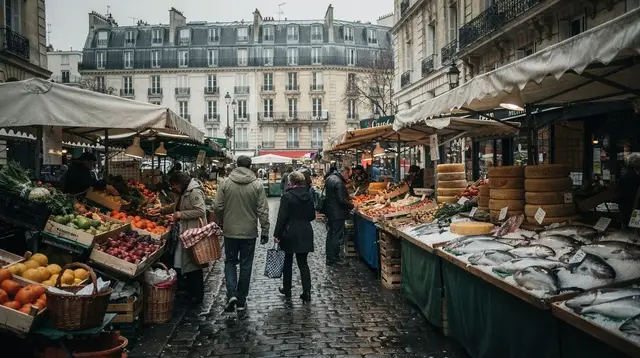
Most food and wine tours in this part of Paris are small-group walks on foot, capped at a modest number of participants so everyone can hear the guide and actually taste what is on offer. A standard route moves between four and eight stops: a cheese shop for a short tasting and an explanation of how French cheese is classified, a bakery or pastry counter, a wine bar for a glass or two paired with something savoury, and often a chocolate or charcuterie stop somewhere in the middle. Guides typically speak about the producers behind each stop, not just the product, and about how the neighbourhood’s university history shaped its food culture.
A traveller who wants a heavier, more structured version can look at the Latin Quarter tour built around a full seated meal rather than a string of small bites. That format runs closer to three hours because a real chunk of the time is spent at the table, not walking between shops, and it suits an evening better than a mid-afternoon slot. For a lighter, more classic tasting circuit through the same streets, the Notre-Dame area food tour with eight tastings covers more ground in the same amount of time, moving briskly between stops rather than settling in for a meal.
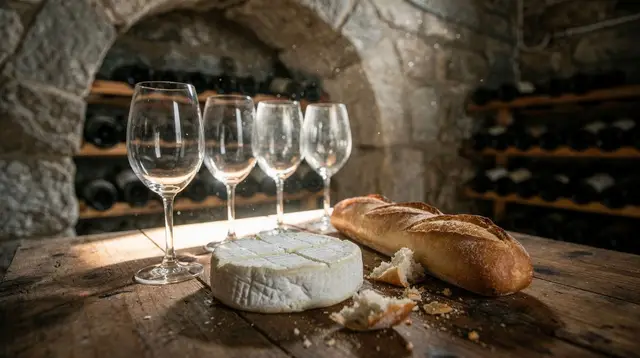
Wine is usually part of the package rather than a separate stop bolted on. The Latin Quarter food and wine tour with a local guide folds tastings of French wine into the same route as the cheese and pastry stops, with the guide explaining regional differences as you go rather than delivering a formal wine class. None of these tours promise a particular vintage or a set number of glasses beyond what the operator lists, so check the listing itself for exact inclusions before booking.
Travellers comparing formats across the city rather than committing to this one neighbourhood can browse the wider Paris food and wine tours category, which covers similar tasting walks in other districts, useful if the Left Bank dates do not line up with the rest of a trip. Most of these tours accommodate vegetarian diets on request, though anyone with a stricter dietary need should confirm with the operator before booking rather than assuming a stop can be swapped on the day.
How long to set aside
| Format | Typical length | Best time of day |
|---|---|---|
| Tasting walk, several small stops | 2 to 3 hours | Late morning or mid-afternoon |
| Tour with a full seated meal | Around 3 hours | Evening |
| Combined walking and tasting tour | 2.5 to 3.5 hours | Afternoon |
These are rough ranges, not fixed schedules — an operator’s own listing is the only reliable source for exact start times and duration. Treat any tour on this list as a half-day commitment once you factor in getting to the meeting point and the wind-down afterward, especially the versions built around a full meal.
Evening slots and any tour anchored around a well-known bistro table or a curated wine flight are the ones most likely to fill up first, particularly on Friday and Saturday nights. If you have a specific evening in mind, especially in the shoulder seasons of spring or autumn when the area is busiest with visitors and students both, book a few days ahead rather than the same afternoon. Daytime tastings are generally easier to find a spot on with shorter notice.
Getting to and from the meeting point rarely adds much time in this part of Paris — most tasting walks start within easy reach of a Paris Métro station, so budget for the tour itself plus a short walk rather than a long transfer either side.
Where this fits against the neighbourhood’s other tours
Saint-Germain-des-Prés and the Latin Quarter carry more than one style of guided experience, and it helps to know which one you are booking. The Saint Germain, Latin Quarter and Notre-Dame walk extends east toward the Ile de la Cité and folds in some food stops along the way, so it works as a middle option between a pure heritage walk and a dedicated tasting tour. If sightseeing is the main goal and eating is secondary, the guided walking tour of Latin Quarter and Saint-Germain covers the same streets with the emphasis on history and architecture instead.
None of this should be confused with the area’s other, more general things to do in the Latin Quarter and Saint-Germain, which also includes museum visits, boat trips on the nearby Seine, and standard sightseeing that has nothing to do with food. If tasting is the point of the outing, look specifically at listings tagged as food or wine tours, not the broader city-tour category.
Getting there and what surrounds it
The neighbourhood sits well within central Paris, easily reached by metro or on foot from most of the Rive Gauche and, across the river, from the Ile de la Cité and the Louvre and Tuileries. It borders the Musée d’Orsay, so a tasting tour pairs reasonably well with a museum morning, though trying to fit both into one day, especially with an evening tasting tacked on, makes for a long day on your feet. The Musée d’Orsay itself is closed on Mondays, worth checking before building a combined day around it.
Because the neighbourhood sits on the Left Bank rather than out near the ring roads, a taxi or ride-hail rarely saves meaningful time over the metro for getting to a meeting point here — see metro versus taxi in Paris for how the two compare across the city generally. Travellers arriving from an airport the same day are usually better off treating a food tour as a second- or third-day activity rather than something booked straight off a flight.
Staying in the area rather than just passing through changes how the food scene feels. Travellers weighing where to stay in Saint-Germain-des-Prés or where to stay in the Latin Quarter get the benefit of walking to a tasting in the evening rather than crossing the city for it, and mornings free to explore the same streets at a slower pace before the tour groups arrive.
Prices, service and what you actually owe
None of the tours listed here have a fixed public price worth repeating in this guide — check the current price directly on the listing, since it moves with season, group size and inclusions. What is worth repeating is how tipping works in France generally, because it trips up a lot of first-time visitors on a food tour that ends at a restaurant table. Service is legally included in the price of French cafés and restaurants, so nothing extra is technically owed once the bill arrives, tasting tour or otherwise. Rounding up or leaving a few euros in cash is common practice at a wine bar or bistro stop, but it is a courtesy, not a requirement, and no guide or venue on one of these tours will expect a percentage tip on top of what you already paid. For more on how this plays out across the city, see tipping in Paris.
The same logic applies to any café stops built into a tour or added on your own afterward — see Paris café culture and etiquette for how ordering, seating and the bill typically work at a Left Bank terrace.
Before and after the tour
A tasting tour is a good anchor for a half day rather than a full one. Pair it with a slower morning at the food markets of Paris if your route passes one, or read up on what to eat in Paris beforehand so the tastings make more sense in context rather than arriving as a string of unfamiliar names. Travellers curious about the area’s specific café habits, including how to order without standing out, can check how to order coffee in a Paris café and what a Paris bouillon restaurant is, a style of cheap, traditional dining that sometimes comes up on these routes.
For a broader sense of where a tasting tour fits into a trip’s food budget, cheap eats in Paris and how much does a trip to Paris cost both cover how a guided tasting compares with eating independently, useful context before deciding whether to book one tour or several.
For travellers planning several days around food specifically rather than a single tour, the Paris food lovers weekend itinerary sets out a broader route that includes this neighbourhood alongside others, and the general food and wine tours category lists the full range of tasting formats across Paris, not just this district, for comparison. If sightseeing rather than food ends up the bigger draw once you’re in the neighbourhood, things to do in Paris and Notre-Dame and Sainte-Chapelle tours cover the monuments a short walk away on the Ile de la Cité.
Who this style of tour suits
A Left Bank tasting walk works well for a solo traveller looking for structured conversation over a meal, and the small-group format suits travellers going it alone better than a table booked for one at a restaurant. Families with older children and teenagers who enjoy trying new foods can usually join, though the pace and the wine stops make most of these tours a poor fit for very young children — for a food-focused day that works better with a family, see Paris with kids for age-appropriate alternatives. Couples looking for something more geared toward atmosphere than education might prefer a slower dinner in the neighbourhood instead of a guided tasting; see romantic Paris for other ideas suited to an evening built around atmosphere rather than a structured itinerary.
Frequently asked questions about food and wine tours in the Latin Quarter and Saint-Germain
How long does a Latin Quarter or Saint-Germain food tour take?
Most walking tastings run two to three hours, moving between four and eight stops on foot. A version built around a full seated meal runs longer, closer to three hours, because part of that time is spent at the table rather than walking between shops.
Is this the same as the Latin Quarter walking tour?
No. A walking tour of the Latin Quarter is built around the streets, churches and university buildings, with food as an occasional stop. A food and wine tour uses the same streets but the stops are tastings, and the guide talks about producers, cheese and wine as much as about the buildings overhead.
How is this different from the food tours in Le Marais?
Le Marais sits on the Right Bank around fashion boutiques, delis and falafel counters. The Latin Quarter and Saint-Germain-des-Prés are on the Left Bank, near the Sorbonne and the Musée d’Orsay, and the tastings here lean more on historic cafés, bookshops and wine bars than on designer shopping streets.
Do I need to book evening tastings in advance?
Evening departures and any tour built around a full meal or a wine flight at a well-known address are worth booking a few days ahead, especially on Friday and Saturday nights, when the smaller tables fill first.
Is a tip expected on top of the tasting price?
No. Service is already included by law in the price of French cafés and restaurants, so nothing extra is owed. Rounding up the bill or leaving a few euros in cash is common but never required, even on a guided tasting that ends at a restaurant table.
Can I combine a food tour with visiting the Musée d’Orsay?
Yes, geographically it works well since the Musée d’Orsay sits on the Left Bank near Saint-Germain-des-Prés, but treat them as two separate outings rather than one afternoon: a tasting walk plus a full museum visit is a long day, and the museum is closed on Mondays.
What should I skip on an empty stomach?
Skip a big breakfast before a tasting tour that includes several savoury and sweet stops, and skip ordering a full lunch right before an evening tour built around a seated meal — most of these tastings add up to more food than a normal restaurant dinner.
Paris food and wine tasting tours on GetYourGuide
Verified deep-linked GetYourGuide tours. Book through these links and we earn a small commission at no cost to you.
GetYourGuide does not provide a product photo for this activity — the image shows the meeting point, photographed by us.