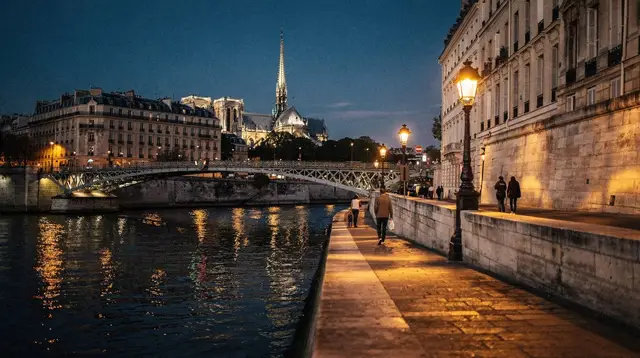
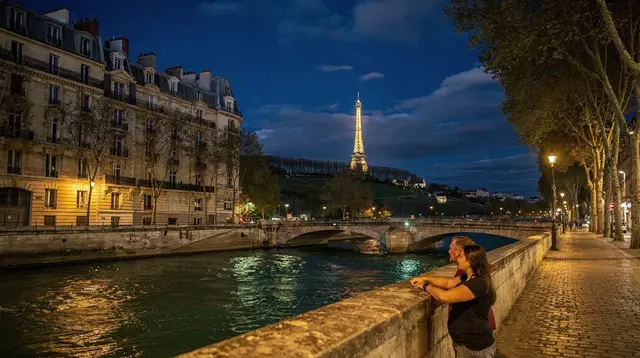
Paris in autumn: what a September or October trip is really like
Is autumn a good time to visit Paris?
Yes. September and October bring softer light, cooler temperatures and fewer crowds than the summer peak, alongside spring as Paris's most comfortable season. Rain is still possible and days shorten noticeably by late October, but queues at major sights ease and locals are back from their own holidays.
Paris in September and October is a different city from the one visitors meet in July. The queues are shorter, the light comes in at a lower angle, and the terraces are full of Parisians rather than only tourists. Alongside spring, autumn is the season locals themselves tend to recommend, and it earns that reputation for reasons that are easy to feel and hard to fake: fewer crowds, kinder temperatures, and a city that has gone back to work.
What makes autumn different from Paris’s other seasons
Autumn does not compete with spring by repeating the same argument twice. Where spring is about a city waking up, with terraces reopening and the first warm afternoons, autumn is about a city settling back into its routine after the summer exodus. The two seasons share comfortable temperatures, but the texture of a visit is different in each.
Understanding Paris’s climate month by month helps set expectations, but the numbers alone do not capture what changes on the ground in September and October: the rentrée, the retreat of the summer crowds, and the shift toward shorter, cooler days as the season progresses toward winter.
September: the rentrée and the last of the summer crowds
Early September still carries some of August’s quiet, but by the second week the rentrée is well underway. Parisians who left the city for August come back, schools restart, and offices fill up again. Restaurants and small shops that closed for the summer, a pattern worth knowing about if a visit is planned for Paris in August, reopen their shutters.
For a visitor this means two things at once. First, the city feels genuinely lived-in again, with the cafés and neighbourhood spots that give Le Marais or the Latin Quarter and Saint-Germain their character back in full swing. Second, the summer’s peak crowds at the big sights have largely moved on, even though September afternoons can still be warm enough for outdoor dining and long walks along the Seine.
Early autumn is a reasonable window for anyone weighing how many days to spend in Paris: the weather cooperates, the city is fully open, and there is no need to plan around August closures.
October: cooler days, softer light, shorter afternoons
October brings a clearer shift. Mornings turn crisp, the trees along the Champ de Mars and the Tuileries begin to change colour, and the light that photographers chase through the city lasts for shorter, more dramatic stretches in the late afternoon. It is a good month for walking neighbourhoods such as Montmartre, where the steep streets and viewpoints suit a cooler day better than a hot one.
Rain becomes more of a feature as the month goes on, and by late October the days are noticeably shorter than they were in September. This is the point where the season starts leaning toward winter: fewer daylight hours, cooler evenings, and a good moment to check a rainy-day plan alongside outdoor ambitions. Museums, covered passages and a long lunch are reasonable ways to wait out a shower rather than pushing through it.
What autumn suits well in Paris
Autumn favours activities that do not depend on long daylight or a heatwave-proof itinerary. Food and wine are a strong match for the season: the best food markets in Paris are in full autumn stock, and a guided tasting is an easy way to spend a cooling afternoon. For a structured introduction to the city’s food scene, a guided food and wine walk through Parisian markets and shops fits the season better than a July heatwave would.
Parks are still worth using before the weather turns fully cold. A relaxed afternoon with a prepared picnic set up in one of the city’s parks works well on the mild days that September and early October still deliver.
Museums earn their keep in autumn as the reliable option on a grey or rainy afternoon. A multi-day pass covering the Louvre, the Musée d’Orsay and dozens of other sites is worth planning around if the itinerary includes more than one wet day, since it still requires the same advance time-slot booking the big museums ask for year-round; see the Paris Museum Pass guide for how it works.
For a first look at the city on arrival, a private transfer from Charles de Gaulle into central Paris avoids the RER B with luggage on a day when the weather is not cooperating, which is more likely in October than in June.
Autumn day trips: what still works and what to check first
Versailles holds up well into autumn. The gardens take on their own seasonal colour, and the palace itself is indoors regardless of weather; see how to get to Versailles from Paris for the practicalities. It remains closed on Mondays whatever the season, so that detail does not change with the calendar.
Giverny is a different story. Claude Monet’s house and gardens open seasonally, roughly from spring through autumn, and typically close for the winter around the end of October or into November. A trip planned for early or mid-autumn is safe; one planned for late October or beyond needs the exact closing date checked before booking, since Giverny’s opening calendar shifts slightly from year to year. Details on getting there are covered in how to get to Giverny from Paris.
Longer excursions such as the Loire Valley or Champagne day trips remain viable in autumn and, for Champagne specifically, coincide with the tail end of the grape harvest in some years, though that timing is not something to promise without checking a specific tour’s dates. Further afield, a Mont Saint-Michel day trip from Paris is a long day either way, and autumn’s thinner crowds make the abbey itself more comfortable to visit without shortening the drive.
Getting around Paris in autumn
Paris runs on Île-de-France Mobilités: 16 metro lines, 5 RER lines, plus trams and buses, and none of that changes with the season. What does matter in autumn is rain: a shower that would be a minor inconvenience in June can derail an afternoon of walking in October, so it is worth defaulting to the metro on grey days rather than planning long walks between sights. Since the January 2025 reform, single tickets come in two forms, a Metro-Train-RER ticket and a Bus-Tram ticket, both loaded onto a Navigo Easy card or a phone; a weekly Navigo pass suits a multi-day autumn stay, while Paris Visite is built for visitors who want an all-in-one option.
The Paris metro tickets and Navigo guide covers how the current system works in practice. Driving into central Paris is not worth the trouble in any season, between traffic, limited parking and the low-emission zone that requires a Crit’Air sticker, and it is even less appealing on a wet autumn evening; taxis and ride-hailing cover the gap when a rainy night makes the metro less appealing.
Arriving in autumn: airports and entry rules
The three airports serving Paris do not change with the calendar, only the weather waiting outside them. Charles de Gaulle (CDG), around 25 km northeast of the city, connects to Gare du Nord and Châtelet via the RER B, with taxis available at the official rank; the CDG to Paris city centre guide covers the options in more detail. Orly (ORY), about 13-14 km south, has been linked to the city by metro line 14 since June 2024, alongside the Orlyval shuttle; see the Orly to Paris city centre guide. Beauvais (BVA), roughly 85 km north and used mainly by low-cost carriers, involves a shuttle bus to Porte Maillot that takes well over an hour, worth factoring into an autumn arrival when daylight is already shorter.
Entry rules are worth a check before an autumn trip, since they shifted recently. France sits inside the Schengen area, so EU, EEA and Swiss citizens travel on an ID card, while visitors from visa-exempt countries such as the UK, the US, Canada, Australia and Japan can stay up to 90 days within any 180-day period. The EU’s new Entry/Exit System (EES), which records fingerprints and a photo at the external border, has been running since 12 October 2025 and is due to be fully rolled out by April 2026, so a first crossing this autumn may take a little longer than an old-fashioned passport stamp.
ETIAS is not yet required; the EU has flagged a launch in the last quarter of 2026 without a confirmed date, so the current advice is to check travel-europe.europa.eu closer to the trip rather than assume anything now. The France visa and entry rules guide tracks the details as they firm up, and other nationalities should plan through france-visas.gouv.fr well ahead of an autumn departure.
Money, tipping and everyday costs in autumn
The currency is the euro, and cards and contactless payments are accepted almost everywhere, though a little cash is still useful for markets, which are worth lingering at while the autumn produce is in season. Service is already included in café and restaurant prices; rounding up or leaving a few coins is appreciated but never expected, a point covered in more depth in the tipping in Paris guide. A per-person, per-night tourist tax is added by accommodation providers, on top of the room rate.
One seasonal quirk worth knowing: many shops close on Sundays outside the international tourist zones, which can catch an autumn visitor out on a quiet weekend when fewer things are open anyway; the Paris Sundays and public holidays guide and the money, cards and payments guide both help with planning around it. Tap water is safe to drink throughout the city, including from the green Wallace fountains, which is a small saving worth using on days spent walking between sights.
Where to stay for an autumn trip
Autumn’s cooler evenings and earlier sunsets make location matter more than it does in high summer, when long daylight forgives a longer walk home. Staying closer to the neighbourhoods a trip is built around, whether that is the Latin Quarter for museum-heavy days or somewhere central for easy metro access everywhere else, cuts down on evening commutes once the light has gone. The where to stay in Paris guide breaks down the main options by neighbourhood and budget.
Packing and practical notes for an autumn trip
Layers do more work in autumn than in any other season. A light jacket or coat, a sweater for cooler evenings, and comfortable shoes for walking cover most days. A compact umbrella earns its place in the bag, since rain remains possible throughout the season and showers in Paris tend to be short rather than day-long. Evenings in October can be genuinely cool, more so than a September evening, so packing for the end of the trip rather than the start avoids being caught out.
Daylight shortens as the season goes on. A day planned around an early sunset in late October should not be built the same way as one in early September, when there is still a long stretch of usable evening light.
What to book ahead of time in autumn
Autumn’s thinner crowds do not remove the need to reserve a time slot for the sights that require one year-round. The Louvre still closes on Tuesdays and still requires a booked entry window regardless of the season, and the Eiffel Tower is worth booking well ahead even outside the summer peak. Fewer people in line does not mean no line, and the sights that sell out do so in autumn too, just with a little more breathing room than in August.
For getting around while planning an itinerary, the Paris metro guide and a look at how many days to spend in Paris are useful starting points, and pairing autumn with a short three-day itinerary is a reasonable way to structure a first visit in this season.
Autumn in Paris: frequently asked questions
Is autumn a good time to visit Paris?
Yes. September and October rank with spring as the two most comfortable windows, with milder temperatures than summer and crowds that thin out once the school year starts. Rain and the occasional grey stretch are still part of the deal.
Does it rain a lot in Paris in autumn?
Rain is possible in any season in Paris, and autumn is no exception, especially as October moves along. Showers tend to be brief rather than day-long, so a compact umbrella and a plan B for indoor sights cover most days.
What is the rentrée in Paris?
The rentrée is the French return to routine in early September, when schools, offices and cultural venues resume their normal schedule after the August exodus. For visitors it means shops and restaurants that were shuttered in August reopen, and the city feels lived-in again rather than emptied out.
Are museums and the Eiffel Tower less crowded in autumn?
Crowds ease compared with July and August, particularly on weekdays in October, but the Louvre, the Eiffel Tower and other headline sights still draw long lines and still require a reserved time slot. Autumn softens the crush; it does not remove the need to book ahead.
What should I pack for Paris in September and October?
Layers are the key: a light jacket or coat, a sweater, comfortable shoes for walking, and a compact umbrella. September afternoons can still feel mild, while October evenings turn noticeably cooler, so something warmer for after dark is worth the suitcase space.
Do Paris day trips like Versailles or Giverny still work well in autumn?
Versailles works well into autumn, with its gardens taking on their own seasonal colour. Giverny’s opening is seasonal and typically closes for the year around the end of October or in November, so a Giverny trip planned for late in the season needs its exact dates checked before booking.
Is autumn better than summer for visiting Paris?
For comfort, many visitors find it is. Summer brings long daylight hours but also heat, possible heatwaves and the heaviest crowds; autumn trades some of that daylight for cooler air, thinner queues and a city that has returned to its normal rhythm after August.
Seasonal Paris guides and events on GetYourGuide
Verified deep-linked GetYourGuide tours. Book through these links and we earn a small commission at no cost to you.
GetYourGuide does not provide a product photo for this activity — the image shows the meeting point, photographed by us.