Monet's House and Gardens in Giverny
What are Monet's house and gardens in Giverny, and when can you visit?
Giverny is the village about 75 km northwest of Paris where Claude Monet lived and painted his water lilies. The house and gardens open only seasonally, from spring to autumn, and close for winter, so the calendar shapes any visit more than distance does.
A garden that follows the seasons
Giverny is the village where Claude Monet lived for over four decades and painted the water lilies that now hang in museums around the world. It sits about 75 km northwest of Paris, in the direction of Normandy rather than the other Île-de-France day trips clustered south and east of the city. Unlike Versailles or Fontainebleau and Vaux-le-Vicomte, which stay open through the calendar year, Monet’s house and gardens close entirely for winter and reopen only in spring. That single fact matters more than the distance from Paris: a trip that would work perfectly in May cannot happen in January, no matter how well the rest of your itinerary is planned.
This guide is built around that seasonal constraint. It covers how to get to Giverny, how the train option compares with a guided excursion, what the local catalog of about 40 products actually includes, and where Giverny sits next to the other Île-de-France day trips out of Paris. It does not give opening dates or prices, both of which shift from year to year and should be checked against the current calendar before you commit to a specific day.
Getting to Giverny from Paris
Giverny has no train station of its own, which trips up first-time visitors who assume it does. The standard independent route is a train from a Paris station to Vernon, the nearest town with rail service, followed by a short shuttle bus or taxi for the final stretch into Giverny. The shuttle typically times its departures around train arrivals in the busier months, but schedules are worth checking the same week you travel rather than assuming a bus will be waiting the moment you step off the platform.
For travelers who would rather not manage a train timetable and a connecting shuttle on the same day, a guided day trip from Paris handles the whole route by coach, usually with a fixed pickup point in the city and a return in the late afternoon or early evening. The guided day trip to Monet’s house in Giverny is built around exactly this door-to-door format, which removes the Vernon connection entirely.
A private option also exists for travelers who want a fixed schedule without joining a group. The private transfer service that also covers airport and day-trip routes from Paris can be adapted to a Giverny day, though most visitors find a scheduled guided tour or the train more practical for a single garden visit.
Train versus guided tour: which to choose
Neither route is objectively better; the right one depends on how much planning you want to do yourself and whether you are traveling solo, as a couple, or with a group that includes children or anyone who tires on long walks.
| Factor | Train to Vernon + shuttle | Guided day trip from Paris |
|---|---|---|
| Planning required | You book train tickets and check shuttle timing yourself | Pickup point and return time are fixed for you |
| Flexibility on site | You set your own pace and leave whenever you choose | Group schedule sets your time in the gardens |
| Connections | One change, from train to local shuttle or taxi | None; coach usually goes door to door |
| Good for | Independent travelers comfortable with French train stations | First-time visitors, groups, or a tight one-day schedule |
| Entry ticket | Bought separately, unless combined with a train-and-entry package | Often bundled with the tour, including skip-the-line access |
If you are combining Giverny with other independent train travel in the Paris region, the guide to getting to Giverny from Paris walks through the Vernon connection in more detail, and the Paris train stations guide and Paris RER and trains guide cover the wider rail network if you want to understand how Vernon-bound trains fit into the regional system.
What the Giverny catalog actually covers
Across GetYourGuide and Viator combined, Giverny day trips and related products number around 40, which is modest next to Versailles or the Loire Valley but still gives real choice. The catalog breaks down into a few recurring formats: half-day and full-day guided coach trips from Paris that include round-trip transport and a timed entry, self-guided train-and-shuttle packages that bundle transport with an entry ticket but leave the pace up to you, and combination days that pair Giverny with a stop in Normandy or another nearby town.
Guided walking formats built around gardens more broadly also appear in the wider Paris catalog, and while they are not set in Giverny itself, they give a sense of how garden-focused tours are structured if you are weighing a guided format against going independently. The walking tour through some of Paris’s lesser-known gardens and the guided visit to the Grand Mosque and its own secret gardens both work on the same principle as a Giverny excursion: a fixed route with a guide who supplies context you would otherwise have to research yourself.
For travelers who also plan to visit several paid museums and monuments in Paris around the same trip, it is worth checking whether a multi-site pass covers any of the city’s own sights before or after the Giverny day, since Giverny itself is a separate ticket regardless. The multi-day museum pass covering a range of Paris sights is worth comparing against your planned itinerary; the Paris Museum Pass guide explains what it does and does not include.
Giverny versus Versailles and Fontainebleau
It helps to place Giverny next to the other big Île-de-France day trips so the differences are clear before you choose between them. Versailles is a former royal palace and formal gardens, open year-round, reachable by RER from central Paris in well under an hour, and built for scale: state apartments, the Hall of Mirrors, and grounds large enough to fill a full day on their own. Fontainebleau and Vaux-le-Vicomte are also palace-and-garden pairings, also open through the year, and also closer to Paris than Giverny.
Giverny is a different kind of site altogether. There is no palace, no state rooms, no grand facade. What draws visitors is a domestic house and a planted garden shaped by one painter’s eye, on a scale you walk through in an hour or two rather than half a day. It is also the only one of the three that closes for winter, which makes it the wrong choice for a December or January itinerary no matter how appealing the other two options are during those months. If you are trying to decide which of these day trips fits your dates and interests, the Giverny versus Versailles comparison sets the two side by side directly, and the Versailles tours from Paris guide and the guide to getting to Versailles from Paris cover that alternative in full. The Fontainebleau and Vaux-le-Vicomte day trip guide does the same for that pairing.
For a broader view of how Giverny fits among all the region’s day trips, the best day trips from Paris guide lays out the full set, and the Giverny day trip guide and the Giverny destination page go deeper on the visit itself. The things to do in Giverny and Monet category and the Giverny activities page list the current bookable options in one place.
Best time of year to visit
Giverny rewards visiting in spring, when the flower garden is at its fullest and irises and tulips are in bloom, and again in early summer as the water lilies open on the pond that inspired Monet’s late work. Early autumn is quieter and still colorful, with the planting scheme shifting toward asters and dahlias as the garden winds down before its seasonal closure. The best time to visit Paris guide and the Paris weather by month guide cover the wider seasonal picture if you are still choosing when to travel at all; the Paris in spring guide and the Paris in autumn guide go deeper on those two windows specifically, since both fall within Giverny’s open season and each has a different crowd and color profile.
Whichever month you choose, remember that “open season” and “best season” are not the same question. The gardens are open from spring to autumn, but the fullest bloom is concentrated in a shorter stretch within that window, and the closing weeks of the season look noticeably different from the opening ones.
Pairing Giverny with Normandy
Because Giverny sits on the route toward Normandy rather than deeper into Île-de-France, some guided itineraries extend the day to include a stop further west, most often Rouen or the Normandy coast around Honfleur and Etretat. This works better as a full-day guided coach trip than as something to attempt independently by train, since adding a second town on top of the Vernon connection stretches an already full day considerably. The Rouen, Honfleur and Etretat day trip guide and the Honfleur and Etretat guide cover that pairing in detail, and the Normandy coast destination page gives an overview of the towns involved if you are deciding whether to extend the Giverny day or keep it to the gardens alone.
Practical tips for visiting
Book ahead in the busier months. Spring and early summer bring the heaviest crowds, both because the gardens are at their most colorful and because the window to visit at all is shorter than at a year-round site, which concentrates demand. A same-day walk-up is a real risk in peak weeks.
Check the calendar, not the season name. “Spring to autumn” is a description, not a fixed date range, and the exact opening and closing dates move from year to year. Confirm the current dates before booking transport or accommodation around a Giverny day; the when are Monet’s gardens open post tracks this question specifically if you want a quick check before you commit to dates.
Pack for a garden, not a museum. Paths can be uneven and partly gravel, and spring and autumn mornings run cooler than the afternoon, so layers and comfortable shoes matter more here than at an indoor sight. The what to pack for Paris guide covers the wider packing list if Giverny is part of a longer Paris trip.
Plan the return leg as carefully as the outward one. Whichever route you take, know when the last shuttle back to Vernon runs or when your coach departs Giverny, since missing that connection in a small village with limited onward transport is a bigger problem than missing a bus in central Paris.
Pace the day around the garden, not the other way around. Most visitors spend one to two hours in the house and gardens combined; padding the day with an additional stop in Normandy is common on guided itineraries, but doing so on your own by train adds real planning overhead.
If you want a guide who can explain what you are looking at rather than a self-guided walk, a private option is also available for Giverny and other Paris-area day trips. The guided walk through royal squares and gardens in central Paris is a useful comparison if you are deciding how much you value having a guide along, and the private guide hire guide explains how private guiding works for day trips more generally.
Monet’s house and gardens in Giverny: frequently asked questions
How far is Giverny from Paris, and how long does the trip take?
Giverny is roughly 75 km northwest of Paris. The usual route is a train from Paris to Vernon, then a short shuttle or taxi to Giverny itself, since Giverny has no train station of its own. Door to door, budget most of a day once you add the shuttle connection and time inside the gardens.
Is Monet’s house in Giverny open all year?
No. The house and gardens are open seasonally, from spring to autumn only, and close for the winter months. Exact opening and closing dates shift from year to year, so check the current calendar before planning a specific date rather than assuming a fixed window.
Should I take the train or book a guided excursion to Giverny?
Both work. The train to Vernon plus a local shuttle is the independent, self-paced route. A guided day trip from Paris removes the connection planning, often bundles transport and a skip-the-line entry, and can pair Giverny with another stop, which suits a tighter schedule better than the train alone.
Can you combine Giverny with Versailles or another day trip in one day?
It is possible but tight, since Giverny and Versailles sit in different directions from Paris and each deserves a half day on its own. Most independent guides treat Giverny as a standalone day trip rather than something to rush alongside Versailles or Fontainebleau.
Do you need to book Giverny tickets in advance?
Booking ahead is strongly advised in the busier spring and early summer months, when the gardens draw large numbers of visitors and same-day entry is not guaranteed. A pre-booked guided tour or timed ticket also removes the risk of arriving to a sold-out day.
What is there to see besides the water lily pond?
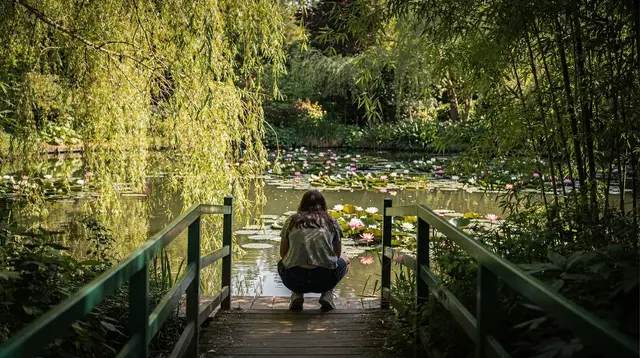
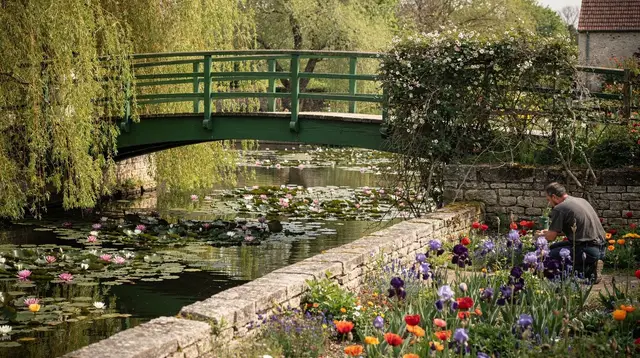
Monet’s house holds his personal collection of Japanese prints and is furnished largely as he left it, and the grounds include the flower garden in front of the house as well as the water garden with the Japanese bridge across the pond. Most visits cover both the house and both garden areas in a single ticket.
Is Giverny worth it if you only have a few days in Paris?
It depends on the season and your interest in art and gardens. If your dates fall outside the spring-to-autumn opening window, Giverny is not an option at all regardless of how many days you have, so check the calendar before ranking it against Versailles or a Paris-only itinerary.
Giverny and Monet's house and garden tours on GetYourGuide
Verified deep-linked GetYourGuide tours. Book through these links and we earn a small commission at no cost to you.
GetYourGuide does not provide a product photo for this activity — the image shows the meeting point, photographed by us.