Paris food and wine tours
What do Paris food and wine tours actually cover?
The category groups tastings, guided market visits, wine cellar and wine-making sessions, cheese pairings and cooking classes, around 180 products in total. Formats range from a short two-hour tasting to a half-day cooking class or an evening chef-led dinner.
Tasting Paris rather than sightseeing it
Most first-time visitors plan a Paris trip around monuments: the Louvre, the Eiffel Tower, Notre-Dame de Paris. Food and wine tours offer a different way into the city, one built around what is on the plate and in the glass rather than what is behind glass in a museum case. Roughly 180 products fall into this category on the booking platforms that supply this site, and the range is wide: a two-hour tasting walk through a covered market, a wine cellar visit with a pairing menu, a hands-on cooking class, or a private chef-led evening built around cheese and wine.
This page is a map of that category, not a review of any single operator. It explains what the different formats involve, how they differ from other Paris activities that get grouped alongside them by mistake, and what to weigh before choosing between a short tasting and a longer class.
What counts as a food and wine tour
The category covers four broad formats, and most bookable products sit clearly in one of them.
Tastings and pairings. A guide leads a small group through several tasting stops, sometimes food, sometimes wine, often both together. These run one and a half to two hours and require no cooking on your part. An orange wine tasting with food pairing is a good example of the format: several wines matched with small plates, with a guide explaining what you are drinking as you go.
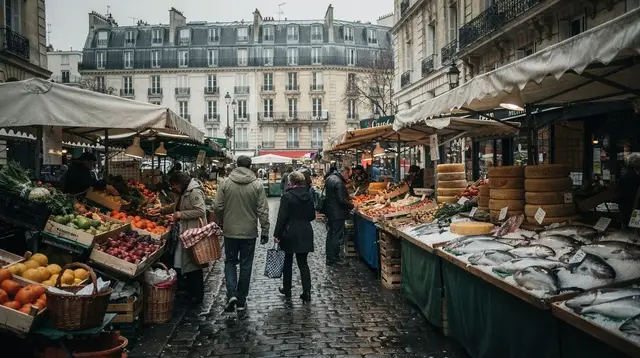
Guided market and neighbourhood walks. A route through a market or a food-dense neighbourhood, stopping at stalls, bakeries or small shops along the way. These sit closer to a walking tour in pace but are built entirely around what you taste at each stop, not around historical commentary. A tour through the western end of Saint-Germain-des-Prés, for instance, threads together several food stops in one of the city’s older food streets.
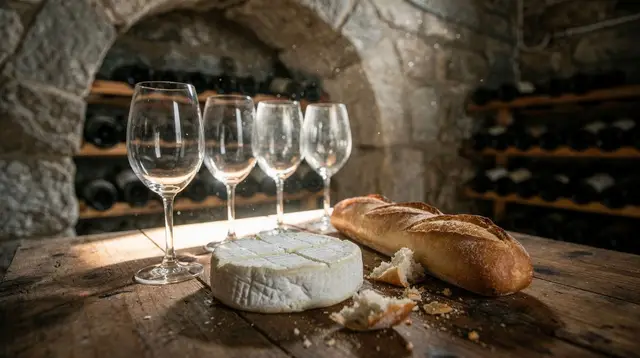
Wine cellars and wine-making sessions. These take place indoors, often below street level, and involve learning about wine production rather than walking a route. A wine-making workshop conducted in English lets participants go through steps of the process themselves rather than only tasting the finished product, and a wine tasting course held at a dedicated Paris wine museum takes a more structured, classroom-style approach to the same subject.
Cooking and cheese-making classes. The longest format, typically two to four hours, held in a kitchen or workshop space. Participants prepare something themselves rather than only tasting what someone else has made. A cheese-making class paired with a wine tasting is a common combination, and there is also a shorter express food tour built around four tastings paired with wine for visitors who want the format without the full time commitment of a class.
At the top end, private options let a small group or a couple book a chef directly, rather than joining a scheduled group session, for a private cheese and wine experience built around a chef’s own selections rather than a fixed script.
What this category is not
Two other categories on this site sit near food and wine tours in the catalogue, and it is worth being clear about the boundary.
Creative workshops cover hands-on activities that are not about food at all: perfume-making, painting, and similar craft sessions. A perfume workshop shares the “make something with your hands in a small group” structure of a cooking class, but the end product is a scent, not a meal, and it belongs on its own page rather than here.
General Paris walking tours and Paris city sightseeing tours cover history, architecture and landmarks. They may pass a market or a famous bakery, but they do not stop to taste anything as a planned part of the route. If the itinerary’s purpose is to see rather than to eat, it sits in a different category from the tours on this page.
Seine cruises deserve a specific note, because dinner cruises are sometimes mistaken for a food and wine product. A Seine dinner cruise does serve a meal, but the format is a set menu eaten while the boat moves past the riverbanks — a cruise experience with dinner attached, not a tasting route through several independent stops. It is covered on the Seine river cruises page rather than duplicated here.
Short tastings versus longer classes
| Format | Typical length | What you do | Good fit for |
|---|---|---|---|
| Tasting / pairing session | 1.5–2 hours | Sit or stand while a guide presents wines or dishes | A short afternoon or evening slot, first exposure to a subject |
| Guided market walk | 2–3 hours | Walk a route, stop and taste at each stall | Combining food with a neighbourhood you also want to see |
| Wine-making or wine course | 2–3 hours | Learn the production process, sometimes hands-on | Visitors who want more than a passive tasting |
| Cooking or cheese-making class | 2.5–4 hours | Prepare a dish or a cheese yourself, then eat it | A rainy afternoon, a group that wants a real activity rather than a walk |
| Private chef experience | Varies, often 2–3 hours | A tailored session for your group with a dedicated chef | Couples, small groups, special occasions |
The trade-off is mostly about time and pace. A tasting fits neatly into a single afternoon or evening without reshaping the rest of the day. A full cooking class is a bigger block of the itinerary, closer to a planned activity than a stop between sights, and works well as the anchor of a day rather than an add-on to it.
Where these tours run
Food and wine tours are not tied to a single neighbourhood, but a few areas come up often because they combine food shops, wine bars and market streets within walking distance of each other. Saint-Germain-des-Prés and the wider Latin Quarter hold a dense cluster of older food streets, which is why a tour through the western part of Saint-Germain is a distinct, bookable route on its own. Le Marais is another common setting, mixing traditional bakeries and delicatessens with newer wine bars in a compact, walkable grid. Montmartre, further north and higher up, has its own tasting and market circuit, separate from its more famous sightseeing routes around the Sacré-Cœur.
Wine cellars and dedicated wine courses tend to be less tied to a single neighbourhood, since the activity happens indoors and the location matters less than the format. A vehicle-based option also exists for visitors who want a different pace: touring by vintage car while stopping for food and drink is closer to a scenic ride with tastings built in than a walking tour, and pairs a sightseeing element with the tasting stops for people who would rather sit than walk between them.
Each of these three neighbourhoods has its own dedicated guide on this site for readers who want more detail than fits in an overview page: Le Marais food tours, Montmartre food and wine tours, and Saint-Germain and Latin Quarter food tours each go deeper into their own patch of the city, including which stops and routes are specific to that area rather than shared across the category.
Timing a tasting or class around the rest of your trip
Most food and wine products in this category run year-round, since tastings, wine cellars and cooking classes take place indoors and are not weather-dependent, but a few seasonal notes are worth knowing before you book. Paris’s best travel seasons, roughly April to June and September to October, are also when markets and food streets are at their most active, with produce stalls fullest and outdoor café seating in use for longer stretches of the day. August in Paris is the one month to plan around: many independent restaurants, bakeries and small food shops close for two to four weeks while their owners take the traditional summer break, so a market walk or neighbourhood tasting booked in August may find a handful of the usual stops shuttered.
This affects small, family-run addresses more than the tastings and classes booked through the links on this page, which run from a fixed venue or with a guide who has already planned around closures, but it is still worth booking with a little more lead time in August than in spring or autumn.
Winter tastings and cooking classes have their own appeal: a wine cellar or an indoor cheese-making class is a comfortable way to spend a short, cold afternoon when the weather outside is grey, and the winter calendar overlaps with the city’s Christmas markets and seasonal food traditions, which sit outside the scope of the guides linked above but are worth building a day around if your trip lands in December.
What to expect once you are there
Service is included by law in French cafés and restaurants, so the price shown for a meal or a sit-down tasting already covers it; rounding up or leaving a few euros afterwards is a common gesture rather than an obligation. The tipping in Paris guide covers this in more detail for the wider trip, and the Paris café culture and etiquette guide is useful background for anyone whose tour includes time at café tables between tasting stops.
Cards and contactless payment are accepted almost everywhere a tour or class is likely to stop, including small food shops and market stalls, though carrying a little cash is still sensible for the rare stall that prefers it for small purchases. Most guided formats on this page run in English, French, or both, with the language confirmed at the time of booking rather than assumed; a wine-making workshop conducted in English, for instance, is built specifically around that language rather than offering it as one option among several, so it is worth checking the listing before assuming a session will run in your preferred language.
Booking notes
None of these products require advance planning on the scale of a timed monument ticket, but slots for evening tastings, wine-making sessions and chef-led dinners are limited by group size, and popular dates fill first. If a specific date matters — an anniversary dinner, a last evening in the city — booking a few days ahead rather than the same morning is the safer approach.
Cooking classes and cheese-making sessions are usually run in a fixed space with equipment for a set number of participants, so these also benefit from earlier booking compared with a market walk, which can often accommodate a late addition to the group. If you have dietary restrictions, mention them when you book rather than on arrival: many tastings are prepared in advance in small batches, and last-minute changes are harder to accommodate than in a full restaurant kitchen.
None of the products in this category require a specific outdoor season the way a garden or a rooftop terrace might, which makes them a reasonable option on a day when the weather in Paris is not cooperating, or when other plans need a wet-weather backup.
Here is a sample of what is bookable in this category:
An orange wine tasting paired with food gives a compact introduction to a less familiar style of wine alongside small plates — a two-hour orange wine and food pairing session.
For a route through one of the city’s older food streets, a guided food and wine walk through western Saint-Germain combines several tasting stops with a fixed neighbourhood itinerary.
Visitors who want a hands-on introduction to cheese can join a cheese-making workshop paired with a wine tasting, which walks through the basics of the process before sitting down to taste the results with wine.
For those who prefer to understand wine production itself rather than only tasting the finished bottle, an English-language wine-making workshop goes through the steps hands-on in a small group.
Couples or small groups looking for something more tailored can book a private cheese and wine tour led by a chef, built around a dedicated guide rather than a scheduled group slot.
Combining a tasting with the rest of your trip
Food and wine activities pair naturally with time spent in the neighbourhoods where they take place, so it is worth booking one on a day when you are already exploring on foot rather than treating it as a separate outing. A market walk or tasting session in Le Marais fits well alongside a morning spent browsing the area’s shops; a Saint-Germain food route sits comfortably next to an afternoon in the Latin Quarter’s bookshops and squares.
For visitors building a longer stay, a Paris food lovers weekend itinerary groups several tasting and market stops across two or three days, which spreads the pace out rather than stacking every tasting into a single afternoon. If you are deciding how much of your trip to give to food-focused activities versus monuments, it is worth reading about what to eat in Paris and the best food markets in Paris before booking, since both pages cover the wider landscape that these tours sample from.
Wine specifically has its own dedicated overview on the Paris wine tasting guide, which goes deeper into the cellar and course side of the category than this page does, and pastry-focused visitors may prefer to start with macaron and pastry classes in Paris, a narrower slice of the cooking-class format built around a specific type of baking.
Finally, if a Seine dinner cruise is also on your list, treat it as a separate booking decision rather than a substitute for a tasting tour: the two experiences serve different purposes, one built around a moving view of the riverbanks with a set meal, the other around stopping, tasting and moving on at your own pace through a neighbourhood.
Paris food and wine tasting tours on GetYourGuide
Verified deep-linked GetYourGuide tours. Book through these links and we earn a small commission at no cost to you.
GetYourGuide does not provide a product photo for this activity — the image shows the meeting point, photographed by us.