Macaron and pastry classes in Paris
What is a macaron or pastry class in Paris actually like?
It is a hands-on workshop led by a pastry professional, usually in a small kitchen or a chef's home, where you mix, pipe and fill macarons or another French pastry yourself rather than just tasting one. These classes are popular and should be booked in advance, not decided on the spot.
A hands-on afternoon, not a tasting stop
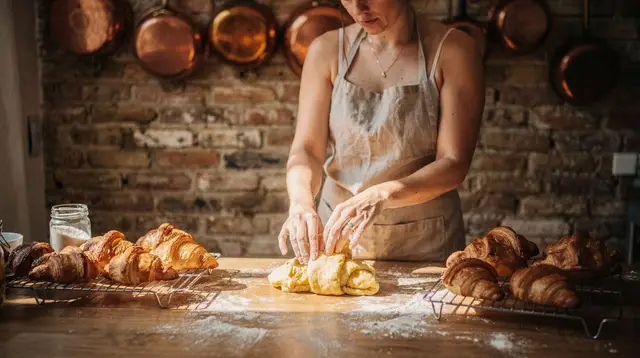
A macaron or pastry class is one of the few things to do in Paris where you leave with something you made, not just something you watched. That distinction matters, because it is easy to confuse this with wandering what to eat in Paris, where the point is tasting pastries someone else baked. Here, you are the one piping the shells, folding the batter and filling the finished macarons or pastries yourself, working alongside a professional who corrects your technique as you go.
The activity sits under cooking classes in the wider list of things to do in Paris, alongside other kitchen-based workshops. It is a different kind of outing from a walking food tour: less ground covered, more time in one spot, and a physical result at the end.
What the format usually involves
Most macaron and pastry workshops in Paris follow a similar shape, though details vary by class. A small group works in a kitchen or teaching space with a pastry professional, who demonstrates each stage and then has participants repeat it. For macarons specifically, that generally means whisking egg whites, folding in almond flour and sugar to get the right batter consistency, piping even rounds, letting them rest, baking them, and finally sandwiching them with a filling such as ganache, buttercream or fruit preserve.
Because macarons are notoriously fussy — they can crack, spread unevenly or fail to develop the characteristic “feet” at the base if the batter is over- or under-mixed — having someone experienced correct your technique in real time is the actual value of the class, more than the finished box of pastries.
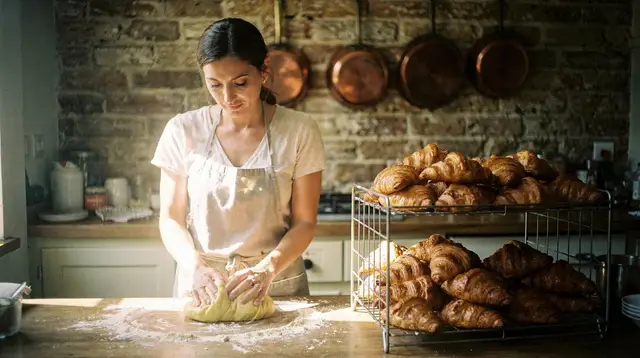
Other formats widen the scope beyond macarons: an introductory pastry and baking class might cover a croissant dough or a classic French pastry as well, a grandmother-led course leans into home-style technique passed down informally, and a few workshops pair the baking with something else entirely, such as a walking segment through a neighbourhood or a wine or chocolate tasting alongside it.
an introductory pastry and baking workshop covering technique beyond macarons aloneBooking ahead, not deciding on the day
Set the expectation early: this is not something you improvise once you are already in Paris and have a free afternoon. Like most in-demand activities in the city — timed entry at the Louvre, a slot at the Eiffel Tower, a seat on a popular Seine cruise — pastry and macaron workshops have limited group sizes and fill up, particularly on weekends, school holiday weeks, and around the Christmas market season. A class that looked available a week out can be full by the time you land.
The honest advice here is simple: decide roughly which day of your trip suits a few hours indoors, and book that class before you leave home rather than treating it as a spontaneous option to slot in later. This guide does not carry prices or exact durations, since both vary by workshop and change over time — check the specifics on the listing you choose before confirming.
a standard Paris macaron baking class for beginnersChoosing between the different formats
Not every macaron or pastry class is the same, and picking the right one depends on who is travelling and what else is on the itinerary.
| Format | Best suited to | What makes it different |
|---|---|---|
| Standard macaron baking class | First-timers wanting a focused, classic experience | Covers the full macaron process from batter to filling |
| Central Paris macaron class | Visitors staying centrally who want an easy commute | Same core format, convenient location |
| Introductory pastry and baking class | Those curious about French pastry beyond macarons | Broader technique, not macaron-only |
| Kids in the kitchen macaron class | Families travelling with children | Simplified steps, aimed at younger participants |
| Pastry course with a French grandmother | Travellers wanting a home-style, informal feel | Taught in a more personal, less clinical setting |
| Macarons class in a Parisian home | Small groups wanting an intimate, residential setting | Held in a home rather than a commercial kitchen |
| Class combined with wine, chocolate or perfume | Travellers who want variety in one outing | Bundles macaron-making with a second experience |
| Oil painting masterclass with coffee and macarons | Those looking for a creative, less food-focused pairing | Painting is the main activity, macarons are a side element |
If you are travelling with children, look specifically for a class described as aimed at kids rather than assuming a standard adult workshop will be suitable.
a macaron workshop designed for children and familiesIf you would rather learn in a more personal setting than a commercial kitchen, a home-based class or one framed around an older, grandmother-style teaching approach tends to feel less formal.
a pastry course taught in an informal, home-style setting
Where these classes tend to be held
Workshop locations vary and are not tied to a single Paris landmark, but central neighbourhoods such as Le Marais and the Saint-Germain-des-Prés area host a good share of them, partly because they combine easy access with a concentration of small culinary businesses. Montmartre also has options, often paired with the area’s food and wine scene. None of this requires special transport planning: these are Paris activities, reached the same way as any other stop within the capital, not day trips requiring a train or RER connection.
If a listing mentions a home setting rather than a professional kitchen, that usually means a smaller group and a more residential feel, which some travellers prefer and others find less polished than a dedicated teaching space. Neither is objectively better — it depends on what kind of experience you want.
Not to be confused with
A few nearby categories cover genuinely different ground, and it is worth being clear about what this class is not.
It is not a walking food tour. A tour such as those covered in Paris food and wine tours or the neighbourhood-specific Le Marais food tours and Montmartre food and wine tours has you tasting pastries, cheese or wine made by others while moving between stops. There is no hands-on baking involved.
It is not a perfume workshop. Scent-making classes, covered separately, are a different craft entirely, built around fragrance rather than food, even if a small number of combined outings pair a macaron session with a perfume introduction in the same afternoon.
It is not a cemetery or canal walking guide. Neither Père-Lachaise nor the Canal Saint-Martin area involve any hands-on making — they are sightseeing walks, unrelated to the kitchen-based format described here.
If what you actually want is a broader creative outing rather than food specifically, browse Paris workshops and creative classes for the fuller range, which includes options beyond pastry.
a centrally located macaron class convenient for visitors staying in the city centreCombining a class with a wider itinerary
A pastry or macaron workshop generally occupies a single block of an afternoon or morning, which makes it easy to build around rather than let dominate a day. Pair it with a museum visit, a walk through a nearby neighbourhood, or simply treat it as the one planned activity on an otherwise unstructured day. It also works well as a rainy-day option, since the entire experience takes place indoors regardless of weather.
Families travelling together sometimes split into two groups — one adult joins a standard class while a parent takes a child to a kids-specific session — but a joint family-friendly workshop avoids that split when everyone wants to take part together. For a broader sense of what else suits a family trip, see Paris with kids and Paris family activities and escape games.
If this is your first time in the city and you are still working out how a cooking class fits into a wider plan, things to do in Paris and best time to visit Paris are useful starting points for shaping the rest of the trip around it.
Practical honesty before you book
A few points worth stating plainly, since they get glossed over in marketing copy:
Macarons are genuinely difficult to get right on a first attempt, even with guidance — shells that crack or lack the characteristic ruffled base are common for beginners, and that is normal, not a sign the class went badly. The point of a hands-on workshop is learning the technique, not guaranteeing a flawless batch on day one.
Group sizes and the amount of individual attention you get vary between a professional teaching kitchen and a smaller home-based setup. If personal attention matters more to you than a polished commercial setting, favour a class described as small-group or home-based.
Finally, remember that none of these workshops can be booked on the spot at a bakery counter — despite what the smell of fresh pastry on a Paris street might suggest, the hands-on version of that experience is a scheduled class, reserved ahead of time.
a small-group macaron class held in a Parisian home
Best time of year to fit one in
Because the whole class happens indoors, it is one of the few Paris activities that is not weather-dependent, which makes it a useful thing to hold in reserve for a grey or wet afternoon rather than only planning it for a fixed day. If your trip lands in the warmer months, see Paris in summer for how the city’s pace shifts, and note that a good share of small culinary businesses close for part of August, when many Parisians leave the city themselves — check that the class you want is actually running before booking a trip built around that month.
Winter visits pair naturally with a pastry class too: a few hours in a warm kitchen is an easy way to break up a day of sightseeing in the cold, and it sits comfortably alongside other indoor-friendly plans during Christmas in Paris or a broader look at Paris in winter. Whatever the season, a class is also one of the more reliable answers to Paris on a rainy day, since nothing about the format depends on the sky staying clear.
Getting to your class
Because these workshops are Paris activities rather than day trips, reaching one rarely takes more than a short ride from wherever you are staying. The Paris metro is the most practical way to get to a class held in Le Marais, Saint-Germain-des-Prés or Montmartre, and it is worth building in a little buffer time, since a class that starts promptly will not wait for a delayed train. If you are travelling with a child, carrying equipment, or the class starts early in the morning or wraps up after dark, a taxi or ride-hailing option — covered in Taxis and ride-hailing in Paris — can be the more comfortable choice, though it is rarely necessary for what is usually a short crosstown trip.
Arriving a few minutes early is worth doing regardless of how you travel: unlike a walking tour where latecomers can often catch up mid-route, a pastry class has a fixed start because early steps like mixing and piping set up everything that follows, and missing the introduction is harder to recover from than missing the first five minutes of a guided walk.
a small-group macaron class held in a Parisian home
Frequently asked questions about macaron and pastry classes in Paris
Answers to the questions travellers most often have before booking a hands-on pastry workshop in the city.
Do I need to book a macaron or pastry class in advance?
Yes. Popular workshops fill up, especially on weekends and during school holidays, so booking ahead is strongly recommended rather than turning up and hoping for a spot.
Is a macaron class the same as a food tour where you taste pastries?
No. A food tour has you tasting pastries made by someone else while walking between shops. A macaron or pastry class is hands-on: you shape, pipe and bake or assemble the pastry yourself under guidance.
Do I need any baking experience to join?
No prior experience is expected. Most classes are designed for complete beginners and walk you through each step, from making the shells to filling and finishing the pastry.
Can children join a macaron class in Paris?
Some workshops are designed specifically for children or families, with a simplified format. Check that a listing is aimed at kids before booking if you are travelling with younger children.
Is the class taught in English?
Many Paris pastry workshops are taught in English or bilingually, since they are aimed largely at visitors, but the working language varies by class, so check the listing before booking.
Where in Paris do these classes usually take place?
Locations vary: some are in a professional teaching kitchen, others in a chef’s Parisian home or a small studio, often around central neighbourhoods such as Le Marais or Saint-Germain-des-Prés.
Can I combine a macaron class with something else, like wine or perfume?
Some workshops bundle a macaron-making session with a wine tasting, a chocolate tasting or a perfume introduction in the same outing, which suits travellers who want variety in one afternoon.
Is a macaron or pastry class a good option in bad weather?
Yes. The entire class takes place indoors, so it works well as a rainy-day activity or as something to fold into a winter itinerary when outdoor sightseeing is less appealing.
How do I get to a macaron or pastry class in Paris?
Since these workshops are held within the city, the Paris metro is the simplest way to reach one, with a taxi or ride-hailing app as an option if you are carrying anything bulky or the class starts early or ends late.
Paris cooking and pastry classes on GetYourGuide
Verified deep-linked GetYourGuide tours. Book through these links and we earn a small commission at no cost to you.
GetYourGuide does not provide a product photo for this activity — the image shows the meeting point, photographed by us.