What to eat in Paris: bistros, brasseries, bakeries and more
What's the difference between a Paris bistro, brasserie and boulangerie?
A bistro is a small, often family-run restaurant with a short menu and table service; a brasserie is larger, usually open all day, with a longer menu of French classics. A boulangerie sells bread and simple lunch items, a patisserie sells pastries and cakes, and a salon de the serves tea and desserts in a sit-down setting. Service is included by law everywhere; a tip is never owed.
Reading a Paris menu before you sit down
Eating well in Paris has less to do with finding the “right” address and more to do with recognising what kind of place is in front of you. The city runs on a handful of formats, and each one comes with its own rhythm, menu style and price range. Once those formats are clear, choosing where to eat for lunch on the Seine or after a morning at the Louvre stops being a gamble.
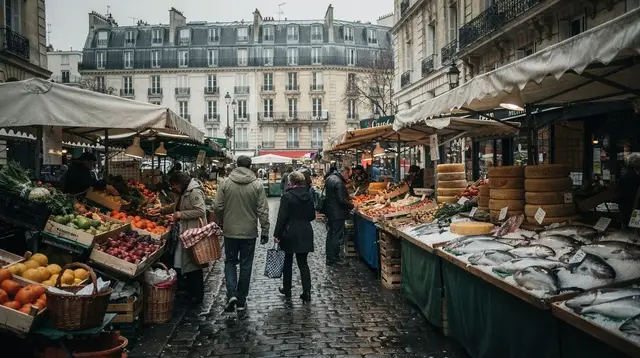
This page covers the formats themselves: bistro, brasserie, boulangerie-patisserie, cafe and salon de the, plus the everyday habits around service, tipping and closing times. It doesn’t list specific restaurants, and it deliberately stays out of two areas covered elsewhere on this site: food markets, which get their own treatment in best food markets in Paris, and wine tastings, covered in the Paris wine tasting guide.
Bistro: small, short menu, set hours
A bistro is usually a small, independently run restaurant, sometimes just a handful of tables, with a menu that changes often and is sometimes handwritten on a chalkboard. Bistro cooking leans on French classics done simply and well: a roast chicken, a braised beef dish, a tart for dessert. Because the kitchen is small, the menu is short, and that’s part of the appeal rather than a limitation.
The trade-off is that bistros keep set service hours, typically a lunch window and a dinner window, with a closed stretch in between. Arriving at 3pm hoping for a full meal at a bistro often doesn’t work; a cafe or brasserie is the better bet at that hour. For dinner, especially at a bistro with a strong local following, reserving a table ahead is worth doing rather than assuming a walk-in table will be free.
Brasserie: bigger, longer hours, classic decor
A brasserie is built for a different kind of reliability. Larger than a bistro, often decorated in the traditional style of mirrors, brass rails and tiled floors, a brasserie typically serves continuously from morning into the evening. The menu is longer too, running through French staples such as steak-frites, choucroute, onion soup and shellfish platters, alongside coffee and a simple breakfast earlier in the day.
Because of the longer hours, a brasserie is the more forgiving choice when timing is tight: after a late train into one of the city’s train stations, before an evening show, or simply when hunger strikes outside standard mealtimes. The atmosphere tends to be busier and more animated than a bistro, which suits some travellers and not others.
Boulangerie and patisserie: bread, pastries, a quick lunch
A boulangerie is a bakery, selling bread baked through the day, and very often a short list of lunch items: sandwiches, quiches, savoury tarts. A patisserie sells pastries, cakes and desserts, and the two are frequently combined into a single shop called a boulangerie-patisserie, which covers both bread and sweets under one roof.
For a fast, inexpensive lunch, a boulangerie counter is hard to beat: pick up a sandwich, eat it in a nearby square or along the Champ de Mars, and move on with the day. It’s a format worth using deliberately rather than as an afterthought, particularly on days packed with sightseeing where sitting down for a full bistro lunch isn’t practical.
Cafe and salon de the: coffee, a light bite, somewhere to sit
A Paris cafe is as much about the seat as the coffee: a table on the terrace, a newspaper, a slow espresso. Food at a cafe is usually simple, croissants and other viennoiserie in the morning, a croque-monsieur or a salad at midday, rather than a full kitchen menu. For guidance on ordering and cafe habits specifically, see the Paris cafe culture and etiquette guide.
A salon de the is a more formal, sit-down version built around tea and pastry, often quieter than a cafe and geared toward an afternoon break rather than a quick stop. Neither format is the place for a full dinner, but both are useful for pacing a day of walking between neighbourhoods like the Marais and Saint-Germain-des-Pres.
Comparing the formats at a glance
| Format | Typical hours | What’s on the menu | Best for |
|---|---|---|---|
| Bistro | Set lunch and dinner windows, often closed in between | Short, changing menu of French classics | A sit-down meal with a local feel |
| Brasserie | Continuous service, morning to late evening | Longer menu of French staples, all day | Flexible timing, off-hours meals |
| Boulangerie-patisserie | Daytime, closes evening | Bread, sandwiches, pastries | A fast, inexpensive lunch |
| Cafe | Morning to evening, varies by address | Coffee, light bites, viennoiserie | A break between sights |
| Salon de the | Afternoon-focused | Tea, pastries, desserts | A slower, seated afternoon stop |
Service, tipping and what things actually cost
One of the most persistent misunderstandings about eating in Paris is the idea that the bill will be padded with an expected tip on top of the menu price. It won’t. Under French law, service is included in the price shown on the menu, and that applies at bistros, brasseries, cafes and everywhere else. A tip is never owed. Rounding up the bill or leaving a small amount of change for good service is a common courtesy, not an obligation, and no one will chase a table down over an unrounded bill. For the fuller picture on tipping across the trip, not just at meals, see tipping in Paris.
Cost is a separate misconception worth correcting: eating in Paris doesn’t have to be expensive. A boulangerie sandwich, a market snack, or a bistro’s fixed lunch menu can cost a fraction of a formal dinner at a landmark brasserie, and the format chosen matters far more than the neighbourhood. This page won’t put a figure on any of it, since prices move and a specific number printed here would go stale fast, but the cheap eats in Paris guide and the broader Paris on a budget guide go further into stretching a food budget without feeling like it.
August closures: a genuine gap, not a rumour
It’s true, not an urban legend: August is when a meaningful number of Parisians take their own holiday, and that includes the people running small, independently owned restaurants, bakeries and shops. Some close for a week, others for most of the month, and it’s common enough that a favourite spot found online may simply have a paper sign in the window during a August visit. No specific date is worth relying on here, since it varies address by address and year by year; the practical response is to have a backup format in mind, a brasserie with longer hours or a nearby boulangerie, rather than planning a trip around one address. More on the seasonal rhythm of the city, closures included, is in Paris in August.
Water, and a note on planning the day around food
Tap water is safe to drink throughout Paris and can be requested free at any cafe, bistro or brasserie; there’s no need to default to bottled water. The city’s public drinking fountains, including the cast-iron Wallace fountains dotted through parks and squares, run on the same safe supply and are a fine way to refill a bottle between sights.
Food is also a good anchor for structuring a day. Building a loop that starts with a boulangerie breakfast, moves through a neighbourhood like Montmartre or the Latin Quarter, and ends with a proper bistro dinner tends to work better than treating meals as an interruption to sightseeing. For a structured way to see the city with meals built in, how many days in Paris is a useful starting point.
Guided ways to eat your way through the city
For travellers who’d rather have a local do the choosing, several guided formats cover Paris cuisine directly. A walking route through tastings across several classic Paris specialities works well as an introduction to the bistro and boulangerie repertoire in a single outing. For something more relaxed, a curated picnic assembled from local producers is a good fit for an afternoon in a park rather than a sit-down meal. And for a more structured outing with a guide leading the way between stops, a guided food tour through a food-focused neighbourhood covers tastings and context together. Neighbourhood-specific versions exist too, including tours through Montmartre, the Marais and Saint-Germain and the Latin Quarter.
Eating well on a day trip beyond Paris
The dining habits above are built around Paris itself, but several of the day trips sold out of the city have their own food identity worth planning around. A trip to Reims and Epernay for Champagne tasting usually centres on a cellar visit and a glass rather than a full meal, so eating beforehand in Paris or picking up something light for the train is worth building into the plan. Along the Normandy coast, Honfleur and Etretat lean on seafood and cider rather than the bistro-and-brasserie format described above, and a day that covers Rouen, Honfleur and Etretat together leaves little time for a sit-down lunch, so a boulangerie stop before departure is often the more realistic option. None of this changes the Paris-based formats above; it’s simply worth knowing they don’t fully carry over once the itinerary leaves the city, covered in full on the day trips beyond Paris overview.
Seeing more of the city between meals
For travellers who’d rather cover ground than sit still between courses, a guided bike tour through the city’s streets pairs naturally with the boulangerie-and-market approach to eating described above: a pastry stop, a ride along the Seine, a market square, all folded into the same outing rather than a separate errand. It follows the same practical logic as choosing a boulangerie lunch over a formal sit-down meal on a day packed with sightseeing. For a self-guided version using the city’s bike-share system, see cycling in Paris and Velib; for other guided options, Paris bike and Segway tours covers the choices.
FAQ: eating and dining out in Paris
Is a tip expected at a Paris restaurant?
No. Service is included in the price by French law, so a tip is never owed. Rounding up the bill or leaving a couple of euros for good service is common but entirely optional, not an obligation.
What’s the difference between a bistro and a brasserie?
A bistro is typically small, with a short, often handwritten menu and limited seating; many close for an afternoon break and serve set hours. A brasserie is larger, decorated in a traditional style with mirrors and brass, and usually serves continuously from morning into the night, which makes it the more reliable option outside standard lunch and dinner windows.
Do restaurants in Paris close in the afternoon?
Many bistros and smaller restaurants close between lunch and dinner service, often from mid-afternoon until early evening. Brasseries and cafes are the more dependable choice for a meal or a coffee at an odd hour, since a good number of them serve continuously through the day.
Is it true that many restaurants close in August?
Yes. August is when many Parisians take their own holiday, and a noticeable number of small, independently run restaurants, bakeries and shops close for a stretch of the month. It’s worth having a backup plan rather than fixating on one specific address if visiting in August.
What is a boulangerie-patisserie, and is it different from a bakery back home?
A boulangerie sells bread, baked fresh through the day, plus simple items like sandwiches and quiches for a quick lunch. A patisserie sells pastries, tarts and cakes, and the two are very often combined in a single shop, called a boulangerie-patisserie, which covers both bread and sweets.
Can you drink the tap water in Paris restaurants and cafes?
Yes, tap water is safe to drink and can be requested free at any restaurant or cafe; there’s no need to order bottled water unless preferred. Public drinking fountains, including the cast-iron Wallace fountains seen around the city, also run on safe tap water.
Is eating out in Paris always expensive?
No. A bakery lunch, a market snack or a simple bistro plat du jour can cost a fraction of a formal multi-course dinner, and format matters more than reputation. Choosing a boulangerie or a neighbourhood bistro over a landmark brasserie is the most direct way to eat well without overspending.
Do I need to reserve a table in Paris?
For small, popular bistros, especially at dinner, reserving ahead is sensible since seating is often limited. Brasseries, cafes and bakery counters are far more casual and rarely require booking, which makes them a practical fallback for a spontaneous meal.
What is a menu or formule at a bistro?
It’s a fixed, multi-course option built around a starter, main and dessert (or two of the three) at a set price, offered mainly at lunch. It’s usually the best-value way to eat a full meal at a bistro, and ordering from it is completely normal rather than a compromise.
Is Paris a good city for vegetarians?
It’s easier than the classic bistro-and-brasserie reputation suggests. Most menus include at least one vegetarian main, and the wider dining scene, especially in neighbourhoods like the Marais and the Latin Quarter, has broadened well beyond traditional French cooking. It still helps to check a menu before sitting down if dietary needs are specific.
Paris food and wine tasting tours on GetYourGuide
Verified deep-linked GetYourGuide tours. Book through these links and we earn a small commission at no cost to you.
GetYourGuide does not provide a product photo for this activity — the image shows the meeting point, photographed by us.