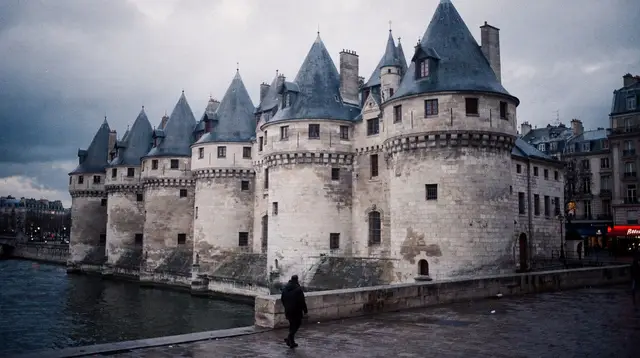
Sacré-Cœur tours in Montmartre
What is there to know before visiting the Sacré-Cœur in Montmartre?
The Sacré-Cœur basilica sits at the top of the Montmartre hill and is reached on foot, by the funicular, or on a guided walking tour; the steps and parvis below the basilica are a known spot for pickpockets and the friendship-bracelet scam, so keep bags closed and decline anyone who approaches you there. Montmartre is a district of Paris, not a separate town, so no special transport is needed beyond the regular metro.
A basilica on top of a hill, not a museum stop
The Sacré-Cœur sits at the highest point of Montmartre, on top of the butte, and it is best understood first as what it is: a working basilica with a wide public parvis in front of it, not a museum or an artist’s quarter. That distinction matters in Montmartre, because the district covers several different things to do that get lumped together in a single afternoon and end up rushed. The art and museum side of Montmartre — the streets around Place du Tertre where portrait artists work, and the small museums nearby — is a separate strand from the basilica itself. In the evening, the district also has the Moulin Rouge, a cabaret show, which has nothing to do with the Sacré-Cœur beyond sharing the same postcode. Treating all three as one stop is how visitors end up seeing none of them properly.
This guide is about the basilica: getting up the hill, what the climb and the viewpoint are actually like, and the pickpocket and scam risk that is concentrated, specifically, on the steps and the parvis below it.
Where it sits, and how to get there
Montmartre is a district of Paris, in the north of the city, not a separate town and not a day trip. There is no special transport required to reach it: the regular Paris metro serves the base of the hill, and from there the Sacré-Cœur is reached on foot up the streets and steps, or by a funicular that climbs the steepest stretch of the hill without the stairs. Anyone offering a private “transfer to Montmartre” as though it were an out-of-town excursion is overstating the trip. It is a hill within the city, reached the same way as any other Paris neighbourhood.
The approach itself has a few possible routes. The most direct is the long flight of steps straight up the south face of the hill, which gives an expanding view over the rooftops as you climb. The funicular runs alongside the steepest section for anyone who would rather not walk it, using the same transport network as the metro. Either way, the last stretch onto the parvis in front of the basilica is on foot.
The parvis and the view
The open square in front of the Sacré-Cœur, the parvis, is one of the widest unobstructed views over central Paris: rooftops stretching south across the Seine, with landmarks picked out on a clear day. It costs nothing to stand there and look, and for a lot of visitors that view is the actual destination, more than the basilica building itself.
It is also, honestly, one of the more crowded viewpoints in the city at peak times, particularly toward the end of the afternoon and at sunset, when the light draws the largest number of people onto the steps and the parvis at once. That crowding is not a reason to skip it, but it is worth planning around: arriving earlier in the day, or later in the evening once the light has gone, thins the crowd considerably. A guided walking tour through the district timed outside the peak hours is one straightforward way to avoid arriving at the same moment as everyone else.
Pickpockets and the bracelet scam — what actually happens
The steps and the parvis below the Sacré-Cœur are one of the most consistently reported spots in Paris for pickpocketing and for a specific, well-known scam, and it is worth being direct about both rather than glossing over them.
The pickpocketing risk is straightforward: it is a dense, distracted crowd, funnelled through a narrow set of steps, with people looking up at the view rather than at their belongings. That is precisely the setting pickpockets favour across Paris — the same reason the metro line 1 and the crowds around the Louvre and the Eiffel Tower get the same warning. Keep bags closed and worn to the front, keep your phone out of a back pocket, and treat the moment you are looking up at the basilica or out at the view as the moment you are least paying attention to your bag.
The scam specific to this location is the so-called friendship bracelet: someone approaches, often striking up conversation or asking for a moment of your time, and ties a length of string or thread onto your wrist without a clear request. Once it is tied, they demand payment for it, sometimes insistently, sometimes with more than one person closing in. The advice here is simple and worth repeating exactly: do not let anyone tie anything onto you in the first place, stay calm if it happens anyway, say no clearly, and keep walking toward the basilica or back down the steps. Do not engage, do not argue about the price, and do not feel obliged to pay for something you did not agree to. Fake petitions — someone asking you to sign a clipboard for a cause, then pressing for a donation — circulate in the same area and call for the same response: decline and move on.
None of this makes the Sacré-Cœur unsafe to visit. It is a very heavily visited landmark in a generally safe city, and the great majority of visits pass without incident. But the concentration of both petty theft and this particular scam on these specific steps is well documented enough that it deserves a direct mention rather than a vague warning, and a visitor who knows what to expect handles it far more calmly than one who is caught off guard. For a wider look at the pattern across the city, see Paris scams and pickpockets and is Paris safe for tourists.
Visiting with a guide versus on your own
Walking up on your own costs nothing beyond the metro fare and gives full control over pace and timing, which matters if the goal is to avoid the busiest hours. The trade-off is that a solo visitor is also the person most exposed to the scam described above, simply by walking through the crowd without anyone flagging the risk in advance.
A guided visit changes that in a small but real way: someone walking with a group who already knows about the bracelet scam is far less likely to be caught by it, and a guide typically times the climb to avoid the worst of the crowd. It also tends to place the basilica within the wider story of the hill — the streets, the history, the artists’ quarter nearby — rather than treating it as an isolated stop.
a guided walk up to Sacré-Cœur through the streets of Montmartre covers the approach with a local guide who knows the district and can point out the scam risk on the steps before you reach it. For a version led by a Parisian resident with a more personal, conversational pace, this Montmartre and Sacré-Cœur tour with a Parisian guide combines the basilica with the surrounding neighbourhood. Travelling with children changes the calculus again — steps, crowds and a scam aimed at distracting adults are all worth planning around — and a family-paced tour of Montmartre is built with that in mind, keeping a slower rhythm through the hill and the basilica approach.
What this visit is not
It is worth being clear about what a Sacré-Cœur visit does not include, because the district’s name covers ground well beyond the basilica. It is not the artist scene at Place du Tertre, covered separately in the Montmartre art and museum tours guide, where portrait painters work in a square a short walk from the basilica. It is not the Moulin Rouge, an evening cabaret show at the foot of the hill that has no connection to the basilica beyond geography. And it is not a day trip requiring separate transport arrangements: Montmartre is reached like any other Paris district, on the metro, with no airport-style transfer involved.
Treating the Sacré-Cœur as one distinct piece of a Montmartre visit, rather than folding it into “doing Montmartre” as a single vague block, tends to produce a better outcome on both fronts: enough time at the basilica and its view to actually take it in, and separate, unhurried time for the streets, the square and whatever else on the hill is on the itinerary. For a fuller sense of what else the district offers, see things to do in Montmartre, and for the full detail on the basilica’s history and layout, the Sacré-Cœur visitor guide goes further than this page does.
Timing the visit
Because the steps and parvis are at their most crowded toward sunset, arriving in the morning or well after dark thins the crowd noticeably and, as a side effect, reduces the exposure to pickpocketing that comes with a dense crowd. A visit worked into a walking tour of the wider district, rather than a single dedicated trip up and back down, also tends to spread the time more naturally across the hill instead of concentrating everyone on the same narrow steps at the same hour.
If Montmartre is one stop among several in a short Paris trip, the one-day-in-Paris itinerary gives a sense of where it fits alongside the rest of the city, and best views in Paris puts the Sacré-Cœur parvis in context against the city’s other viewpoints. For the practicalities of when to come to Paris at all, see best time to visit Paris; for how the district fits into the city’s numbering system, why Paris has 20 arrondissements explains the layout Montmartre sits within.
Sacré-Cœur tours and visits: frequently asked questions
Is the Sacré-Cœur the same visit as the Montmartre art and museum tours?
No. The Sacré-Cœur is the basilica and its viewpoint at the top of the hill. Montmartre’s artist history, Place du Tertre and its small museums are a separate strand of things to do in the same district, and the cabaret shows in the evening, including the Moulin Rouge, are a different experience again.
Do I need to book a special transfer to reach the Sacré-Cœur from central Paris?
No. Montmartre is a district of Paris like any other, served by the regular metro network. There is no airport-style transfer or separate ticket required to get there.
Is the climb up to the Sacré-Cœur difficult?
The final approach involves a flight of steps up the hill, or a funicular that covers the steepest section. Neither is technically difficult, but the steps and the parvis in front of the basilica get crowded, especially around sunset.
What scams should I watch for near the Sacré-Cœur?
The most reported one is the friendship-bracelet scam, where someone ties a bracelet onto your wrist without asking and then demands payment. Fake petitions and distraction schemes also circulate on the steps. Keep your hands free, say no clearly, and keep walking.
Is the crowd on the steps a safety concern, or just crowded?
Both can be true at once. The area is generally safe to visit, but a dense, distracted crowd is exactly the setting pickpockets look for. Treat it as you would any busy tourist landmark: bag closed, phone and wallet not in a back pocket, and stay aware in the crush near the steps and the viewpoint.
Is the view from the Sacré-Cœur worth the trip?
The parvis in front of the basilica gives one of the widest open views over the Paris rooftops, and it is free to stand there and look. Whether it is worth a dedicated trip depends on how much time you have and whether you are already spending time elsewhere in Montmartre.
Can I combine a Sacré-Cœur visit with the rest of Montmartre in one outing?
Yes, and most visitors do. The basilica, the surrounding streets, and Place du Tertre are all within walking distance of each other on the same hill, so a single outing on foot covers the district without extra transport.
Arc de Triomphe and Paris landmark tickets on GetYourGuide
Verified deep-linked GetYourGuide tours. Book through these links and we earn a small commission at no cost to you.
GetYourGuide does not provide a product photo for this activity — the image shows the meeting point, photographed by us.