Five days in Paris: the city plus Versailles and Giverny
This five-day plan builds on a shorter four-day stay in Paris by adding a second day trip. After three days inside the city, it sends you out twice: first to Versailles, then to Giverny. Both are day trips from a Paris base — you sleep in Paris every night of this itinerary, including after each excursion.
The two trips are not interchangeable. Versailles is open all year (it closes on Monday) and sits a short, direct RER ride from central Paris. Giverny, Claude Monet’s house and gardens, opens only seasonally, from spring into autumn, and the trip out takes noticeably longer — a train to Vernon followed by a shuttle, or an organized tour that handles the connection for you. Stacking these two excursions back to back at the end of a five-day trip is what makes this itinerary moderate rather than easy: two consecutive days leaving the city, after three days of city walking, adds up.
If you have seven days rather than five, the extra time is usually better spent on excursions that need a full day of travel each way, such as the Loire Valley, Champagne around Reims and Epernay, or Normandy — see the seven-day itinerary for that structure. This five-day version stays closer, with Versailles and Giverny as its only two departures from Paris.
Day 1: Île de la Cité, the Seine and the Louvre
Start where Paris started. The Île de la Cité and Notre-Dame area holds the cathedral, reopened in December 2024 after the 2019 fire, plus the Sainte-Chapelle and the Conciergerie. Entry to the cathedral itself is free, but reserving a time slot in advance is worth doing to avoid standing in a long line. The towers are a separate, paid, bookable visit — check their current status before planning around them, since access has changed more than once since the reopening.
Cross to the Louvre and Tuileries area in the afternoon. The Louvre is enormous and closes on Tuesday; every visitor, including Paris Museum Pass holders, needs a reserved entry slot, so book before you arrive rather than at the door. A guided visit is a reasonable way to see the highlights without wandering: a guided walk through the Louvre’s main collections covers the ground efficiently in a few hours. Finish along the Tuileries gardens as the light drops.
Day 2: The Seine, Eiffel Tower and Trocadéro
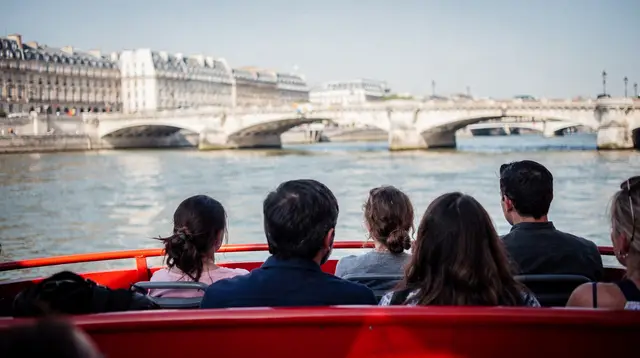
Devote the morning to the river. A cruise along the Seine shows you the UNESCO-listed stretch of riverbank between the Eiffel Tower and Île Saint-Louis, listed since 1991, from a different angle than walking the quays. In the evening, consider a seated option instead: an evening dinner cruise on the Seine with a glass of champagne turns the same stretch of river into a slower, after-dark outing.
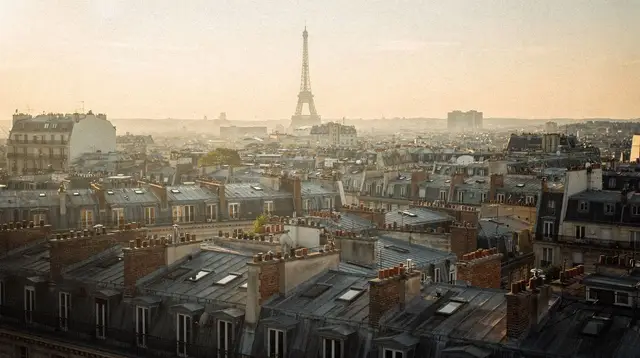
Spend the afternoon at Eiffel Tower and Trocadéro. The tower, built for the 1889 Exposition Universelle, stands about 330 metres tall with its antennas; book your slot well ahead, since walk-up availability is unreliable, especially in the middle of the day. The Trocadéro esplanade across the river gives the clearest wide view of the tower and is free to reach and stand in.
Day 3: Montmartre, Le Marais and the Champs-Élysées
Morning in Montmartre: the Sacré-Cœur, the steep streets around Place du Tertre, and the general texture of the neighbourhood before it fills up. Keep bags closed and be matter-of-fact about anyone offering a “free” bracelet near the basilica steps — the friendship-bracelet approach and its variants are a known routine here, not a random encounter.
Cross to Le Marais for lunch and an afternoon of narrow streets, historic mansions and independent shops, then move toward Champs-Élysées and Opéra for the evening — the avenue itself, the Arc de Triomphe, and the Palais Garnier opera house if you want to see it from outside or book a tour of the interior. If museums pulled at you more than shopping avenues, a stop in the Latin Quarter and Saint-Germain area works as a substitute; the Musée d’Orsay sits there and is closed on Monday, worth noting if you shuffle days around.
An alternative for anyone who wants a single well-organized sweep of the Cité island sights and the Louvre together, rather than splitting them across two days, is a combined outing such as a Notre-Dame, Sainte-Chapelle and Louvre tour in one day, or a deeper look at Notre-Dame’s art, history and symbolism if the cathedral itself interests you more than checking off a list.
Day 4: Versailles
This is the first of the two day trips, and it is the more straightforward one. Versailles sits about 20 km southwest of Paris and is reached on the RER C to Versailles Château Rive Gauche, or by train from Saint-Lazare or Montparnasse. The palace, gardens and Trianon estate were added to the UNESCO World Heritage list in 1979, and the site is open across the year — it closes on Monday, so check that this day does not land on one.
Go early. The palace draws large crowds by mid-morning, and the gardens alone are large enough to fill an afternoon without ever entering a building. A guide who can explain the layout and history before you start walking is useful here, since the palace’s own signage only covers so much; more detail is in the Versailles guide and the Palace of Versailles guide. Return to Paris in the evening for dinner in the city rather than near the château, where options thin out after the day-trip crowds leave.
Day 5: Giverny
The second excursion is a different kind of trip. Giverny, the house and gardens where Claude Monet lived and painted, is about 75 km northwest of Paris — noticeably farther than Versailles. Getting there means a train to Vernon followed by a shuttle to the village, or joining an organized tour that handles the connection; either way, budget more travel time than the Versailles day, since the route is less direct.
The other difference matters more for planning: Giverny is seasonal, open from spring into autumn and closed the rest of the year. Confirm it is open for your dates before you book any transport, since there is no way to substitute a closed Giverny with anything on-site. If it turns out to be closed, Fontainebleau or Chantilly are the closer, year-round alternatives, and a second museum day back in Paris is the simplest fallback of all.
Because this is your second consecutive day away from the city, keep the pace realistic — Monet’s gardens are worth lingering in rather than rushing through to catch an early train back. This is also where the itinerary parts ways with a shorter version: four days in Paris has only Versailles, not both excursions, while a seven-day trip typically trades Giverny for something farther, like the Loire Valley or Champagne. Anyone weighing the two day trips against each other before committing can compare them directly in the Versailles vs. Giverny guide; the Monet’s house and gardens guide and the Giverny transport guide cover the practical side of the day.
Practical notes for this itinerary
| Day | Focus | Leaves Paris? |
|---|---|---|
| 1 | Île de la Cité, Notre-Dame, Louvre | No |
| 2 | Seine, Eiffel Tower, Trocadéro | No |
| 3 | Montmartre, Le Marais, Champs-Élysées | No |
| 4 | Versailles | Yes — RER, direct |
| 5 | Giverny | Yes — train + shuttle, longer |
Getting around the city on the three Paris days uses the ordinary Paris metro network — 16 metro lines and 5 RER lines run by Île-de-France Mobilités. Since January 2025, single tickets come as a Metro-Train-RER ticket or a Bus-Tram ticket, loaded onto a Navigo Easy card or a phone; a weekly Navigo pass or a Paris Visite pass suits a stay of this length better than buying single tickets each day. None of this is worth planning around exact prices, which change and are not listed here.
Driving is not useful for this itinerary. Paris traffic and parking are difficult, the city centre has a low-emission zone requiring a Crit’Air sticker, and both day trips are faster and simpler by train than by car. Keep in mind the country drives on the right if you do rent a car for any reason.
FAQ: five days in Paris with Versailles and Giverny
Is five days enough for Paris, Versailles and Giverny?
Five days works if you accept that two of them leave the city entirely. Three days cover central Paris at a comfortable pace, and the last two are given over to Versailles and then Giverny, so the city itself gets less time than a four-day trip that stays put.
Do I need to book the Louvre and Notre-Dame in advance?
The Louvre requires a reserved entry slot, including for Paris Museum Pass holders. Notre-Dame’s cathedral is free to enter but a reserved slot is recommended; if you also want the towers, that is a separate paid, bookable visit with its own availability.
What is the difference between the Versailles day and the Giverny day?
Versailles is open across the year (closed on Monday) and sits about 20 km from Paris on a direct RER C line. Giverny is a seasonal visit, open only from spring to autumn, and sits much farther out, reached by train to Vernon plus a shuttle, or by an organized tour.
Can I do Versailles and Giverny on the same day?
It is possible in theory but not advisable. Both sites reward unhurried time, the transport connections do not line up well, and stacking them into one day usually means rushing both and missing the last useful transport back to Paris.
Why does this itinerary put Giverny after Versailles instead of the reverse?
Versailles’ direct RER connection makes it the simpler excursion to attempt first. Giverny’s longer, train-plus-shuttle journey and seasonal opening window sit better as the final full day, once you already have a rhythm for getting in and out of Paris.
Is this itinerary different from the seven-day version?
Yes. The seven-day itinerary swaps day trips like Giverny for longer excursions such as the Loire Valley, Champagne houses in Reims and Epernay, or Normandy, which need a full day of travel each way and suit a longer stay.
What if Giverny is closed when I visit?
Giverny’s house and gardens close for the winter months and reopen in spring; check current dates before booking transport. If it is closed, Fontainebleau, Chantilly or a second Paris museum day are reasonable substitutes for that fifth day.
tours.5 days
Verified deep-linked GetYourGuide tours. Book through these links and we earn a small commission at no cost to you.
GetYourGuide does not provide a product photo for this activity — the image shows the meeting point, photographed by us.