Seven days in Paris with day trips
Why a week changes the plan
A three-day or five-day trip to Paris has to stay inside the city, because there simply isn’t time to leave it and come back. A week is different. Once you have four full days for the Eiffel Tower and Trocadéro, the Louvre and Tuileries, the Île de la Cité and Notre-Dame, Montmartre and Le Marais, you have a real choice to make: spend the remaining three days walking more of central Paris, including the Champs-Élysées and the Opéra district, or spend them outside the city entirely.
This itinerary makes the second choice on purpose. It skips the Champs-Élysées and the Opéra — both are covered well in the shorter five-day itinerary — and uses the time instead for three day trips: Versailles, Giverny and Mont-Saint-Michel. It’s a trade of density for range. You’ll see less of central Paris shop by shop, but you’ll leave with a much wider picture of what’s within reach of a Paris base — a royal palace, an Impressionist garden, and a tidal island abbey that most visitors never make time for.
You sleep in Paris every night of this trip. None of the three excursions involves a hotel change; each is a long out-and-back day, and the last one in particular asks a lot of your stamina. Read the Mont-Saint-Michel day below before you book anything.
Day 1: Arrival, the Eiffel Tower and a first look at the Seine
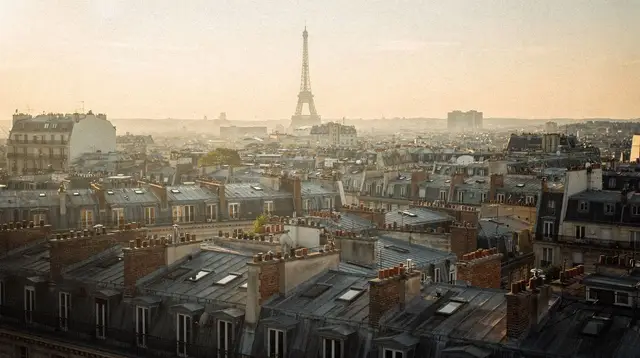
Settle in and start with the view that frames the whole city. The Eiffel Tower, built for the 1889 World’s Fair and standing about 330 m with its antennas, is best tackled early or reserved well in advance — the ticketed time slot is not optional, and turning up without one usually means a long wait or no entry at all. Cross to the Trocadéro esplanade for the classic view back across the river before or after your visit.
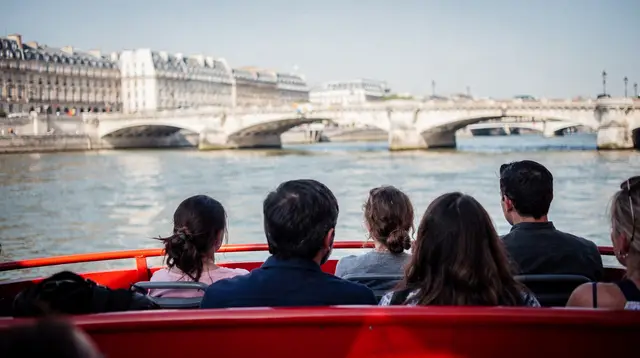
In the afternoon, walk the riverbank. The stretch of the Seine between the Eiffel Tower and the Île Saint-Louis is inscribed on the UNESCO World Heritage list as “Paris, banks of the Seine” (1991), and walking it is free. If you’d rather see the city from the water, a Seine cruise is a low-effort way to get oriented on day one — see the Seine dinner cruises guide for what a dinner cruise involves before booking one.
For a slower evening on the river, a Seine dinner cruise with a glass of champagne works well as a first-night meal — you’re seated, the city goes by outside, and you don’t have to plan a restaurant on your first evening.
Day 2: The Louvre, the Tuileries and Notre-Dame
Two big sights, one museum pass to consider. The Louvre is closed on Tuesdays and requires a reserved time slot even if you’re carrying the Paris Museum Pass — the pass gets you in without buying a separate ticket, but it does not replace the booking. A Paris Museum Pass covering several consecutive days is worth weighing now, since you’ll also use it (or a separate ticket) at Versailles later this week; see the museum pass guide for how the days count. Inside, a guided Louvre visit is the fastest way to see the major works without wandering the wrong wing for an hour.
Walk out through the Tuileries gardens toward the river, then cross to the Île de la Cité. Notre-Dame de Paris reopened on 7 December 2024 after the 2019 fire; the cathedral itself is free to enter, though booking a free time slot in advance is recommended given demand. The towers are a separate, ticketed visit — check their current booking status before planning around them. A guided tour of Notre-Dame’s art, history and symbolism is a good way to understand what changed in the restoration. The Sainte-Chapelle and the Conciergerie sit on the same island and pair naturally with this afternoon.
Day 3: Montmartre in the morning, Le Marais at night
Montmartre rewards an early start, before the place du Tertre fills with crowds and the queue for the Sacré-Cœur basilica builds. See the Sacré-Cœur guide for the practicalities of visiting the basilica itself. This is also the district associated with the Moulin Rouge, though the cabaret show itself is an evening booking, not a daytime stop.
Head down into Le Marais for the afternoon and evening — narrow streets, courtyards, and one of the few central districts where a meaningful number of shops stay open on Sundays, since it sits partly within a designated international tourist zone. It’s a good district for wandering without a fixed itinerary; a walking route through it works better than a checklist of stops.
Day 4: The Latin Quarter, Saint-Germain and a lighter day in the city
After three dense days, this one is intentionally slower. The Latin Quarter and Saint-Germain-des-Prés reward unstructured walking — bookshops, the Musée d’Orsay if you haven’t fit it in yet, cafés with no particular agenda. It’s also a sensible day to do laundry, book restaurants for later in the week, or simply not walk 20,000 steps for once, since day 7 will ask a lot of you.
This is your last full day inside Paris before the itinerary turns outward. If there’s a central sight you’ve missed — the Panthéon, Les Invalides, a food market — this is the day to fit it in.
Day 5: Versailles
Versailles sits roughly 20 km southwest of Paris, reachable by RER C to Versailles Château Rive Gauche or by trains from Gare Saint-Lazare or Montparnasse. The palace and its gardens, along with the Trianon estate, were inscribed on the UNESCO World Heritage list in 1979, and the whole site is closed on Mondays — plan this day for any other weekday. Budget the full day: the château, the gardens and the Trianon estate are spread out, and rushing any one of them defeats the point of coming.
Book ahead rather than deciding on arrival. The full range of ticket and tour options is covered in the Palace of Versailles guide, and whether a guided visit is worth it over going on your own is answered in Versailles guided tour vs. self-guided.
Day 6: Giverny
Giverny, about 75 km northwest of Paris, is Claude Monet’s house and garden — reachable by train to Vernon followed by a short shuttle, or by a guided day tour that handles the connection for you. Note that Giverny is open seasonally, roughly spring through autumn, and closed the rest of the year; check current dates before you build this day into your trip, since booking it in winter simply isn’t possible.
This is the shortest of the three excursion days and pairs well as a change of pace after Versailles — gardens and water lilies rather than gilded state rooms. Details on the site, the house and what the visit actually involves are in the guide to Monet’s house and gardens.
Day 7: Mont-Saint-Michel — the long day
This is the day that separates a five-day Paris trip from a seven-day one, and it needs an honest warning before you book it. Mont-Saint-Michel is a tidal island abbey in Normandy, and from a Paris base it is a genuinely long day: several hours of road travel in each direction, on top of however long you spend on the island itself. It is not a “quick excursion” in the way Versailles or Giverny can feel — it’s closer to a full day of transit bookended by a few hours on-site, and you’ll be back in Paris late and tired.
If that trade doesn’t appeal, the Normandy D-Day beaches or a Rouen, Honfleur and Étretat day trip cover Normandy with a shorter round trip and might suit a seven-day pace better. But if you go, go in with clear eyes: read can you visit Mont-Saint-Michel in a day from Paris before booking, keep your evening free afterward, and don’t schedule anything demanding for the morning after — day 7 earns you a slow start home.
Making the trade: what this week gives up and what it gains
| Kept in this itinerary | Left out | |
|---|---|---|
| Central Paris | Eiffel Tower, Louvre, Notre-Dame, Montmartre, Le Marais, Latin Quarter | Champs-Élysées, Opéra district |
| Beyond Paris | Versailles, Giverny, Mont-Saint-Michel | Loire Valley, Champagne region, other Normandy stops |
| Pace | 4 city days, 3 excursion days | — |
If you’d rather keep the Champs-Élysées and Opéra and skip the excursions, the shorter itineraries do that better than trying to force both into one week. This version is built for travelers who’d rather trade a shopping avenue and an opera house for a royal estate, an Impressionist garden and a tidal abbey — three places that no three-day or five-day Paris trip has room for.
Planning a week in Paris with day trips: your questions
Is a week too long to spend in Paris?
Not if you use the extra days for range rather than repetition. Four days is enough for the core Paris sights; the remaining three are better spent on excursions like Versailles, Giverny or Mont-Saint-Michel than on additional central neighborhoods you’ve already partly covered.
Do I need to book Versailles, Giverny and Mont-Saint-Michel in advance?
Yes, for all three. Versailles requires timed entry and is closed on Mondays; Giverny is only open seasonally and gets busy on clear days; Mont-Saint-Michel involves long-distance transport that is far easier to book ahead than to arrange on the day.
Can I do Mont-Saint-Michel and Giverny on the same day?
No. They’re in different directions from Paris, and Mont-Saint-Michel alone already fills a long day of road travel in each direction. Trying to combine them would leave almost no time on either site.
Why does this itinerary skip the Champs-Élysées and the Opéra?
Because a week spent doing both a full central Paris tour and three day trips leaves every day rushed. This itinerary picks range over density — three excursions instead of an extra city day — and points readers who want both back to the shorter itineraries.
Is the Paris Museum Pass worth it for this itinerary?
It can be, since you’ll visit the Louvre and Versailles in the same week, both covered by the pass. It still requires a separate timed-entry booking at both sites; the pass covers cost and access, not the reservation itself.
How tiring is the Mont-Saint-Michel day compared to the rest of the trip?
Significantly more tiring. Versailles and Giverny involve a couple of hours of travel each way; Mont-Saint-Michel involves several hours each way on top of time on the island, making it the longest and most physically demanding day of the week by a wide margin.
What if I only want two day trips instead of three?
Versailles and Giverny are the easier pair to combine with a full city stay, since both are shorter round trips. If you’d rather drop one excursion, Mont-Saint-Michel is the one to reconsider first, given how much of the day it consumes.
Do I need a car for this itinerary?
No. Versailles and Giverny are reachable by train, and Mont-Saint-Michel day trips from Paris are typically sold as guided excursions that include transport. Driving in Paris itself is best avoided given traffic, parking and the low-emission zone.
tours.7 days
Verified deep-linked GetYourGuide tours. Book through these links and we earn a small commission at no cost to you.
GetYourGuide does not provide a product photo for this activity — the image shows the meeting point, photographed by us.