A romantic route across Paris, quarter by quarter
What makes a Paris visit feel romantic without just picking one monument?
Stringing together a handful of quarters over two evenings and a day works better than fixating on the Eiffel Tower alone: an evening Seine cruise, a slow Montmartre climb at golden hour, a proper visit to Ile de la Cite and Notre-Dame, and the Trocadero view across the river. Book the Eiffel Tower and any evening cruise ahead, since both sell out.
A route across quarters, not a single monument
Couples planning a Paris trip often default to the Eiffel Tower and stop there, but the city rewards a route that moves through several quarters instead of parking itself in front of one landmark. This guide sets out four anchors that work well together across roughly two days: an evening on the Seine river, a climb through Montmartre, a proper visit to the Ile de la Cite and Notre-Dame, and the view from the Trocadero across to the Eiffel Tower. Between them, there is enough contrast in mood, elevation and time of day to avoid the trip feeling like a checklist.
This is not a restaurant guide, and it does not cover Paris cafe etiquette in any depth; that ground is already handled in a separate guide on Paris cafe culture. It also is not a safety or solo-travel guide. The aim here is narrower: which quarters to string together for two, what genuinely needs booking ahead, and what can be improvised on the day.
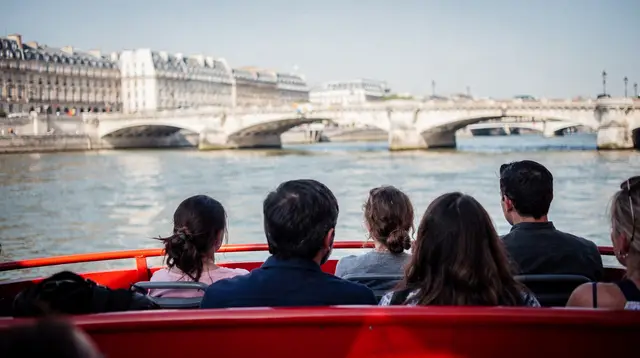
The Seine after dark: cruises worth the evening
The stretch of riverbank between the Eiffel Tower and the Ile Saint-Louis is inscribed as UNESCO World Heritage, under the listing “Paris, Banks of the Seine,” since 1991. A river cruise is one of the more efficient ways to see several of these stretches in one sitting, since it removes the need to walk between the Eiffel Tower, the Ile de la Cite, and the Musee d’Orsay to see their riverfronts in turn.
An evening departure shows the bridges and the illuminated facades of buildings along the banks, which reads as the more obviously romantic option. A daytime crossing gives sharper views of the architecture itself, without the floodlighting. Both are reasonable; the choice depends on whether the evening is otherwise free or already booked for something else.
Bateaux-Mouches is the best-known operator, but it is one of several running the same stretch of river, including dinner-cruise formats that combine the ride with a seated meal on board. A dedicated guide to Seine dinner cruises compares the dinner-cruise format against a straightforward sightseeing crossing, which is worth reading before booking if a full seated dinner on the water is under consideration rather than a shorter cruise. For couples who want the river experience without committing to a set-menu dinner, a shorter evening or sunset departure covers the same UNESCO-listed banks in less time.
a chauffeured hour past the riverside landmarks by night is a different way to cover some of the same ground for a couple who would rather stay on dry land, with stops at a few of the illuminated monuments along the way.
Montmartre at a slower hour
Montmartre sits on the city’s highest hill, and the area around the Sacre-Coeur basilica and the Place du Tertre is genuinely crowded for a large part of the day, particularly around midday and early afternoon. Earlier in the morning or later toward sunset, the crowd thins noticeably and the light across the rooftops improves, which makes either end of the day the better window for a couple who want the view without shuffling through a dense crowd on the steps.
The climb itself, through the winding streets below the basilica, is part of the appeal, not just the summit. A guide to Montmartre walking tours lays out a few different routes through the quarter, and Montmartre food and wine tours cover tastings along the way for those who want to build in a stop, though this guide leaves the detailed food planning to that one. The Moulin Rouge sits at the foot of the hill; a visit to a show there is a separate booking and a separate evening, not something to fold into a Montmartre walk on the same day.
For a couple who would rather see the quarter from a vehicle than on foot throughout, a guided walk through Montmartre’s more scandalous history gives a different angle on the same streets, mixing the well-known viewpoints with some of the quarter’s less polished past.
Ile de la Cite: Notre-Dame and the Sainte-Chapelle
Notre-Dame de Paris reopened on 7 December 2024, after the 2019 fire and the restoration that followed. Entry to the cathedral itself is free, and reserving a free time slot ahead of the visit is sensible given demand, even though it costs nothing. The cathedral was not designed with a romantic visit specifically in mind, and it is not a quick stop either; it deserves a proper amount of time on its own terms, regardless of how it fits the day’s mood.
The towers are a separate visit, paid and on a timed reservation, and their current status should be checked directly before building a plan around them, since access has changed more than once since the fire.
The Ile de la Cite also holds the Sainte-Chapelle, known for its stained glass, and the Conciergerie next to it. A guide to Notre-Dame and Sainte-Chapelle tours covers how to combine the two without doubling back across the island. Both sit within walking distance of the Ile Saint-Louis, one of the quieter stretches on this route, worth a slow walk rather than a stop with a fixed itinerary of its own.
a ride through the historic center in a vintage Citroen 2CV is one way to link the Ile de la Cite to the rest of the day’s stops without long walks between them, with the added novelty of the car itself for a couple who want something other than the metro between sights.
Trocadero and the view across to the Eiffel Tower
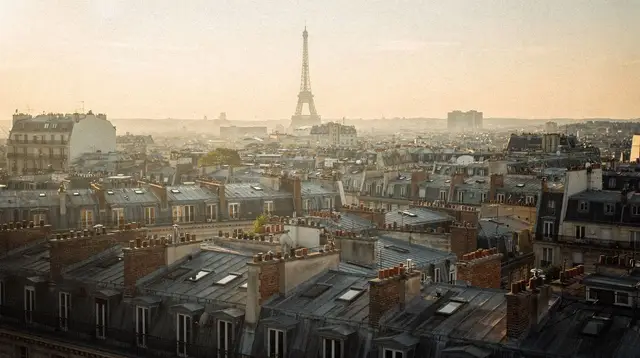
The Trocadero esplanade, on the opposite bank from the Eiffel Tower, gives one of the clearest full views of the tower without a ticket or a timed entry: it is simply a place to stand and look across the river. Paired with the Champ de Mars on the tower’s own side, the two give a before-and-after sense of the structure, from a distance and then up close. A guide to the Trocadero and Champ de Mars covers both sides in more detail.
The tower itself, built for the 1889 World’s Fair and standing at roughly 330 metres including its antennas, is the one stop on this route that genuinely needs a reservation. A timed entry slot is strongly advised given the volume of visitors, whether the plan is the second floor by elevator or stairs, or the summit by elevator only. A guide to Eiffel Tower tickets and tours and a companion piece on how to visit the Eiffel Tower both go through the booking mechanics in more depth than belongs here. Whether the climb to the summit is worth it, compared with stopping at the second floor, is covered separately in a blog post weighing the two.
Booking ahead: what actually needs it
Of the four anchors in this route, two need advance booking and two do not. The table below sets out which is which, without attaching any prices.
| Stop | Needs booking ahead | Why |
|---|---|---|
| Seine river cruise (evening) | Yes, for popular departures | Evening slots sell out, especially dinner-cruise formats |
| Montmartre / Sacre-Coeur | No | Free to walk and enter; timing, not booking, is the lever |
| Notre-Dame cathedral | Recommended, though free | Free time slots reduce queuing at a high-demand site |
| Eiffel Tower | Yes | Strongly advised given demand; walk-up queues are long |
| Trocadero esplanade | No | Open public space, no ticket involved |
A guide to the Paris Museum Pass is worth reading separately if the trip includes museums beyond this route, though the pass does not remove the need to book a timed slot at sites like the Louvre or Versailles; it only covers entry, not the reservation itself.
What to skip or rethink
Not every well-known Paris sight belongs on a two-day romantic route, and this one deliberately leaves some out. The Centre Pompidou is closed for a multi-year renovation and should not be part of any current itinerary. A single day is too short to add a day trip to Versailles or Giverny on top of these four anchors without turning the visit into a rush; either belongs on a longer stay or a separate day, not squeezed between Montmartre and a Seine cruise.
The Moulin Rouge and other cabaret shows are their own evening commitment, with their own booking window, and sit awkwardly bolted onto a day that already includes an Eiffel Tower visit or a Seine cruise. If a show is part of the plan, it is worth giving it a full evening rather than fitting it in after another outing.
For couples who prefer to see several of these anchors from a vehicle rather than on foot, a guided Montmartre walk or the 2CV ride mentioned earlier both cover ground more efficiently than crossing the city on foot between the Ile de la Cite, Montmartre and the Trocadero in a single day. Two days, rather than one packed day, is the more realistic frame for all four anchors without feeling rushed at any of them.
Putting the two days together
A workable split: one day for the Ile de la Cite and Notre-Dame in the morning, with the Eiffel Tower and Trocadero in the afternoon or at sunset, when the light suits the view from across the river. The second day opens with Montmartre, ideally before the midday crowd builds, and closes with an evening Seine cruise, which works as a natural final outing since it needs no walking and ends the day on the water rather than back at street level.
This is one of several ways to sequence the same four anchors; a three-day romantic Paris itinerary spreads the same ground over an extra day and adds room for slower mornings, which suits a longer stay better than the two-day version above. Either way, booking the Eiffel Tower slot and the evening cruise as early as the trip allows keeps the rest of the plan flexible, since both are the two elements on this route most likely to sell out.
FAQ: planning a romantic route across Paris
Do we need to book the Eiffel Tower in advance for a romantic evening visit?
Yes. A timed slot is strongly advised given the demand, especially for a sunset or evening visit, so reserve before the trip rather than showing up and queuing.
Is a Seine river cruise actually worth it, or is it a tourist trap?
It is one of the simplest ways to see several stretches of the Seine that are inscribed as UNESCO World Heritage in a single evening, without walking between them. It suits couples well precisely because it needs no navigation or decision-making once aboard.
Is Notre-Dame reopened, and is it free to visit?
Notre-Dame de Paris reopened on 7 December 2024 after the 2019 fire. Entry to the cathedral itself is free, though reserving a free time slot in advance is sensible. The towers are a separate, paid visit and their current status should be checked before planning around them.
Where is the best view of the Eiffel Tower for two, if not from the tower itself?
The Trocadero esplanade, across the Seine, gives a full view of the tower and is free to reach and stand at, unlike the tower’s own upper levels, which require a ticket and a timed entry.
How many days does this romantic route actually need?
The four anchors described here (Seine, Montmartre, Ile de la Cite, Trocadero) fit comfortably across two days, with an evening left free for a cruise or a walk rather than another sight.
Should we do the Seine cruise during the day or in the evening?
An evening departure shows the illuminated riverbanks and monuments and reads as the more deliberately romantic choice; a daytime crossing gives clearer sightlines to the architecture along the UNESCO-listed banks. Neither is wrong, but they are different outings.
Is Montmartre still worth it if we’ve heard it’s crowded and touristy?
The area around the Sacre-Coeur and Place du Tertre gets busy, particularly midday, but the surrounding streets and the climb itself remain worthwhile earlier or later in the day, when the crowd thins and the light is better for the view over the rooftops.
Do we need to plan meals into this route, or is that covered elsewhere?
This guide focuses on the sights and their booking logistics, not restaurants; for dining choices and cafe etiquette, a dedicated guide to Paris cafe culture covers that ground separately.
Paris trip planning guides on GetYourGuide
Verified deep-linked GetYourGuide tours. Book through these links and we earn a small commission at no cost to you.
GetYourGuide does not provide a product photo for this activity — the image shows the meeting point, photographed by us.