Romantic Paris in three days
Three days is not much time in Paris, so this version doesn’t try to cover the whole city. It stays inside four areas — the Seine, Trocadéro and the Eiffel Tower, Montmartre and Le Marais — and gives each one real time rather than a rushed hour on a checklist. No day trips, no Notre-Dame, no Louvre, no Versailles: those belong to other itineraries built around monuments and museums. This one is built around moments — a sunrise view, a slow dinner, an evening on the water — for a couple who would rather sit down for two hours than stand in four different lines.
A practical note before the days themselves: service is already included in French restaurant and café prices by law. Nothing extra is owed, at any of the addresses below or anywhere else in Paris; rounding up is a courtesy, never a requirement. For more on this, see the guide to tipping in Paris.
Because the pace here is slower and the budget upscale, this itinerary suits couples staying somewhere central and comfortable — where to stay in Le Marais is a good starting point if accommodation isn’t booked yet.
This plan assumes the airport transfer is already sorted and the three days start from the hotel. For that first leg, see the guides on getting in from Paris-Charles de Gaulle, where the RER B runs to Gare du Nord and Châtelet, or from Paris-Orly, reachable by metro line 14. Booking that transfer, and a hotel in a central, walkable area, before the trip leaves more of these three days free for the slower pace this itinerary is built around.
Day 1: settle in, then the Seine after dark
Don’t schedule anything for the first few hours. Arrive, check in, and use the rest of the afternoon to walk without a destination — along the river, through a nearby square, wherever the hotel happens to sit. The point of this itinerary is unhurried time, and it starts on day one rather than day three.
In the late afternoon, head toward the river for a first look at the Seine. A short daytime walk along the banks — inscribed on the UNESCO World Heritage list since 1991 between the Eiffel Tower and Ile Saint-Louis — is a good way to get oriented before the evening’s main event.
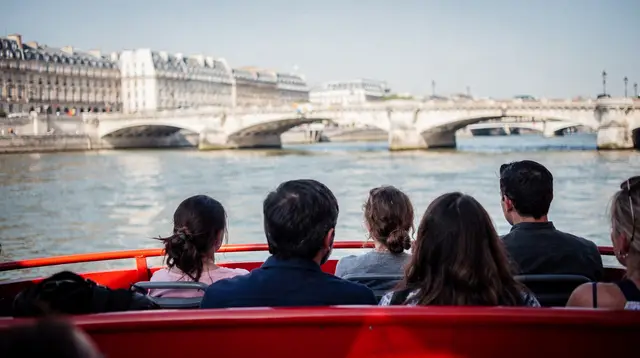
The evening itself belongs to the water. An evening dinner cruise on the Seine with a glass of champagne turns the same stretch of river into something else entirely once the bridges and monuments light up. Book a fixed departure time well ahead — evening cruises with dinner are popular and slots close out, especially on weekends. For a longer look at how the different cruise formats compare, the Seine dinner cruises guide and the piece on whether a Seine dinner cruise is worth it are worth reading before you book.
If a formal dinner cruise doesn’t suit, a more unconventional option for the evening is a guided painting session on the Seine, where you paint each other rather than the view — a slower, more personal alternative to a standard cruise, and one that fits the same evening-on-the-water theme without a set menu.
Getting back to the hotel afterward is straightforward: Paris’s metro runs across all four areas in this itinerary, and a Navigo Easy card loaded with single Metro-Train-RER tickets covers most short hops without any planning. Late-evening taxis are also easy to find near the river; the guide to taxis and ride-hailing in Paris covers both options if the metro has stopped running by the time dinner ends.
Day 2: sunrise views, then a village morning in Montmartre
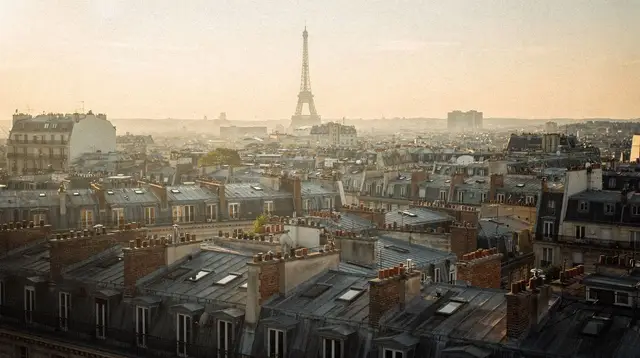
Start early. Trocadéro looks best before the crowds arrive, and an early view of the Eiffel Tower from across the river — with the light still soft — is one of the few genuinely quiet moments this itinerary offers. It costs nothing but an early alarm. For background on the tower itself, built for the 1889 World’s Fair and standing roughly 330 metres including its antennas, see the Eiffel Tower tickets and tours guide; for the wider area around it, the Trocadéro and Champ de Mars guide covers both banks.
Spend the rest of the morning at the tower itself if you want to go up — reserving a timed slot in advance is strongly recommended, both elevator and stairs options exist to the second floor, with elevator only to the summit — or simply stay at ground level and enjoy the view from the Champ de Mars instead. Either way, keep the pace slow rather than adding a second big sight before lunch.
In the afternoon, move to Montmartre, a different register entirely: steep streets, a village feel that survives despite the crowds around Sacré-Cœur and Place du Tertre, and corners that reward wandering rather than a fixed route. A guided street art walk through Montmartre with a working artist is a good way to see the neighbourhood through someone who knows its back streets, without turning the afternoon into a formal museum visit. For a self-paced alternative, the Montmartre walking tours guide lays out a route.
Stay for the evening. Montmartre after the day-trip crowds thin out is a different place — quieter streets, small bistros, the hill itself lit up. This is a good night to linger over dinner rather than plan a second activity.
A note on timing this whole day around the weather: Paris is at its most comfortable for a slow, outdoor-heavy itinerary like this one in April–June or September–October, when the light is good for the Trocadéro sunrise and the streets of Montmartre aren’t at their most crowded. High summer brings heat and occasional heatwaves, while August itself is quieter but sees some smaller restaurants and shops close as locals leave the city. Winter has its own charms — quieter streets, Christmas lights and markets in December — but shorter, greyer days. The guide on the best time to visit Paris goes through each season in more detail.
Day 3: slow mornings and small streets in Le Marais
The last day stays close to the hotel in spirit if not in fact: Le Marais rewards exactly the kind of unstructured wandering this itinerary has been building toward. Narrow streets that predate Haussmann’s boulevards, courtyards behind unmarked doors, small independent shops rather than chain stores — this is a neighbourhood to walk without a map for a couple of hours before deciding on anything specific.
For a sense of the area’s history and its aristocratic mansions turned museums, a guided visit to the Carnavalet Museum in Le Marais gives context to the streets outside without requiring a full museum day — a couple of hours is enough. The Le Marais walking tours guide covers a self-guided version of the same ground, and where to stay in Le Marais is useful if this neighbourhood’s pace and streets make you want to base yourselves here on a future trip.
Keep the afternoon open rather than programmed. A long lunch, a bookshop, a bench in a small square — Le Marais is dense enough that an unplanned afternoon here rarely feels empty. This itinerary shares this neighbourhood with the site’s food-focused and budget three-day itineraries, but the point here is different: fewer stops, slower mornings, no rush to a second sight before evening.
For a last dinner, choose somewhere small over somewhere famous. As with every meal on this trip, service is already included in the bill — nothing extra is expected, whatever the setting.
One thing worth building into the Le Marais afternoon: if day three falls on a Sunday, many shops across Paris close for the day, though Le Marais itself is inside one of the international tourist zones where shops are allowed to open. The guide to Paris on Sundays and public holidays explains which neighbourhoods stay open and which don’t. On payments, cards and contactless are accepted almost everywhere in Paris, including small Le Marais boutiques, but it’s worth carrying a little cash for markets — see money, cards and payments in Paris for the detail.
Planning notes for this itinerary
| Day | Focus | Best time |
|---|---|---|
| Day 1 | Arrival, first river walk, evening Seine cruise or painting date | Late afternoon into evening |
| Day 2 | Trocadéro and Eiffel Tower views, Montmartre village atmosphere | Early morning, then afternoon into evening |
| Day 3 | Le Marais streets and courtyards, slow lunch, quiet dinner | Late morning into evening |
This pace assumes no day trips and no rush between neighbourhoods — it deliberately covers four areas instead of the seven or eight a faster three-day plan might attempt. For a faster version covering more ground, see three days in Paris; for a plan with a Versailles day trip built in, see Paris and Versailles in three days.
If the mood of this trip is what you’re after rather than the exact three-day frame, the romantic Paris guide covers the same slower, view-and-evening-led approach at greater length, and is worth a look before finalising bookings for the Seine cruise and the two guided visits above — all three sell out further ahead than most people expect, especially for evening and weekend slots.
Romantic Paris itinerary: questions before you go
Does this itinerary include Notre-Dame or the Louvre?
No. Both belong to other three-day itineraries built around monuments and museums. This route keeps to the Seine, Trocadéro, Montmartre and Le Marais, and treats each place as somewhere to linger rather than tick off.
Is Versailles part of this trip?
No. Versailles is a half-day excursion outside Paris and sits in its own itinerary. This is a Paris-only plan for couples who would rather slow down than add a train ride.
Do we need to book the Seine dinner cruise in advance?
Yes. Evening cruises with dinner or a set boarding time sell out, especially on weekends, so reserve a fixed slot before the trip rather than turning up.
Should we tip at restaurants in Paris?
Service is already included in the price by law, so nothing is owed. Rounding up or leaving a few euros for particularly good service is a personal choice, never an obligation.
Is this itinerary walkable, or do we need taxis?
Montmartre and Le Marais are best explored on foot once you’re there, but getting between areas — say from Trocadéro to Montmartre — is easier by metro or taxi than on foot, especially in the evening.
What’s the best time of day for Trocadéro?
Early morning for a quiet, uncrowded view of the Eiffel Tower, or the last hour before sunset when the light turns warm and the crowds thin out again after the daytime peak.
Is three days enough for a romantic trip to Paris?
Three days is enough for this slower version, which deliberately covers fewer neighbourhoods. A couple who also wants the Louvre, Notre-Dame or a day trip should plan for four or five days instead.
How do we get from the airport to the hotel to start this itinerary?
From Charles de Gaulle, the RER B train runs into central Paris; from Orly, metro line 14 does the same job. Either way, arriving with the transfer already planned means the three days can start the moment you check in, rather than being spent working it out.
tours.3 days
Verified deep-linked GetYourGuide tours. Book through these links and we earn a small commission at no cost to you.
GetYourGuide does not provide a product photo for this activity — the image shows the meeting point, photographed by us.