Paris and Versailles in three days
This three-day route is built for a first visit: two full days inside Paris itself, followed by one complete day at Versailles. You sleep in Paris on all three nights — Versailles is a day trip, not a place to check into a hotel, even though it deserves a full day rather than a rushed half-morning.
The order matters more than it looks. The Louvre is closed on Tuesdays, and the Château de Versailles is closed on Mondays. Neither closure day can simply be swapped for the other, so check your own dates against this calendar before you lock in bookings. Both sites also require a pre-booked entry time slot — walking up without one, even with a Paris Museum Pass in hand, does not guarantee entry.
Base yourself centrally: where to stay in Paris matters more for this itinerary than for a looser trip, since you’re returning to the same bed every night, including after the long Versailles day. If you’re flying in, getting from CDG to central Paris by RER B is the usual route into town, and it’s worth doing that transfer on arrival day rather than folding it into Day 1’s schedule.
Day 1: the Seine, the Eiffel Tower and Trocadéro
Start along the river. The Seine is the spine of the city, and orienting yourself along its banks — Rive Droite to the north, Rive Gauche to the south — makes the rest of the trip easier to picture. A short walk or a river cruise gets you past the classic waterfront view before the crowds build.
By late morning, head to the Eiffel Tower and Trocadéro area. The tower was built for the 1889 World’s Fair and stands about 330 metres tall including its antennas. If climbing it is on your list, book a timed slot in advance — same-day tickets at the base routinely sell out or mean a long wait; see Eiffel Tower tickets and tours for how the summit and second-floor options compare before you choose one. The Trocadéro esplanade across the river gives the widest unobstructed view of the tower and the Champ de Mars below it, and it’s worth the crossing even if you don’t go up.
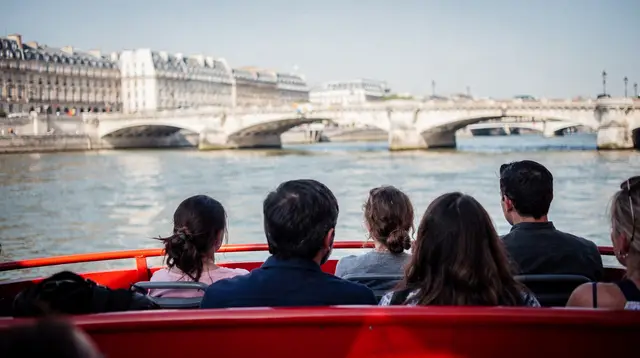
Spend the afternoon around the Champ de Mars and the riverbank. This stretch of the Seine between the Eiffel Tower and the Île Saint-Louis is inscribed on the UNESCO World Heritage list, recognised in 1991 as “Paris, Banks of the Seine.” A late-afternoon or evening river cruise is a relaxed way to see both this stretch and Notre-Dame from the water before your second day takes you there on foot; the Seine river cruises guide walks through the main operators and departure points if you want to book one for this evening rather than choosing on the spot.
a guided visit to Les Invalides and the Army Museum, with Napoleon’s tomb pairs naturally with this side of the river if you have energy left in the late afternoon, since it sits between the Eiffel Tower and Saint-Germain.
Day 2: Louvre, Tuileries, Île de la Cité and Notre-Dame
This is the museum-and-monument day, and it only works if the Louvre is open. Confirm you’re not visiting on a Tuesday before you book anything.
Arrive at the Louvre and Tuileries with your reserved time slot already booked — this is non-negotiable, not a suggestion, and it applies whether you’re buying a standalone ticket or using a Paris Museum Pass. The collection is large enough that trying to see everything in one visit usually means seeing very little properly; picking two or three wings and walking the rest of the museum at a normal pace works better than an exhausting sprint. If you’re still deciding between a standalone ticket, a pass or a guided slot, Louvre Museum tickets and tours lays out the booking options side by side.
a guided tour of the Louvre’s main collection is a practical way to cover the highlights efficiently with someone doing the navigating, and it still requires the same advance booking as any other Louvre ticket.
After the museum, walk through the Tuileries Garden toward the river. This puts you within reach of the afternoon’s second stop: the Île de la Cité and Notre-Dame. Notre-Dame de Paris reopened on 7 December 2024 after the 2019 fire, and entry to the cathedral itself is free — booking a free time slot in advance is recommended to avoid standing in the queue. The towers are a separate, ticketed visit with their own booking; check their current status before planning around them, since access has changed as restoration work continues nearby. The Notre-Dame de Paris visitor guide covers what’s changed since the reopening in more detail if you want the full picture before you go.
While you’re on the island, the Sainte-Chapelle and the Conciergerie are close by and worth the short walk if you have time left in the afternoon.
a guided tour of Notre-Dame’s art, history and symbolism is useful here if you want context on the cathedral’s restoration rather than walking through unguided. If your schedule is tight and you’d rather combine several Île de la Cité sights in one outing, a combined tour covering Notre-Dame, Sainte-Chapelle and the Louvre compresses the day’s two main stops into a single guided route.
Day 3: a full day at Versailles
This day belongs entirely to Versailles, and it needs the whole day — treating it as a quick half-day add-on from Paris usually means missing either the gardens or the Trianon estate. Confirm Versailles is open on the day you’ve chosen: it closes on Mondays, and if your three days happen to fall on a Monday, swap the order so Versailles lands on a different day than Day 2’s Louvre slot. The Palace of Versailles guide is worth reading the night before, since it covers the layout of the estate in more depth than fits into a single day’s plan.
Versailles is not in Paris. It sits about 20 kilometres southwest of the city, in its own town, and reaching it means leaving the Paris transport network you used on Days 1 and 2. The most direct option is the RER C line to the Versailles Château Rive Gauche station, a walk from the palace gates. Regional trains from Gare Saint-Lazare or Montparnasse also serve Versailles stations and can be faster depending on the specific line and time of day. There is no metro line to Versailles — don’t look for one; how to get to Versailles from Paris breaks down each option if you want the full comparison before you buy a ticket.
Book your château entry time slot before you leave Paris, the same way you did for the Louvre. Versailles routinely fills its early slots, and arriving without one can mean losing an hour or more to the ticket line before you’ve seen anything.
Inside, prioritise the State Apartments and the Hall of Mirrors first, since they’re the part most visitors come for and the part most affected by crowd timing. The gardens and fountain shows run on their own schedule and are worth checking before you go, since they shape when it’s worth lingering outside versus heading back in. The gardens and the Grand and Petit Trianon, along with Marie-Antoinette’s estate, sit further from the main palace and need a separate chunk of the day — if you’re set on seeing both the palace interior and the full grounds, budget the entire day for it rather than trying to add Versailles onto a half-day already spent elsewhere.
A multi-day Paris Museum Pass can cover entry to both the Louvre and the Château de Versailles across this itinerary, though it does not replace the separate timed-entry booking each site requires.
By early evening, retrace your route back to Paris — RER C or the train line you arrived on — and return to your accommodation in the city. There’s no overnight stay at Versailles built into this itinerary; the town itself is small, and Paris remains your base for all three nights.
Before you go: passes, transport and practicalities
A few things outside the day-by-day plan are worth sorting before you land. Paris uses the euro, and cards and contactless are accepted almost everywhere, though it’s worth carrying a little cash for the smaller markets around Le Marais or Montmartre. Power sockets are the 230V, 50Hz type C/E plug, and the country drives on the right — not that you’ll need a car for this itinerary, since driving in central Paris is best avoided given the traffic, limited parking and the low-emission zone that requires a Crit’Air sticker.
Getting around between the two Paris days relies on the Île-de-France Mobilités network — 16 metro lines plus the RER, trams and buses. Since the January 2025 reform, single tickets come in two forms, a Metro-Train-RER ticket and a separate Bus-Tram ticket, both loaded onto a Navigo Easy card or a phone; for a stay of several days a weekly Navigo pass or a Paris Visite pass aimed at visitors is usually simpler than buying single tickets each time you ride. The Paris metro guide covers how the ticketing actually works if you want the detail before you arrive. Day 3’s RER C ride to Versailles uses the same network and the same ticket types as the metro rides on Days 1 and 2.
On tipping, service is already included in café and restaurant prices in France; rounding up or leaving a few euros for good service is common but never expected the way it is in some other countries — see tipping in Paris if you want more context before your first meal. Sundays also change the rhythm of the city: many shops close, though the touristic areas you’ll be spending time in in this itinerary generally stay open.
If you’re choosing when to travel, April to June and September to October tend to give the mildest weather for three days spent mostly on foot and in queues. Summer can bring heatwaves, and August in particular sees many Parisians leave the city, with some smaller shops and restaurants closing for the month; winter is colder and greyer but brings the Christmas illuminations and markets if that fits your dates. The Paris weather by month guide breaks this down further if your three days aren’t fixed yet. Rain is possible in any season, so keep it in mind regardless of when you go — Paris tap water is safe to drink throughout the trip, including from the city’s Wallace fountains, so there’s no need to buy bottled water at every stop.
If you’re arriving from outside the EU, check entry requirements before you book: citizens of the UK, US, Canada, Australia, Japan and other visa-exempt countries can stay up to 90 days within any 180-day period under the Schengen rules, and the EU’s new Entry/Exit System now records fingerprints and a photo at the border. ETIAS is not yet required for this itinerary — the EU has only announced a target launch window, without a firm date — so check travel-europe.europa.eu closer to your trip rather than relying on secondhand information.
Making this itinerary work
A few adjustments keep the three days realistic rather than rushed:
| Day | Focus | Key booking |
|---|---|---|
| Day 1 | Seine, Eiffel Tower & Trocadéro | Eiffel Tower time slot if climbing |
| Day 2 | Louvre, Tuileries, Île de la Cité, Notre-Dame | Louvre time slot; Notre-Dame free slot |
| Day 3 | Versailles, full day | Château time slot; check Monday closure |
If your travel dates force a Louvre visit on a Tuesday, move the Louvre to Day 1 or Day 3 morning instead and shift the Eiffel Tower or Versailles day accordingly — just don’t let the Louvre and Versailles land on the same calendar day, since both need meaningful time and neither slot can be rushed to fit the other in.
This route deliberately stays general: it’s not built around a romantic theme, a tight budget, or an art-history deep dive. If one of those angles fits your trip better, the site’s other three-day itineraries cover them without the Versailles day trip built in.
Frequently asked questions about this Paris and Versailles itinerary
Is Versailles part of Paris?
No. Versailles is a separate town about 20 kilometres southwest of Paris. It is reached by RER C to Versailles Château Rive Gauche, or by train from Gare Saint-Lazare or Montparnasse, never by the urban metro.
Can I do the Louvre and Versailles on the same day?
It is possible but rushed, since both need a pre-booked time slot and Versailles alone fills most of a day. This itinerary keeps them on separate days so neither visit feels cut short.
What day should I avoid for the Louvre?
The Louvre is closed on Tuesdays. If your three days include a Tuesday, move the Louvre morning to another day and keep Versailles on a day other than Monday.
What day should I avoid for Versailles?
Versailles, including the château and Trianon estate, is closed on Mondays. Plan the Versailles day for any day except Monday, and confirm the Louvre is open on whichever day you swap it to.
Do I need to book time slots in advance?
Yes, for both. The Louvre and the Château de Versailles both require a reserved entry time slot booked ahead, even if you hold a Paris Museum Pass.
Where do you sleep during this itinerary?
In Paris for all three nights. Versailles is a long day trip, not an overnight stop, so you return to your Paris accommodation each evening.
How do you get from Paris to Versailles?
By RER C to the Versailles Château Rive Gauche station, or by regional train from Gare Saint-Lazare or Montparnasse. There is no metro line to Versailles.
Is this itinerary suitable for a first visit to Paris?
Yes, it is built as a general first-timer route covering the Seine, the Eiffel Tower, the Louvre, Notre-Dame and a full Versailles day, without a romantic, budget or art-focused theme.
tours.3 days
Verified deep-linked GetYourGuide tours. Book through these links and we earn a small commission at no cost to you.
GetYourGuide does not provide a product photo for this activity — the image shows the meeting point, photographed by us.