A Paris weekend itinerary: 2 days, essentials only
Why this plan is short on purpose
Two days in Paris is not enough time to see everything, and this itinerary does not try. It sticks to five stops that most first-time and short-stay visitors rank highest: the Eiffel Tower and Trocadéro, the Louvre, Île de la Cité with Notre-Dame de Paris, a Seine river cruise, and a single afternoon and evening in Montmartre. Le Marais, Saint-Germain-des-Pres beyond a quick stop, and every excursion outside Paris are left for another trip. If you have a third day, Two days in Paris: monuments, then Montmartre and the Marais covers similar ground with slightly more breathing room, and adding Le Marais or a day trip works better as a third or fourth day than as an extra stop squeezed into this weekend.
A weekend also means very little slack. Two must-book stops — the Louvre and, less critically, Notre-Dame — sit at the center of this plan, and both work on timed entry. If either is unavailable at the hour you need, the whole day shifts. Book before you land, not after.
Before you go: the two things that can break this plan
The Louvre requires a reserved timed-entry slot, including for holders of the Paris Museum Pass, and it is closed on Tuesdays. If your weekend includes a Tuesday, move the Louvre morning to your other day and adjust the order below. Full detail on the closure pattern is in What day is the Louvre closed?.
Notre-Dame de Paris reopened on 7 December 2024 after the 2019 fire. Entry to the cathedral itself is free, but a reserved free time slot is strongly recommended given demand — see Is Notre-Dame open to visitors?. The towers are a separate, ticketed visit on their own booking system; check their current status before planning around them, since that can change independently of the cathedral.
For everything below, book what needs a time slot the moment your dates are fixed, then let this itinerary hold together around those two fixed points.
Getting to Paris for the weekend
Most short stays fly into Paris-Charles de Gaulle (CDG), about 25 km north-east of the city; the RER B runs into Gare du Nord and Châtelet, and taxis wait at an official station outside each terminal. A growing share of budget and short-haul flights use Paris-Orly (ORY) instead, roughly 13-14 km south of the centre, where metro line 14 has reached the airport since June 2024 and the Orlyval shuttle remains an option too. If your flight lands at Paris-Beauvais (BVA), budget more time: it sits about 85 km north of Paris and the shuttle bus into Porte Maillot takes well over an hour, so plan your first booking of the weekend accordingly rather than assuming a quick transfer. See Paris airport transfers for a fuller comparison of the three.
Once you’re in the city, this itinerary runs almost entirely on foot and on Île-de-France Mobilités’ network — 16 metro lines, 5 RER lines, trams and buses. Since the January 2025 fare reform, single tickets come in two forms, a Metro-Train-RER ticket and a Bus-Tram ticket, both loaded onto a Navigo Easy card or a phone; see the Paris metro tickets and Navigo guide for how the weekly Navigo pass and the tourist-oriented Paris Visite pass compare for a two-day stay. Driving is not part of this plan — parking is scarce, central Paris has a low-emission zone requiring a Crit’Air sticker, and every stop above sits on or near a metro line, so a car adds cost without saving time.
Day 1: Eiffel Tower, Seine and Île de la Cité
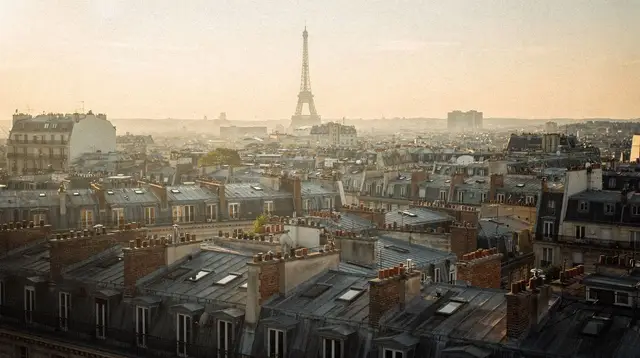
Morning — Eiffel Tower and Trocadéro. Start early at the Eiffel Tower and Trocadéro. The tower was built for the 1889 World’s Fair and stands roughly 330 m including its antennas; you can take a lift or the stairs to the second floor, with a lift required for the summit. Reserve your slot in advance — same-day tickets are unreliable and the queue without one is long. A guided visit removes the reservation guesswork: a combined tour that pairs Notre-Dame, Sainte-Chapelle and the Louvre in one outing is one way to bundle sights if your dates align, though most visitors will want the tower and the day’s other stops kept separate. Cross to the Trocadéro esplanade afterward for the view back across the Champ de Mars.
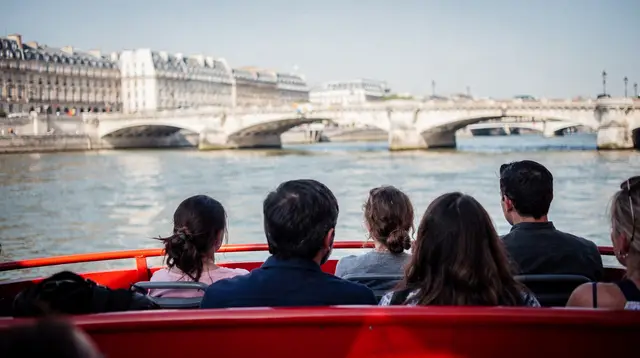
Midday — Seine river cruise. Walk or take the metro down to the river for a Seine river cruise. The banks between the Eiffel Tower and Île Saint-Louis are inscribed on the UNESCO World Heritage list as “Paris, Banks of the Seine” (1991), and an hour on the water is the fastest way to see most of central Paris’s landmarks from a single seat. A standard sightseeing cruise fits neatly into a lunch window; a dinner cruise is a full evening commitment, so save that option for a night when you have nothing else planned.
Afternoon — Île de la Cité and Notre-Dame. Walk to Île de la Cité and Notre-Dame. Visit the cathedral if you have a reserved slot, then take in Sainte-Chapelle and the Conciergerie if time allows — all three sit within a few minutes of each other on the island. A guided option that explains the cathedral’s art and history in context is a guided walk through Notre-Dame’s art, history and symbolism, useful if you want context rather than a self-paced visit.
Evening. Cross to the Rive Gauche or stay on the Rive Droite for dinner near the island; both sides are walkable from Île de la Cité, and there’s no need to travel far after a full day on your feet.
Day 2: Louvre in the morning, Montmartre in the afternoon
Morning — the Louvre. Go straight to your reserved slot at the Louvre. It is the single most time-consuming stop on this weekend, and trying to add much else to the same morning usually means rushing both. A guided visit is worth considering for a first trip, since the collection is large enough that self-guided visitors often spend most of their time lost between wings: a guided tour of the Louvre’s main galleries gets you to the major works without the wrong-turn detours. If you’d rather move at your own pace across multiple sights, the Paris Museum Pass covering the Louvre and dozens of other sites is worth comparing against single tickets, though it still requires the same reserved entry slot at the Louvre. Finish with a walk through the Tuileries gardens on your way out.
Afternoon and evening — Montmartre. Take the metro up to Montmartre for the rest of the day. This is the one neighborhood on the itinerary chosen purely for atmosphere rather than a single monument: the Sacré-Coeur, the steep streets around Place du Tertre, and the general feel of the hill above the rest of the city. There’s no fixed schedule here — wander, stop for a coffee or an early dinner, and let this half-day be the unstructured counterweight to the two more tightly timed sights that came before it.
What this weekend leaves out
This itinerary is deliberately narrower than Two days in Paris: monuments, then Montmartre and the Marais. It skips Le Marais entirely, along with most of the Rive Gauche beyond Île de la Cité, the Champs-Élysées and Opéra district, and every destination in Île-de-France or beyond — Versailles, Disneyland Paris, Giverny and the longer excursions covered under Best day trips from Paris: how to choose all need a separate day of their own. If a weekend leaves you wanting more, that’s the plan working as intended: it’s meant as a complete short trip, not a compressed preview of a longer one. Save Le Marais, and anything beyond Paris itself, for a return visit.
Money, entry rules and when to go
Paris uses the euro, and cards and contactless payment are accepted almost everywhere on this itinerary, from museum ticket counters to Metro-Train-RER machines; keep a little cash on hand mainly for smaller stalls or markets if you wander off the plan. See Money, cards and payments in Paris for more on how that works day to day, and Tipping in Paris for the short version: service is already included in café and restaurant prices, so rounding up or leaving a few euros is a courtesy, never an obligation.
Entry rules depend on where you’re travelling from. France is part of the Schengen area, so EU, EEA and Swiss citizens can enter on a national identity card. Visitors from visa-exempt countries such as the UK, the US, Canada, Australia and Japan can stay up to 90 days within any 180-day period without a visa. The EU’s new Entry/Exit System (EES), which records fingerprints and a photo at the external border, has been running since 12 October 2025 and is being phased in fully through April 2026, so allow a little extra time at passport control on arrival.
ETIAS is not yet required for a Paris weekend; the EU has flagged a launch in the last quarter of 2026 without confirming a date or fee, so check current status at travel-europe.europa.eu before you fly, and see France visa and entry rules: EES and ETIAS for the full picture. Travellers from other countries need a Schengen visa in advance via france-visas.gouv.fr.
This two-day plan works in any season, but timing shifts what it feels like. The best time to visit Paris is generally April-June or September-October, when the weather is milder and the queues at the Louvre and Eiffel Tower ease slightly compared with peak summer. Expect hot spells and possible heatwaves in July and August, when many Parisians leave the city and some smaller restaurants close for part of the month; winter is cold and grey but brings Christmas lights and markets, and rain is possible at any time of year, so check what to pack before you land. Paris runs on Central European Time (UTC+1 in winter, UTC+2 in summer during daylight saving) and standard European 230V, Type C/E plugs, both worth a line in your packing list — see What to pack for Paris.
Practical notes for the weekend
| Stop | Booking needed | Best time of day |
|---|---|---|
| Eiffel Tower | Yes, timed entry | Early morning |
| Seine cruise | Recommended in high season | Midday or evening |
| Notre-Dame | Free, timed slot recommended | Afternoon |
| Louvre | Yes, timed entry, closed Tuesdays | Morning |
| Montmartre | No | Afternoon into evening |
Getting between these stops mostly means the metro, part of Île-de-France Mobilités’ network of 16 metro lines and 5 RER lines. Since January 2025, single fares run on two tickets — the Metro-Train-RER ticket and the Bus-Tram ticket — loaded onto a Navigo Easy card or a phone; visitors on a multi-day trip may prefer a weekly Navigo pass or a Paris Visite pass instead. Driving is not worth considering for a weekend built entirely around central Paris.
FAQ: planning a Paris weekend itinerary
Is two days enough for a first trip to Paris?
Two days covers the highest-priority sights — the Eiffel Tower, the Louvre, Notre-Dame and Île de la Cité, a Seine cruise, and Montmartre — but it means leaving out Le Marais and everything beyond central Paris. It works well as a complete short trip, less well as a way to see “all of Paris.”
Does this itinerary include Le Marais?
No. This plan is intentionally narrower than a fuller two-day itinerary and stops at Montmartre. Le Marais is better suited to a third day or a return visit, when it can get proper time rather than being squeezed in.
Do I need to book the Louvre in advance?
Yes. The Louvre requires a reserved timed-entry slot, even with the Paris Museum Pass, and it is closed on Tuesdays. Book as soon as your dates are set.
Is Notre-Dame open and free to visit?
Yes. Notre-Dame de Paris reopened on 7 December 2024 after the 2019 fire, and entry to the cathedral is free. A reserved free time slot is strongly recommended given how busy it gets. The towers are a separate paid visit with their own booking.
What if my weekend falls on a Tuesday?
Move the Louvre to your other day, since it’s closed on Tuesdays, and shift the rest of this itinerary’s order around that. Notre-Dame, the Eiffel Tower and Montmartre have no weekly closure to plan around.
Can I fit a day trip like Versailles into this weekend?
Not comfortably. This itinerary already fills both days with central Paris sights. Versailles, Giverny and other Île-de-France destinations need their own day and are better planned as an extension rather than a substitution within this plan.
How much walking does this itinerary involve?
A fair amount, especially on Île de la Cité and in Montmartre’s steep streets. Comfortable shoes matter more than any single booking on this itinerary.
Is a Seine river cruise worth the time on a short trip?
For a weekend, yes — a standard sightseeing cruise is roughly an hour and covers ground that would otherwise take most of a day to walk. A dinner cruise is a longer commitment and fits better on an evening with no other plans.
Which airport should I fly into for this itinerary?
Either CDG or Orly works well, since both connect to central Paris by train — the RER B from CDG, or metro line 14 or Orlyval from Orly. Beauvais is cheaper on some budget airlines but sits much further out, so only choose it if you build the longer transfer time into your first evening.
Do I need a visa for a Paris weekend?
It depends on your passport. EU, EEA and Swiss citizens travel on an ID card. Visitors from visa-exempt countries, including the UK, US, Canada, Australia and Japan, can stay up to 90 days in any 180-day period without one, though the new EES border checks mean allowing extra time on arrival. Other nationalities need a Schengen visa arranged in advance.
Paris trip planning guides on GetYourGuide
Verified deep-linked GetYourGuide tours. Book through these links and we earn a small commission at no cost to you.
GetYourGuide does not provide a product photo for this activity — the image shows the meeting point, photographed by us.