Paris and champagne in four days: the Eiffel Tower plus a day in Reims and Epernay
Four days is enough to see the Eiffel Tower properly, spend one day in the Champagne region tasting in cellars around Reims and Epernay, and still have room left over. That last part is the point of this pairing. A day trip to Champagne is shorter and more focused than a day trip into the Loire Valley — it is built around cellar visits and tastings in a compact area, not a string of château visits spread across a wider region — so it tends to run a little shorter door to door. That leaves a spare half-day or full day on the Paris side that this itinerary does not try to fill with the Louvre, the Île de la Cité or Montmartre, since those already have their own guides on this site. Instead, it stays close to the Eiffel Tower side of the city and leaves the extra time genuinely open.
You sleep in Paris on all four nights. Champagne is a day trip by train or organised excursion, not a place to stay over, and it is never done by rental car — the wine houses want groups arriving by coach or train precisely so no one is driving after tastings.
Day 1: Settle into Paris, then the Eiffel Tower and Trocadéro
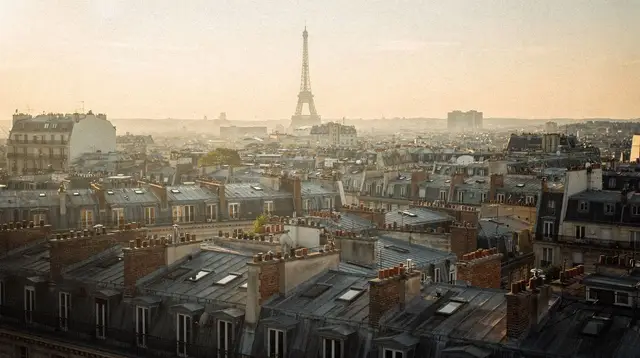
Arrive, check in, and use the rest of the day at a walking pace rather than trying to pack in a full sightseeing schedule on top of travel. The Eiffel Tower and Trocadéro area works well for a first afternoon: it is easy to find, doesn’t require advance planning if you’re just viewing it from outside, and gives you a clear orientation point for the rest of the trip.
The Eiffel Tower was built for the 1889 World’s Fair and stands at roughly 330 m including its antennas. If you plan to go up — by lift to the second floor, or lift again to the summit, with stairs as an option to the second floor — book your Eiffel Tower tickets well ahead of the date you want. Slots fill, and there’s no same-day guarantee. This guide won’t give you an opening time or a price, since both change and neither belongs in a page like this — check current details when you book.
Across the river, the Trocadéro terraces give the classic view back toward the tower, and the Champ de Mars side gives you the view looking up. Neither requires a ticket. If you’re deciding whether the summit is worth climbing over the second floor, read up before you book, since the two experiences are genuinely different and the summit adds time and a separate reservation.
End the day with dinner in the surrounding streets — this part of the 7th and 16th arrondissements is residential and calm rather than a nightlife district, which suits a first evening after travelling.
Day 2: A second Paris quarter, at your own pace
This is the day the shorter Champagne trip buys back. Rather than prescribing a fixed itinerary, use it for whichever quarter interests you that isn’t already covered by the Louvre, Île de la Cité or Montmartre days you may be planning separately, or fold it into a related best day trips from Paris plan if you’d rather stay flexible.
One option that pairs naturally with the Eiffel Tower side of the city is Les Invalides, a short walk or a couple of metro stops away. The complex holds Napoleon’s tomb and the army museum, and it rewards a few focused hours rather than a rushed pass-through.
If museums are part of your plan for the rest of the trip, the Paris Museum Pass covers more than 50 museums and monuments across Paris and the wider region over 2, 4 or 6 consecutive days — worth comparing against buying tickets separately depending on how many sites you’ll actually visit, since it does not remove the need to book a timed slot at busy sites.
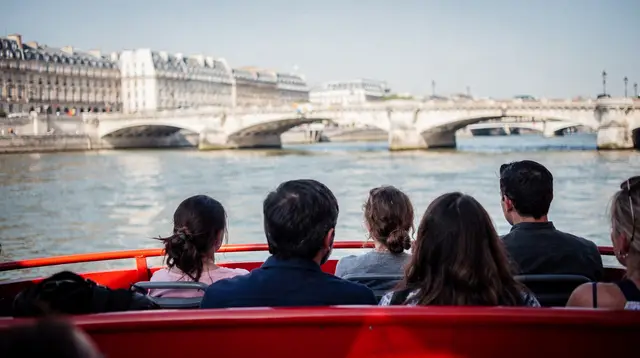
Use the afternoon loosely: a walk along the Seine, a café stop, or simply resting before an early departure the next morning for Champagne. If you’d rather structure this day more tightly, the Champs-Élysées and Opéra area or a canal walk are both reasonable alternatives that don’t overlap with the rest of this itinerary.
Day 3: A day trip to Reims and Epernay for Champagne
This is the core of the trip and the reason for the pairing. Champagne (Reims and Epernay) is done as a single long day from Paris — by train, or on an organised excursion that includes transport, cellar visits and tastings. Neither option involves driving yourself; the tastings alone rule that out, and no rental car belongs in this plan.
Reims and Epernay sit close together and both host well-known champagne houses with cellars open for guided visits. A tour with a tasting and a walk through the vineyards is a common format, and it’s worth comparing Reims against Epernay if you have to pick a base for the day, since the two towns have a different feel — Reims larger and anchored by its cathedral, Epernay smaller and built more directly around the champagne houses lining its main avenue.
Depending on the operator, a day out here might include a champagne tasting paired with a scenic vineyard walk — a guided walk through the vineyards that ends with a seated tasting — or a smaller, more intimate stop such as a tasting of two rosé champagnes at a house in Prouilly. Both are built around the cellar-and-tasting format that defines this region, rather than the château-hopping pace of a Loire Valley day.
Compared with a Loire Valley day trip of similar length, the Champagne day tends to be more contained: fewer stops, more time in each cellar, and a clearer focus on tasting rather than architecture. That’s the trade-off this itinerary is built around, and it’s why Day 2 and Day 4 have room to breathe instead of being squeezed by a longer excursion.
Expect a full day away from central Paris — this isn’t a half-day outing, even though it’s shorter than the Loire Valley or Mont-Saint-Michel options. Confirm your pickup or train times the night before, and don’t schedule anything back in Paris for that evening beyond dinner.
Day 4: A last morning in Paris, then departure
With the Champagne day behind you, use the final morning for whatever didn’t fit earlier — a return to the Eiffel Tower and Trocadéro area if you skipped the summit on Day 1, a quiet walk along the river, or simply packing and a last coffee near your accommodation.
For departure, work backward from your flight and airport. Paris-Charles de Gaulle (CDG), about 25 km northeast of the city, connects by RER B to Gare du Nord and Châtelet, and by taxi from the official rank — never follow anyone soliciting fares inside the arrivals hall. Paris-Orly (ORY), around 13–14 km south, has been reachable by metro line 14 since June 2024, alongside Orlyval. Paris-Beauvais (BVA), used mainly by low-cost carriers, sits roughly 85 km north, and the shuttle to Porte Maillot takes well over an hour — build in more time than feels necessary if you’re flying from there.
For getting around Paris itself over these four days, the city runs on 16 metro lines and 5 RER lines under Île-de-France Mobilités. Since the January 2025 fare reform, single tickets come in two forms — a Metro-Train-RER ticket and a Bus-Tram ticket — loaded onto a Navigo Easy card or a phone. If you’re staying the full four days, a weekly Navigo pass or a Paris Visite pass is worth comparing against buying tickets one at a time; see the Paris metro tickets and Navigo guide for how the options compare. This guide won’t quote a price for any of them, since fares change.
FAQ: pairing the Eiffel Tower with a Champagne day trip
Can you visit Reims and Epernay in a single day from Paris?
Yes. Reims and Epernay are close enough together that a single organised day trip or a self-arranged train itinerary can cover cellar visits and tastings in both towns, though many day trips focus on one town or a handful of specific houses rather than trying to cover everything.
Do you need a car to visit the Champagne region from Paris?
No, and it isn’t recommended. Trains and organised excursions run regularly from Paris to Reims and Epernay, and since the day involves tastings, arriving by train or coach avoids the question of driving afterward entirely.
How far ahead should you book Eiffel Tower tickets for this itinerary?
Booking well in advance is strongly advised, particularly if you want a specific level or the summit. This guide doesn’t list exact windows or prices since both change, but treat it as one of the first things to book once your dates are fixed.
Why is the Champagne day trip shorter than a Loire Valley day trip?
The Champagne region’s day-trip format is built around cellar visits and tastings in a compact area around Reims and Epernay, rather than travelling between several separate châteaux spread across a wider region, so the itinerary is naturally more contained.
What should you do with the extra time this itinerary leaves free?
Use it however suits your trip — a museum you haven’t fitted in elsewhere, a slower morning, or a second look at the Eiffel Tower and Trocadéro area. This itinerary intentionally leaves Day 2 open rather than routing you through the Louvre, Île de la Cité or Montmartre, which are covered in their own guides.
Is the Paris Museum Pass worth it for a four-day trip like this one?
It depends on how many museums and monuments you plan to visit, since the pass covers more than 50 sites across Paris and the region over 2, 4 or 6 consecutive days. It’s worth comparing against buying individual tickets, and note that it does not remove the need to book a timed entry slot at busier sites.
Do you need to worry about pickpockets on this itinerary?
The areas covered here — around the Eiffel Tower, Trocadéro and Les Invalides — see the same crowd-based pickpocketing risk as other busy Paris sites, so keep bags closed and be attentive in queues. It’s a precaution, not a reason for alarm.
Should you book the Champagne day trip or arrange trains yourself?
Both work. An organised excursion bundles transport, cellar entry and tastings into one booking, which removes the planning of train connections and house appointments; arranging your own trains gives more flexibility but means booking tastings at each house separately in advance.
tours.4 days
Verified deep-linked GetYourGuide tours. Book through these links and we earn a small commission at no cost to you.
GetYourGuide does not provide a product photo for this activity — the image shows the meeting point, photographed by us.