Champagne Houses in Reims and Epernay: Choosing a Day Trip from Paris
Is a champagne day trip from Paris to Reims or Epernay worth it?
It can be, but it is a full day away from Paris, not a short outing, since Reims and Epernay sit well outside the city. The choice that matters most is Reims for the cathedral and large, organised champagne houses versus Epernay for the Avenue de Champagne and smaller, more personal grower visits.
Reims and Epernay are not a Paris outing
Start with what this trip actually is. Reims and Epernay sit well outside Paris, in the Champagne region to the east, and neither is a neighbourhood you can slot into an afternoon the way you would Montmartre or Le Marais. Getting there and back, on top of the cellar visits themselves, is a full day away from Paris, not a short excursion. Anyone weighing this against a morning at the Louvre or an afternoon along the Seine should treat it as using one of a limited number of days, because it does.
Rather than invent a travel time in minutes, the honest way to size this up is by proportion: a champagne day trip is comparable in scale to the Mont-Saint-Michel or Loire Valley excursions also sold from Paris — a genuine day given over to somewhere else, with a moving vehicle or train involved on both ends. It works well as a deliberate choice within a longer stay, and less well as an add-on squeezed into a two or three day visit that is otherwise built around central Paris.
The catalogue of day trips sold from Paris toward Reims and Epernay is large: 138 champagne house and cellar visits at last count, from tightly organised bus tours to private cars and even more unusual formats. That range is the real subject of this guide — not whether to go, but which kind of visit actually suits what a traveller wants from it.
Reims or Epernay: two different days
Reims and Epernay both sit in the Champagne region, roughly the same distance from Paris, but they offer different days out, and most tours pick one rather than combining both properly.
Reims is a city, with a cathedral at its centre — the same cathedral where French kings were once crowned — and a handful of large, well-known champagne houses with visitor centres built for tour groups. A Reims-based day tends to pair a cellar visit with some time in the city itself, cathedral included. The champagne house experience here is generally more produced: fixed routes through the cellars, a timed tasting, and a shop at the end. It is efficient and easy to book, and it can also feel like one stop on a checklist if the group is large and the schedule is tight.
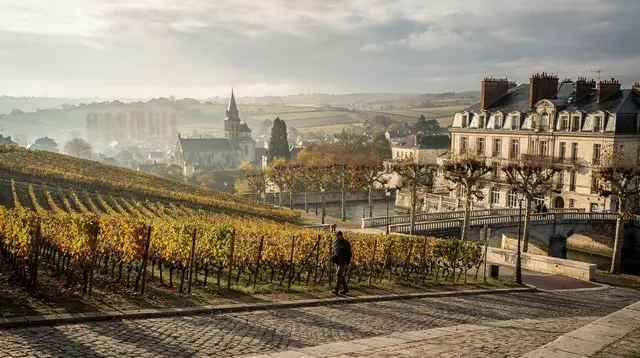
Epernay is smaller and built almost entirely around one thing: the Avenue de Champagne, a street lined with the headquarters of major houses, many with cellars running directly underneath it. Day trips based in Epernay more often include a stop with an independent grower rather than only a big-name house, which tends to mean a smaller group, more conversation with whoever is pouring, and a less rehearsed visit. It rarely includes a comparable city sight the way Reims includes its cathedral, so the day trip leans entirely on the vineyards and cellars themselves.
Neither is the “correct” choice. Reims suits someone who wants a city and a cathedral alongside the champagne, and who does not mind a more organised, larger-scale cellar visit. Epernay suits someone who wants the tasting itself to be the focus, with a smaller, more personal visit, even if that means a plainer day otherwise. A handful of tours do combine both towns in a single day, but that usually means less time at each and a longer day overall — worth checking carefully before booking, since it is easy to end up rushed at both stops rather than settled at either.
| Reims | Epernay | |
|---|---|---|
| Centrepiece | Cathedral plus large champagne houses | Avenue de Champagne and cellars beneath it |
| Typical visit | Larger, more organised house tours | Smaller cellars, more independent growers |
| Pace | Fixed group schedule, efficient | Often slower, more conversational |
| Best for | Travellers who also want a city and a landmark | Travellers who want the tasting to be the focus |
Grand house tour or a smaller grower visit
Beyond Reims versus Epernay, the sharper choice is between two kinds of champagne experience, and it matters more than which town a tour happens to be based in.
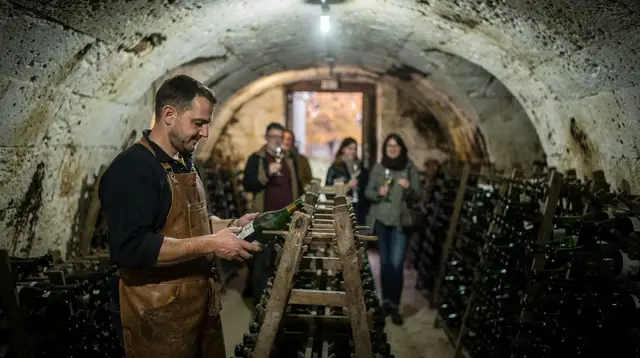
A visit to one of the well-known houses is built for volume: a fixed group size, a set route through the cellars, a timed tasting with a set number of pours, and a shop at the end that is often the largest part of the building. It is reliable and easy to plan around, and the cellars themselves — some carved deep underground, occasionally into old chalk quarries — are genuinely worth seeing once. What it is not is intimate. Groups can be large, the guide’s script rarely changes, and the tasting is a fixed part of a fixed programme rather than a conversation.
A visit with a smaller producer or an independent grower is the opposite trade. Groups tend to be smaller, sometimes just the people on that day’s tour, and whoever pours the tasting is often involved in making the wine itself, which tends to produce a more open, less scripted conversation about the vineyard and the process. The visible cellar and production space is usually smaller too, since a family-run producer is not built at the scale of a major house. Some day trips built around a smaller grower also include walking a bit of vineyard, which the larger houses rarely offer since their vines are typically some distance from the visitor centre.
Several of the day trips sold from Paris are explicit about which of these two experiences they offer, and a few combine one of each into a single day. A tour advertising a specific number of tastings, such as a full day trip from Paris with seven tastings across the Champagne region, is generally built around covering more ground and more producers rather than lingering at one. A tour built around a private car, such as a private day tour to Champagne from Paris, trades that breadth for a schedule set around a smaller group and fewer, more considered stops. For travellers who want the vineyards themselves as part of the day rather than only the cellars, a day trip covering Champagne vineyards and cellars is built with that walk through the vines as part of the itinerary, not an afterthought.
Booking a slot versus queuing on the day
The single most practical fact about the larger champagne houses is this: a reserved time slot is what keeps a visitor out of a queue, and at some houses it is the only way in at all. Walk-up visits exist at a few producers, but the well-known names generally sell cellar tours in timed groups, booked in advance, and a visitor who turns up without a reservation may simply be turned away or told to come back at a later slot that may not fit the rest of the day.
This is the same logic that applies to the Eiffel Tower or the Louvre in Paris itself, and it matters more here because a wasted slot in Champagne cannot be recovered by simply walking to something else nearby — the next cellar may be a drive away, and the day itself is already fixed. A day trip booked as a single tour from Paris removes this risk entirely, since the cellar reservations are made as part of the package. Independent travel by train to Reims or Epernay, followed by booking cellar visits locally, is possible and can work well, but it puts the responsibility for securing those time slots on the traveller, and it is worth doing well before the visit rather than after arriving in Champagne.
When a champagne visit decides not to visit
Not every stop on a champagne day trip is worth the time, and it is worth saying plainly that a few visits amount to little more than a shop with a short talk attached. This tends to happen at producers that treat visitors mainly as a retail opportunity: a brief walk past a few barrels or racks, a short, generic explanation, and then a long stretch of time in a boutique before the group is moved along. It is not dishonest, exactly, but it is a thin version of what a champagne house visit can be, and it is a fair disappointment if a traveller was expecting cellars and vineyards rather than a shop floor.
The tours more likely to avoid this are ones that are specific about what is included — a stated number of tastings, a stated cellar walk-through, or a private format rather than a large fixed-group bus tour. A tasting-focused stop, such as one built specifically around wine and oyster pairing, works because the format itself sets expectations correctly from the start: a tasting tour in Paris pairing oysters with wine and champagne is upfront about being a tasting experience rather than a cellar tour, which avoids the mismatch that causes disappointment elsewhere. The lesson generalises: reading what a tour actually promises, rather than assuming “champagne day trip” means the same thing everywhere, is the difference between a memorable cellar visit and an afternoon mostly spent in a gift shop.
Getting a full day right
A few practical points apply regardless of which town or which style of visit gets chosen. First, this really is a full day: departing Paris in the morning and returning in the evening, with no realistic way to also fit in a significant amount of central Paris sightseeing on the same day. Second, no price is quoted here deliberately, since tour pricing varies by format, by group size, and by season, and the only reliable way to compare is to check current listings directly rather than rely on a number that is likely to be out of date. Third, comfortable shoes matter more than they might seem — cellar floors are often uneven stone or chalk, and some visits include a walk through vineyard rows.
Travellers building a longer stay around this trip, rather than squeezing it into a short one, may find it sits more comfortably as part of a multi-day itinerary that includes Champagne alongside central Paris time, rather than as a single rushed day bolted onto a short visit. For a wider look at how this excursion compares with the other long days out sold from Paris — the Loire Valley, Mont-Saint-Michel, or Normandy — the broader day trips from Paris overview covers that ground, while choosing between Reims and Epernay in more detail goes deeper on that specific decision than this page does.
Travellers who want a smaller, guided experience without joining a large fixed group might also look at a private tour built by night in the city itself as a different kind of champagne experience entirely — closer to Paris and requiring none of the day’s travel, if a full excursion to Champagne does not fit the itinerary. a Paris tour by night that includes a champagne stop is a genuinely different trip from anything covered above: an evening in Paris itself, not a day trip east of the city, and worth knowing about as an alternative rather than a substitute for a real visit to Reims or Epernay.
Champagne day trip questions, answered
Is Reims or Epernay better for a Paris day trip?
Reims suits travellers who also want the cathedral and a polished visit at one of the well-known champagne houses. Epernay suits travellers who want the Avenue de Champagne and a smaller, more personal cellar visit, sometimes directly with a grower rather than a large brand.
How far is Reims or Epernay from Paris?
Both sit well outside the Paris region, in the Champagne area to the east. A day trip covers real travel time in each direction plus the visit itself, so it fills a full day rather than a half day.
Do I need to book a champagne cellar visit in advance?
For the larger, well-known houses, yes. A reserved time slot is what keeps you out of a walk-up queue, and some cellars simply will not admit visitors without one. Smaller growers are more flexible but still prefer advance notice.
Can I visit a champagne house without a guided tour from Paris?
Yes, independent travel by train to Reims or Epernay is possible, then booking individual cellar visits locally. A day trip sold as a single tour from Paris removes the planning and the separate train and cellar bookings, at the cost of a fixed schedule.
What is the difference between a champagne house tour and a tasting?
A house tour usually includes walking through the cellars and production areas before the tasting itself. Some visits are tasting-only, with no cellar walk-through, which suits travellers on a tighter schedule but gives less context for the wine.
Is a champagne day trip from Paris worth it if I only have a few days?
It is worth weighing against the rest of a short itinerary, since it uses a full day outside Paris. Travellers with only two or three days in the city often find it competes directly with time spent on central Paris sights.
Do all champagne cellar visits include tastings?
Most do, but the number of glasses poured and the wines offered vary by house and by tour. A visit built around a single house tends to offer fewer pours than a day trip that stops at more than one producer.
Champagne region and Reims cellar tours on GetYourGuide
Verified deep-linked GetYourGuide tours. Book through these links and we earn a small commission at no cost to you.
GetYourGuide does not provide a product photo for this activity — the image shows the meeting point, photographed by us.