Where to catch sunrise in Paris for photos without crowds
The hour when Paris empties out
I used to think the queues and the crowds at the big sights were just a fact of visiting Paris, something to plan around rather than avoid. Then I got up early enough one September to be at Trocadéro before the sky had fully turned, and the whole plaza belonged to about a dozen people. That’s when sunrise stopped being a photography trick for me and became the actual way I plan a Paris morning.
This isn’t a piece about quiet, overlooked corners of the city — that’s a different question, and a different page. This is about timing: which spots reward showing up before the crowds do, and why that window matters more at some sites than others. The answer keeps coming back to the same handful of places, all of them famous, all of them transformed by being nearly empty.
The Eiffel Tower from Trocadéro
The single best-known shot in Paris is the Eiffel Tower from the Trocadéro esplanade, across the river, with the tower catching the first light while the plaza itself is still in shade. By mid-morning this spot is dense with tour groups working through the same handful of angles, but at sunrise it’s just a scattering of other early risers, most of them also holding a camera rather than talking over each other.
The tower itself doesn’t need to be open for this to work. You’re photographing it from across the Seine, not standing underneath it, so none of this depends on ticket times or opening hours — I don’t track either here, since they’re not the point of a sunrise visit. If you’d rather be directly beneath the structure, the Champ de Mars side gives a completely different picture, looking straight up through the ironwork, and it’s worth doing both on separate mornings if you have the time. For anyone weighing where to stand once the light is higher and the crowds have arrived, the second floor versus the summit question is a separate decision, made later in the day.
Notre-Dame and Ile de la Cité before the square fills
The reopened Notre-Dame de Paris sits on Ile de la Cité, and the square in front of it is public space you can walk into at any hour. At sunrise, with the low sun catching the west front and almost nobody else standing in front of it, it’s a completely different building than the one you’ll see mid-afternoon with a line stretching across the cobblestones. I’m not writing about ticket times or interior visits here — that belongs elsewhere — just the fact that the exterior and the surrounding square reward an early arrival on their own.
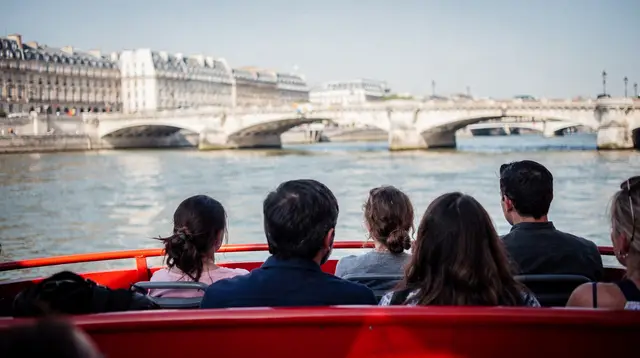
Walking the short distance along the river from Notre-Dame back toward the Eiffel Tower and Trocadéro side of the city, early enough, means covering two of the most photographed sights in Paris without waiting in a single line for either.
a guided photo workshop that covers Notre-Dame and the Louvre in the early morning light is one way to do this with someone who already knows where the light lands first, if you’d rather not work it out alone on your first visit.
Why early also means calmer
The known pickpocket activity around the Eiffel Tower and the Louvre builds with the density of the crowd, not with the location itself. A packed plaza at 2 pm gives cover that a near-empty one at 7 am simply doesn’t. I still keep my bag closed and stay aware wherever I am in the city, but the tension of watching a crowd around you thins out almost completely before the tour buses arrive. That’s not the main reason to get up early, but it’s a real side benefit of the same choice.
a private lesson that walks the Louvre courtyard and the Tuileries with a photographer is a good option if the technical side, not just the timing, is what you’re after.
Montmartre’s different kind of light
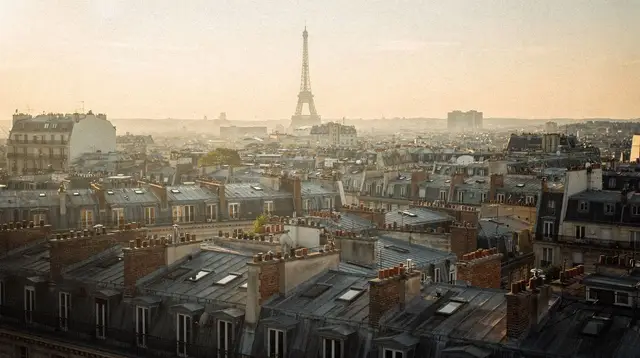
Montmartre works on a different axis: instead of photographing a monument from across the water, you’re standing on the steps below the Sacré-Cœur and looking back over the rooftops as the light comes up behind the city. It’s a much smaller crowd to begin with at any hour, but at sunrise the steps and the small streets around the hill are close to silent, which is its own kind of picture. I’d pair this with one of the riverside spots on a different morning rather than try to fit both into a single dawn — Montmartre sits far enough from the Seine that rushing between them defeats the point.
For a wider sense of where the light and the angles line up across the city beyond these two mornings, the best views in Paris page is a useful next stop, and if the sunrise habit sticks, a slower morning drive out to Le Marais in a vintage car — a private vintage car tour paired with a Le Marais walk — catches some of the same early light on a completely different set of streets.
A practical note on timing
Sunrise in Paris moves by more than two hours across the year, from around 6 am in June to closer to 8:30 am in December, so I never plan around a fixed hour. I check the date-specific time the evening before and work backward from there, aiming to be in position 30 to 45 minutes ahead so I catch the sky changing rather than arrive after the color has already gone. This is the one piece of timing that matters for this kind of morning — not a museum’s opening hour, not a shop’s schedule, just the sky itself.
Sunrise photography in Paris: your questions answered
What time should I arrive at the Eiffel Tower for sunrise photos?
I aim to be at the Trocadéro esplanade or the Champ de Mars about 30 to 45 minutes before sunrise, so the sky is still turning and the plaza hasn’t filled in yet. The exact clock time moves with the season, so I look it up for that date rather than reuse last visit’s hour.
Is Trocadéro or the Champ de Mars better for a sunrise view of the Eiffel Tower?
Trocadéro faces the tower directly and catches the first light on its east side, which is why most of the classic shots are taken from there. The Champ de Mars puts you underneath and looking up, which works better once the sun is higher, so I treat the two as different pictures rather than a choice between one and the other.
Can I photograph Notre-Dame before it opens?
Yes. The exterior and the square in front of the cathedral, on Ile de la Cité, are open public space, so you can walk around and photograph the facade well before the building itself opens its doors for the day. I don’t try to guess an opening time here; I just go early enough that the square is still empty.
Are the pickpocket risks lower at sunrise near the Eiffel Tower and the Louvre?
The known pickpocket activity around both sites is tied to the dense midday and afternoon crowds, so an early, thin crowd removes most of the cover that pickpockets rely on. I still keep bags closed and stay aware, but I’ve never felt the tension at sunrise that builds up later in the day.
Does sunrise time change much between summer and winter in Paris?
It does, by more than two hours across the year, since Paris sits fairly far north and observes daylight saving. A June sunrise near 6 am and a December one closer to 8:30 am call for different plans, so I check the date-specific time rather than a rule of thumb.
Is Montmartre worth visiting at sunrise too?
Yes, for a different picture. The steps below the Sacré-Cœur and the streets around Montmartre are close to empty at sunrise, and the view back over the rooftops catches the same low light as the Eiffel Tower shots, just facing a different direction.
What should I bring for an early morning photo walk in Paris?
A layer for the cool morning air even in summer, a charged phone or camera, and a printed or offline map segment in case a connection is patchy near the river. I don’t carry anything I’d mind losing, since an early walk is still a walk through a city, not a private space.
tours.Inspiration
Verified deep-linked GetYourGuide tours. Book through these links and we earn a small commission at no cost to you.
GetYourGuide does not provide a product photo for this activity — the image shows the meeting point, photographed by us.