Auvers-sur-Oise day trip from Paris
Is Auvers-sur-Oise worth a day trip from Paris?
Yes, but plan for a half day rather than a full day. Auvers-sur-Oise is a small village north-west of Paris where Vincent Van Gogh spent his final weeks, and its sights — the church, the wheatfields, the cemetery, a handful of small museums — are covered on foot in a few hours, not a whole itinerary.
A village, not a full day out
Auvers-sur-Oise is easy to over-plan. It sits north-west of Paris in the wider Île-de-France region, and it comes with a name that carries real weight: Vincent Van Gogh spent the last weeks of his life here, and it is where he is buried. That history draws a steady stream of visitors from Paris every year. But the village itself is small, and the sights connected to Van Gogh’s stay — a church, a stretch of wheatfields, a handful of streets, a cemetery — are the kind of thing you walk through in a morning or an afternoon, not the kind of thing that needs a full day.
That distinction matters when you are planning a trip based in Paris, because Versailles and Fontainebleau really do ask for a full day each — a palace, formal gardens, and grounds large enough that rushing them defeats the purpose. Auvers-sur-Oise is a different kind of outing. Go in expecting a half day, and it delivers exactly what it should: a quiet village walk built around the places Van Gogh painted, without padding the itinerary to fill hours that the village doesn’t have.
This page treats Auvers-sur-Oise the way most visitors actually experience it: as a half-day add-on from a Paris base, not a destination you’d sleep in. If you’re weighing it against a full-day option, our guide to Giverny — Claude Monet’s village, and a similarly compact outing — is worth reading alongside this one, since the two villages get compared often and sometimes combined into a single longer day.
Why Van Gogh came here, briefly
Van Gogh arrived in Auvers-sur-Oise in May 1890, in the final stretch of his life, seeking the quieter surroundings and the informal supervision of a doctor who lived in the village. In just over two months he produced an extraordinary number of paintings — the church, the wheatfields, portraits, the village rooftops — before his death there in July of the same year. His brother Theo, who supported him financially and emotionally throughout his career, died the following year and was later reburied beside him. The two graves, side by side in the village cemetery, are one of the most visited spots in Auvers-sur-Oise and one of the more affecting stops on any Van Gogh-themed itinerary.
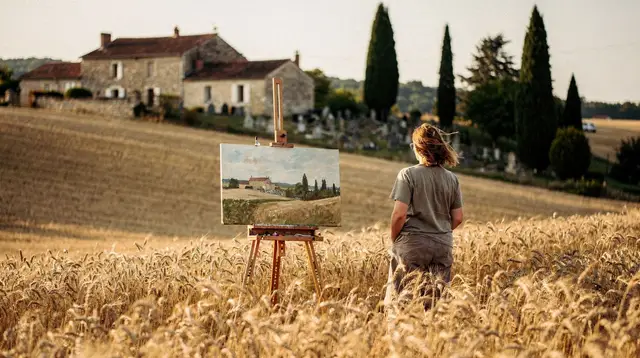
That short, intense period is really the whole reason the village draws visitors from Paris. It’s not a place with monuments in the conventional sense — it’s a place where you can stand in front of the same church, the same fields, the same rooftops that appear in some of Van Gogh’s best-known late paintings, painted within walking distance of where you’re standing.
What a half day in Auvers-sur-Oise looks like
Most visits follow a similar shape: a walk through the village past the church that Van Gogh painted, a stop at the wheatfields on the edge of town, and a visit to the cemetery where he and Theo are buried. Add a small museum or two connected to his stay, and that’s a satisfying half day without needing to stretch it further.
From Paris Auvers-sur-Oise Van Gogh Village Half Day Trip is built around exactly that scope: transport from Paris, a guided walk through the key sites, and a return that doesn’t eat up your whole day. For travellers who want more context on Van Gogh’s final weeks rather than just the sights themselves, Paris on Van Gogh’s Footsteps in Auvers-sur-Oise Day Tour follows a similar route with a stronger narrative thread.
A smaller number of operators build something more theatrical around the same story. Tour with an Actor Van Gogh’s Last Days in Auvers-sur-Oise uses a costumed guide to walk visitors through the final weeks in character rather than as a straight historical recap — worth knowing about if that style appeals, and worth skipping if you’d rather stick to a conventional guided walk.
Most itineraries follow roughly the same logic, whether you’re on a guided tour or working it out yourself: start in the village centre near the church, since it’s the most recognisable single sight and close to wherever the train or coach drops you; walk out toward the wheatfields on the edge of the village, which is where the open, big-sky landscapes Van Gogh painted in his final weeks actually sit; then finish at the cemetery, a short walk further on, where Vincent and Theo are buried side by side. Doing it in that order means the most emotionally weighted stop — the cemetery — comes last rather than first, which most visitors find works better than the reverse. None of this needs a strict schedule; the village is small enough that wandering off the direct route by a street or two rarely costs more than a few minutes.
Getting there from Paris
Auvers-sur-Oise is reachable from central Paris by train, typically with a change of train along the way, and it’s also covered by organised half-day tours that handle the transport end to end. This page doesn’t publish train times or ticket prices, since both change and neither the trip planning nor the trains themselves are run by this site — check current options directly before you travel.
For travellers who’d rather not manage a connection on unfamiliar suburban lines, a half-day tour with return coach transport from central Paris removes that step entirely, which is part of why the guided option is popular for a village with fairly modest public transport links. If you’re building a longer stay in the city and want a sense of how a day like this fits into your schedule, how many days in Paris is a useful companion read, as is where to stay in Paris if you haven’t picked a base yet.
Don’t stack it with another full-day excursion
It’s tempting, once you’ve committed to getting out of Paris for the day, to try to combine Auvers-sur-Oise with something else nearby — squeeze in a second village, or pair it with a longer outing. Resist that. The travel time to reach Auvers-sur-Oise and back from Paris already accounts for a meaningful slice of the day, and adding a second full stop tends to compress the village walk into something rushed, which defeats the point of visiting a place known for its quiet.
If you do want to see two Impressionist villages in a single day, a small number of operators build that specifically around Auvers-sur-Oise and Giverny together, rather than leaving you to improvise the logistics yourself. From Paris Giverny and Auvers-sur-Oise Private Art Tour and Van Gogh Monet Villages Full Day Tour from Paris both take on that combined itinerary as a private or full-day tour, with the transport and pacing planned around covering both villages without wasting time on connections. That’s a genuinely different kind of day than the half-day Auvers-sur-Oise trip described above — plan for it as a full day out, not a half day stretched to cover more ground.
Auvers-sur-Oise versus Giverny
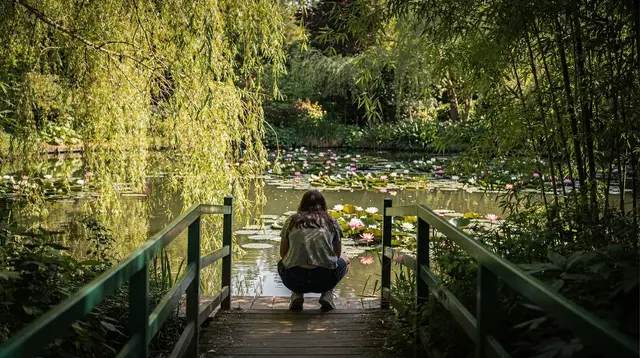
Since the two villages get compared constantly — both are Impressionist-era villages within day-trip range of Paris, both are built around a single painter’s legacy — it’s worth being direct about the difference. Giverny centres on Claude Monet’s house and garden, a maintained, ticketed site with a clear visiting structure and a strong seasonal element, since the gardens are only open part of the year. Auvers-sur-Oise centres on Van Gogh’s final weeks and doesn’t have an equivalent single ticketed site — it’s a village walk through streets, fields and a cemetery, with a couple of small museums along the way rather than one central attraction.
Neither is objectively bigger or better; they simply ask for different things from a visitor. If your priority is a single well-defined sight with a garden to walk through, Giverny fits that better. If you’re drawn to the more atmospheric, walk-the-streets version of an artist’s history, Auvers-sur-Oise is the stronger match. Our comparison of Giverny versus Versailles as a day trip covers the Giverny side of that decision in more depth, and how to get to Giverny from Paris is useful if you’re weighing both villages before booking anything.
What to skip
Because the village is small, it’s worth being honest about what a half day does and doesn’t include. This isn’t a trip built around grand monuments — there’s no equivalent here to the fortifications or cathedral that anchor some of the other villages within reach of Paris, and Auvers-sur-Oise shouldn’t be judged against those. It’s a quieter, more atmospheric stop, and treating it as such — rather than expecting a marquee sight around every corner — is the difference between a satisfying half day and a disappointing one.
If you’re weighing Auvers-sur-Oise against the other short excursions available from Paris, our overview of the best day trips from Paris puts it in context alongside Versailles and Fontainebleau and Vaux-le-Vicomte, which — unlike Auvers-sur-Oise — are built to fill a full day each.
When to visit
Auvers-sur-Oise sits in the same temperate climate zone as Paris, so the same broad seasonal logic applies here as it does anywhere else in the Île-de-France region. Spring and early autumn — roughly April to June and September to October — tend to offer the most comfortable conditions for a walking-heavy outing like this one: mild temperatures, and the wheatfields and village streets without the crowds or heat of high summer. Summer brings warmer, sometimes hot weather, and a village built around outdoor walking is more pleasant to visit before the midday heat sets in than during it.
Winter is colder and greyer, and while the village doesn’t close down the way some purely outdoor sights might in bad weather, a short, overcast day gives you less daylight to work with for a half-day outing. Rain is possible at any time of year, so it’s worth treating it as a real possibility rather than an exception whatever month you go — our guide to what to pack for Paris covers this in more detail if you’re building out a packing list for the wider trip.
Practical tips for the day
A few habits make the half day easier regardless of which way you get there. Comfortable, broken-in walking shoes matter more here than in central Paris — the walk between the church, the wheatfields and the cemetery covers uneven pavement and some unpaved paths at the edges of the village, and there’s no benefit to arriving underdressed for that. Layers are worth it too, since the wheatfields on the edge of the village are more exposed to wind than the sheltered village streets, and Île-de-France weather can shift over the course of a few hours even outside the rainy months.
If you’re travelling independently by train, build in a buffer either side of the outbound and return legs — a missed connection on a day trip with modest onward transport options costs you more time than the same delay would in central Paris, where a Métro line or a taxi is always close at hand. And because Auvers-sur-Oise is a village rather than a single ticketed attraction, there’s no single entrance or opening time to plan around the way there is at Versailles or the Louvre — the church, the cemetery and the streets are open to walk through at any reasonable hour, which is part of why a half day here is genuinely flexible rather than something you have to time precisely.
Quick comparison: half-day versus combined options
| Option | Scope | Best for |
|---|---|---|
| Auvers-sur-Oise half-day tour | Village walk, church, wheatfields, cemetery | A single focused outing, no other stop the same day |
| Auvers-sur-Oise walking tour with narrative guide | Same sites, more storytelling around Van Gogh’s final weeks | Visitors who want context, not just the sights |
| Auvers-sur-Oise and Giverny combined | Two villages, private or full-day format | Travellers set on seeing both Impressionist villages in one trip |
| Independent visit by train | Same sites, self-guided pace | Travellers comfortable managing a train change |
Frequently asked questions about visiting Auvers-sur-Oise from Paris
How far is Auvers-sur-Oise from Paris?
Auvers-sur-Oise sits north-west of Paris, within day-trip range by train or organised tour. It is close enough that most visitors treat it as a half-day add-on rather than a destination that needs an overnight stay.
Do I need a full day for Auvers-sur-Oise?
No. Unlike Versailles or Fontainebleau, which each fill a full day with a palace, gardens and grounds, Auvers-sur-Oise is a small village. A half day covers the church, the wheatfields, the cemetery where Van Gogh is buried, and one or two small sights on foot.
What is there to see in Auvers-sur-Oise?
The main draws are the sites Van Gogh painted in his last weeks — the village church, the town hall, the wheatfields on the edge of the village — plus the cemetery where he and his brother Theo are buried, and a small museum or two dedicated to his stay.
Can I combine Auvers-sur-Oise with another day trip?
It is best treated as a single half-day outing rather than stacked with another destination on the same day. The travel time to reach it and the return to Paris already use up a meaningful part of the day, so pairing it with a second full site tends to feel rushed.
Is Auvers-sur-Oise the same trip as Giverny?
No, they are different villages with different Impressionist connections — Giverny is linked to Claude Monet, Auvers-sur-Oise to Vincent Van Gogh — though some tour operators combine both in a single longer excursion for travellers who want to see both in one day.
How do I get to Auvers-sur-Oise from Paris?
Independent travellers reach Auvers-sur-Oise by train, usually with a change outside central Paris; an organised half-day tour with return transport from Paris removes the need to plan connections. Neither this page nor the operators list exact timetables or prices, since both change.
Should I book a guided tour or go independently?
A guided half-day tour is the simpler option for a village with modest public transport and no single obvious starting point; going independently by train works well for visitors comfortable navigating a change of train and a short walk from the station.
More on the region: Île-de-France day trips, the Auvers-sur-Oise destination page, and Monet’s house and gardens in Giverny for the village most often compared with this one.
Fontainebleau, Chantilly and Chartres day trips on GetYourGuide
Verified deep-linked GetYourGuide tours. Book through these links and we earn a small commission at no cost to you.
GetYourGuide does not provide a product photo for this activity — the image shows the meeting point, photographed by us.