Is Paris safe at night?
What actually happens after dark
I get asked this before nearly every trip, usually by someone picturing something dramatic. The honest answer is less exciting and more useful: Paris at night is not a city where visitors get attacked. It is a city where visitors get pickpocketed, and the difference matters for how you should actually behave.
In years of walking around Paris after dinner, past the illuminated monuments, along the Seine, up into Montmartre, I have never once felt physically threatened. What I have seen, repeatedly, is crowds around a floodlit view, a phone coming out for a photo, and a hand that is not the owner’s near a bag or a back pocket. That is the real risk profile of Paris at night: property crime that depends on distraction, not violence.
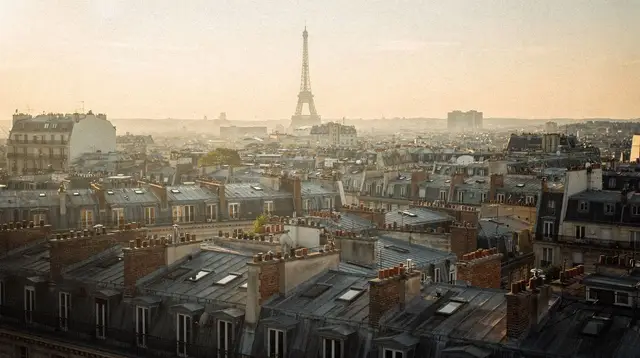
This matters because the wrong kind of caution — staying in, avoiding busy squares, treating every stranger as a threat — costs you the parts of Paris that are genuinely better after dark. The Eiffel Tower lit up against a dark sky, the Seine with its bridges reflected in the water, Sacré-Coeur with the city spread out below: none of this is dangerous to see at night. It just needs a closed bag and a bit of attention.
Where the crowds gather, so do the pickpockets
Pickpocketing in Paris is not random. It concentrates wherever people stop moving and stop paying attention, which at night means three places in particular.
Around the Eiffel Tower and the Champ de Mars. The lawn in front of the tower fills up every evening for the hourly light show, and that stationary, distracted crowd is exactly what a pickpocket wants. Keep your bag zipped and in front of you, not slung behind.
The Louvre and its surrounding squares. Even after the museum closes, the courtyard and the streets around it draw evening crowds for photos of the pyramid lit up. Same principle: a packed, slow-moving group of people looking up and taking pictures.
The steps and viewpoint at Sacré-Coeur. This is the one I’d flag hardest. The view over Paris from the top of the steps in Montmartre is one of the best in the city at night, and it is also the most consistent location in Paris for both pickpocketing and the classic tourist scams below. Enjoy the view, keep a hand on your bag, and don’t let anyone slow you down on the way up or down.
None of this means avoid these places. It means know what you’re walking into and act accordingly.
The scams that specifically target tourists in the evening
A handful of scams show up again and again around Montmartre and on the bridges over the Seine, and they share a pattern: someone engages you directly, gets you to stop, and either distracts you for a pickpocket or pressures you for money outright.
| Scam | How it works | What to do |
|---|---|---|
| Friendship bracelet | A person near Sacré-Coeur ties a string bracelet onto your wrist before you can pull away, then demands payment for it | Keep your hands away from anyone approaching with string or thread; don’t let them touch you |
| Fake petition | Someone asks you to sign a petition for a cause, then pushes for a cash donation once you’ve stopped to engage | Don’t sign anything handed to you on the street; keep walking |
| Found gold ring | A stranger “finds” a ring on the ground near you and offers it, then asks for money as a reward or claims it’s yours | Ignore it entirely; it is never actually gold and never actually found |
| Three-card shell game | A quick card or cup game set up on a bridge over the Seine, designed to look winnable | Don’t stop to watch, don’t bet; the game is rigged and often involves a lookout |
The common thread is engagement. Every one of these depends on you pausing, making eye contact, or responding. A firm no and continuing to walk ends all four almost instantly. I don’t say this to sound paranoid — I say it because it works, and because knowing it in advance means you don’t have to think about it in the moment.
How I actually handle an evening out
In practice, none of this changes what I do in Paris at night, only how I carry things. I keep a cross-body bag zipped shut, worn in front of me in any crowd, and I don’t carry more cash than I’d want to lose. If someone approaches me directly, whether it’s a bracelet, a petition, or a “found” ring, I say no and keep moving rather than stopping to explain myself.
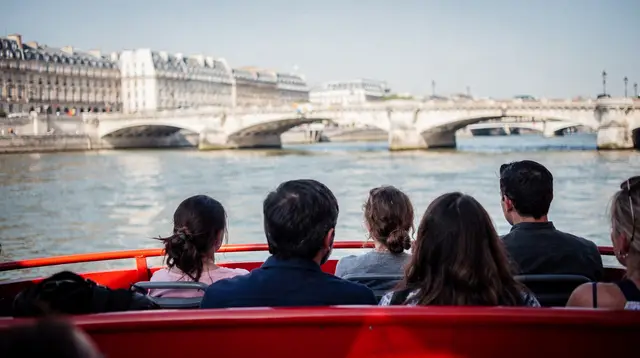
I don’t avoid Sacré-Coeur at sunset, the Eiffel Tower after dark, or the bridges over the Seine, because these are some of the best reasons to be out in Paris in the evening. A Seine cruise at night, a walk up to Montmartre for the view, dinner somewhere with the tower lit up in the distance — all of this is normal, safe, and worth doing. The point isn’t to be anxious. It’s to know where the crowds are, what the common tricks look like, and to not let a bag hang open behind you.
If you want a guided evening rather than working this out solo, a small-group or private tour after dark takes the navigation and some of the vigilance off your plate, since you’re moving with a guide rather than alone through a crowd. A private evening tour past the lit-up Louvre covers exactly the kind of busy, photogenic square where it pays to have someone else watching the group. For a different pace, a night out around Paris with a stop for cocktails keeps you in a small group after dark rather than navigating solo. And if you’d rather see the illuminated landmarks from something other than your own two feet, a vintage car tour combined with a walk through Le Marais mixes a slower, watched pace with a walk through one of the calmer central neighborhoods.
Metro and RER are a separate question
Everything above is about the streets, squares, and monuments of Paris after dark. The metro and RER network is its own environment, with its own crowding patterns and its own lines that see more pickpocketing than others, and it deserves separate advice rather than a paragraph tacked onto the end of this one. For that, see the dedicated Paris metro guide, which covers the network itself rather than the city above ground.
More on staying safe and getting around
For a broader look at safety across the whole trip, not just the evening, the Paris safety guide for tourists covers daytime risks too. The scams and pickpockets guide goes deeper on the tricks mentioned above and a few more. If Montmartre is on your evening plan, things to do in Montmartre and the neighborhood’s walking tours are a good starting point, and where to stay in Montmartre is worth reading if you’re considering basing yourself up there. For the view itself, the Sacré-Coeur guide has the practical details.
If it’s the illuminated Eiffel Tower drawing you out, see Eiffel Tower tickets and tours and Trocadéro and Champ de Mars guide for where to see it from. For an evening on the water, the Seine dinner cruises guide is the place to start, and the broader Paris at night guide rounds out what else is worth doing after dark. If getting around after your evening out is on your mind, taxis and ride-hailing in Paris covers the alternative to walking or the metro late at night.
Questions on staying safe at night in Paris
Is Paris safe to walk around at night?
Yes, in the areas a visitor is likely to be in. The realistic risk after dark is pickpocketing in a crowd, not assault. Stay aware in busy tourist spots and you are unlikely to have a problem beyond a stolen phone or wallet if you are careless.
Where are pickpockets most active at night in Paris?
Around the Eiffel Tower and the Champ de Mars, at the Louvre and its surrounding squares, and on the steps and viewpoint of Sacré-Coeur in Montmartre. Anywhere a crowd stops to look at a view or a monument is a pickpocket’s working environment.
What is the friendship bracelet scam?
Someone near Sacré-Coeur ties a string bracelet onto your wrist before you can object, then demands payment. It is a well-known distraction and pressure tactic. Keep your hands to yourself and walk on without engaging.
What other scams should I know about in the evening?
Fake petitions asking for a signature and then a donation, the found gold ring trick where a stranger offers you a “found” ring and asks for money, and the three-card shell game on bridges over the Seine. All rely on you stopping to engage.
Should I avoid certain metro lines at night?
This page covers the streets and tourist sites; metro and RER safety, including which lines see more pickpocketing, is covered separately in the Paris metro guide, since the advice there is specific to trains and platforms.
Is Montmartre safe at night?
The area around Sacré-Coeur is busy and generally fine to walk through, but it is also the single most consistent spot for the friendship bracelet scam and pickpocketing near the viewpoint. Keep bags closed and skip anyone approaching you with a bracelet, a petition, or a ring.
What should I actually do if someone tries to scam me?
Do not stop, do not make eye contact, do not respond beyond a firm no, and keep walking. Scams here depend on you pausing long enough to be distracted or pressured; refusing to engage ends the interaction almost every time.
Paris trip planning guides on GetYourGuide
Verified deep-linked GetYourGuide tours. Book through these links and we earn a small commission at no cost to you.
GetYourGuide does not provide a product photo for this activity — the image shows the meeting point, photographed by us.