Bastille Day in Paris: what to know about July 14
What is Bastille Day in Paris actually like for a visitor?
Bastille Day, France's national day on July 14, falls in the middle of summer, when Paris can already be hot and crowded. Expect heavier foot traffic around the Seine, the Eiffel Tower and Champ de Mars, tighter security near official routes, and metro and RER lines that can run busier or slower than usual.
A national holiday inside a hot, busy season
July 14 is France’s national day, marking the anniversary of the storming of the Bastille in 1789. In Paris, it lands squarely inside the warmest stretch of the year, a season when the city is already drawing large numbers of visitors and can slide into a heatwave. For anyone planning a trip around this date, the honest framing is simple: Bastille Day is not a separate event you can plan around in isolation. It’s the busiest single day inside an already busy, already hot month, and the two pressures — heat and crowds — compound each other.
This guide does not attempt to list an official program, a fireworks schedule, or a parade route. Paris City Hall and national authorities publish those details closer to the date, and they change year to year, so anything printed here in advance would be guesswork. What this guide covers instead is what stays true regardless of the year: where the crowds concentrate, how transport tends to behave, where pickpockets are already active on an ordinary day and why that matters more on a holiday, and how July 14 fits into the broader rhythm of a Paris summer.
Where the crowds concentrate
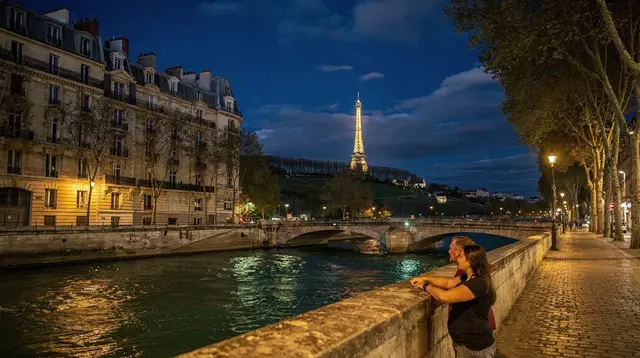
Bastille Day draws people toward a handful of predictable areas: the Champs-Elysees, where a formal event typically takes place during the day, and the Eiffel Tower and Champ de Mars, where an evening fireworks display is a long-running tradition. Around these zones, expect road closures, barriers, and a much denser crowd than a typical July evening. The Trocadero, on the opposite bank facing the tower, is another vantage point that fills early.
Beyond these focal points, the ripple effect touches the wider center: the Seine riverbanks, bridges connecting the Rive Droite and Rive Gauche, and the metro stations feeding into these areas all see more foot traffic than usual. If your hotel or Airbnb sits near the Eiffel Tower and Trocadero guide, plan on a longer, more crowded walk than the map suggests, especially in the hours before and after the fireworks.
None of this means the rest of Paris shuts down. Montmartre, Le Marais, the Latin Quarter and Saint-Germain, and the Ile de la Cite continue more or less as normal, and this is often the better strategy: enjoy those neighborhoods during the day and choose deliberately whether the evening crowd near the tower is worth it for you.
Heat, not fireworks, is the bigger daily risk
The socle for this guide is explicit that Paris summers run warm and can tip into a heatwave, and July 14 offers no exception. A day spent standing in direct sun near the Champ de Mars, followed by a dense, slow-moving evening crowd, is a different kind of tiring than a museum day. Carry water, seek shade during the afternoon, and treat the evening event as an endurance exercise as much as a sightseeing one if you plan to hold a spot for hours.
This is also where Bastille Day differs sharply from the month that follows it. Paris in August is the opposite mood: many Parisians leave the city, some small restaurants and shops close for weeks, and the crowds thin even as the heat continues. July 14 is a single loud, dense day; the weeks after it are quieter, emptier, and in some ways easier to navigate, just as hot.
Pickpockets and holiday crowds
The site’s general safety guidance is not specific to Bastille Day, but it becomes more relevant on a day like this one. Pickpockets are already known to work the metro line 1, the RER B, and the areas around the Eiffel Tower and the steps of Sacre-Coeur on an ordinary day. A packed holiday crowd, with people distracted, shuffling slowly, and often holding phones up to film, is exactly the kind of environment pickpockets look for.
The same advice that applies any day applies more urgently here: keep bags closed and in front of you, be wary of anyone staging a distraction — a “found” ring, a friendship bracelet offered at a monument, a signature request for a petition — and treat anyone approaching you in a dense crowd with polite but firm refusal. None of this is unique to July 14, but the concentration of people near the Eiffel Tower and Champ de Mars that evening raises the odds of encountering it. For the fuller picture, see Paris scams and pickpockets and is Paris safe for tourists.
Getting around on July 14
Île-de-France Mobilités runs the city’s 16 metro lines and 5 RER lines on Bastille Day as on any other day, but expect two things: road closures around the official routes near the Champs-Elysees, and heavier-than-normal use of stations near the Seine and the Eiffel Tower, particularly from late afternoon into the evening. If your plans involve the fireworks, build in real time margin both ways — walking may end up faster than waiting for a packed train once the crowd starts moving after the display ends.
Driving into or through central Paris is already discouraged under normal circumstances, given traffic, limited parking, and the low-emission zone requiring a Crit’Air sticker; on a day with additional road closures for the official event, it becomes even less practical. If you’re arriving that day from Paris Charles de Gaulle (CDG) or Paris Orly (ORY), the RER B or metro line 14 remain the more reliable choices over a taxi caught in holiday traffic. For a general primer, see the Paris metro guide and the metro tickets and Navigo guide.
What stays open, and what to book ahead anyway
Bastille Day is a national holiday, but Paris does not close down the way it might on a quieter public holiday. Museums, cruises, and day trips generally continue to operate, sightseeing tours run, and the Louvre and other major sites keep to their usual weekly closing days rather than an extra holiday closure — though it’s worth checking official hours for the specific date before you go, since individual venues can adjust.
What does matter is booking ahead, but that’s true of mid-July in general rather than Bastille Day specifically. A Seine river cruise or an Eiffel Tower time slot sells out faster in the middle of summer than in the shoulder seasons this site otherwise recommends, so treat July as a month that rewards planning ahead regardless of the exact date you land on.
A different way to spend the day
If standing in a dense crowd near the Champ de Mars for hours isn’t your idea of a good holiday, Bastille Day is also a reasonable day to lean into neighborhoods and experiences that don’t compete with the evening crowd. The Bastille area itself — the historic starting point of the holiday’s name, now a lively market and food neighborhood in eastern Paris — offers a lower-key way to spend the afternoon before deciding whether to join the evening crowd at all.
a guided walk through the Bastille food market is one way to spend the day exploring a working Paris neighborhood rather than queuing near a monument, pairing well with a wine and cheese tasting session in the same area if you’d rather sit down out of the heat during the hottest part of the afternoon. For a more active option that covers ground without relying on a packed metro, a bike tour of Paris can be a practical way to see several neighborhoods before the evening crowds build.
Bastille Day versus other Paris crowd days
| Event | When | What drives the crowd | Weather |
|---|---|---|---|
| Bastille Day (July 14) | Mid-summer | National holiday, evening fireworks, daytime official event | Warm to hot, possible heatwave |
| Paris in August | The month after | City empties as residents leave, some shops close | Warm, humid |
| New Year’s Eve | December 31 | Evening gathering, especially near the Champs-Elysees and Eiffel Tower | Cold, possibly wet |
Bastille Day and New Year’s Eve in Paris share a structural similarity — both concentrate a large evening crowd around the Eiffel Tower and central Paris — but the season flips the experience entirely. One is a hot, long-daylight evening where the challenge is heat and density; the other is a cold, dark one where the challenge is weather and closed transport options late at night. Neither guide promises an official schedule, since neither is published far enough in advance to print reliably.
Planning your dates around it
If your trip dates are flexible, it’s worth deciding deliberately whether you want to be in Paris for Bastille Day or would rather avoid it. Arriving a few days before or after the 14th still puts you inside the same warm season and the same general summer crowd levels covered in best time to visit Paris and Paris weather by month, without the specific density of the holiday itself. Neither choice is wrong; it depends on whether a shared national celebration and an evening fireworks display are part of what you came for, or an obstacle you’d rather sidestep.
For visitors who do want to be there, a practical plan looks like this: spend the day in a neighborhood away from the official routes, eat somewhere with air conditioning during the hottest hours, and make a clear-eyed decision in the late afternoon about whether joining the crowd near the Eiffel Tower for the fireworks is worth the walk home afterward. For visitors who’d rather skip it, treating July 14 as a day to explore Montmartre, the Latin Quarter and Saint-Germain, or a day trip beyond Paris keeps the day calm while the center of the city celebrates without you.
Frequently asked questions about Bastille Day in Paris
Is Bastille Day the same as the fireworks over the Eiffel Tower?
The fireworks display near the Eiffel Tower is one part of a wider national day that also includes a military event on the Champs-Elysees. This guide does not list times or routes, since neither is fixed far in advance; check official Paris city sources closer to your trip.
Do I need to book anything in advance for Bastille Day?
Paris keeps running on July 14: museums, cruises and day trips generally operate, though some attractions may adjust hours around the holiday. Popular Seine cruises and Eiffel Tower slots sell out faster in mid-July regardless of the date, so booking ahead is a summer habit, not a Bastille Day-specific one.
Is it safe to be near the Eiffel Tower on Bastille Day?
Paris is a safe city for visitors, but any large gathering concentrates pickpockets. The areas around the Eiffel Tower, the Champ de Mars and crowded metro lines are already known pickpocket spots on an ordinary day, and a national holiday crowd makes the same areas busier still.
Will the metro be more crowded on July 14?
Yes, expect heavier use of central lines and stations near the Seine and the Eiffel Tower, especially in the evening. Build in extra time and expect some stations to feel more congested than a typical weekday.
Should I avoid Paris around Bastille Day?
No, but plan around it rather than ignore it. It’s a single day inside a broader summer stretch that is already warm and busy; treat July 14 as the busiest day of an already busy season, not as a reason to skip the city.
Is August a similar experience to Bastille Day in Paris?
No, they’re opposite moods. Bastille Day is one crowded, celebratory day in mid-July. August is the month right after it, when many Parisians leave the city and some small shops and restaurants close, so the city empties out even as the heat continues.
What should I pack for a July visit that includes Bastille Day?
Light clothing for heat, comfortable shoes for walking around crowds and closed roads, water, and a closed bag you can keep an eye on in dense areas. The socle for this site does not fix exact temperatures, so check a forecast closer to your dates.
Are there quieter alternatives to being right at the Eiffel Tower that evening?
Some visitors choose to watch from farther back, along the Seine or from a rooftop or terrace away from the densest crowd at the Champ de Mars and Trocadero, trading a closer view for an easier walk home. Either way, expect the closest vantage points to be the most congested.
Seasonal Paris guides and events on GetYourGuide
Verified deep-linked GetYourGuide tours. Book through these links and we earn a small commission at no cost to you.
GetYourGuide does not provide a product photo for this activity — the image shows the meeting point, photographed by us.